


- Home/
- Dense Fog In Delhi, Air Quality Edges Close To 'Severe' Category
Dense Fog In Delhi, Air Quality Edges Close To 'Severe' Category
Indo-Asian News Service | Updated: December 21, 2025 09:39 IST
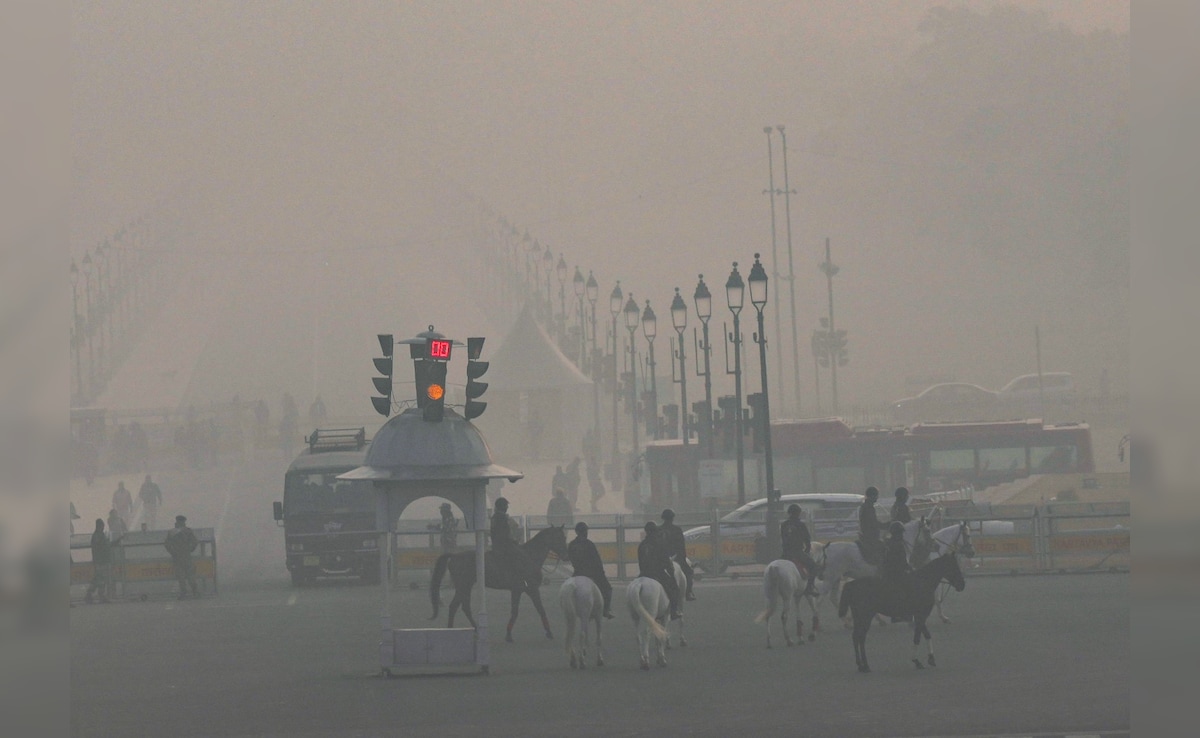
The deteriorating air quality coincided with challenging weather conditions. (File)
New Delhi:
Air pollution levels in the national capital deteriorated sharply on Sunday, edging dangerously close to the “severe” category as dense smog, plunging temperatures, and thick fog blanketed large swathes of northern India.
The worsening air quality once again raised health concerns for residents, particularly children, the elderly and those with respiratory ailments.
According to data from the Air Quality Early Warning System for Delhi, operated by the Ministry of Earth Sciences, the city's Air Quality Index (AQI) climbed steadily, touching 410 by 11 pm, officially breaching the “severe” threshold.
Although there was a marginal improvement overnight, pollution levels remained alarmingly high, with the AQI recorded at 396 at around 6.30 am on Sunday, still within the near-severe range.
Monitoring data from the Central Pollution Control Board's Sameer app revealed that several areas across the capital experienced extremely poor air quality during the early morning hours.
#WATCH | Delhi | Visuals around the Rajghat area as a layer of toxic smog engulfs the national capital. CAQM (Commission for Air Quality Management) has invoked all actions under GRAP Stage-IV in Delhi-NCR.
— ANI (@ANI) December 21, 2025
AQI (Air Quality Index) around the area is 376, categorised as 'Very… pic.twitter.com/LTIWFUMBhh
Among the worst-affected locations were Chandni Chowk (455), Wazirpur (449), Rohini (444), Jahangirpuri (444), Anand Vihar (438) and Mundka (436), all of which firmly fell under the “severe” pollution category.
The deteriorating air quality coincided with challenging weather conditions. The India Meteorological Department (IMD) warned of dense to very dense fog, further reducing visibility and compounding the impact of pollution. Orange alerts, the second-highest warning level, were issued for large parts of Delhi, Uttar Pradesh, Haryana, and Chandigarh, cautioning residents and authorities about possible disruptions to road, rail, and air traffic.
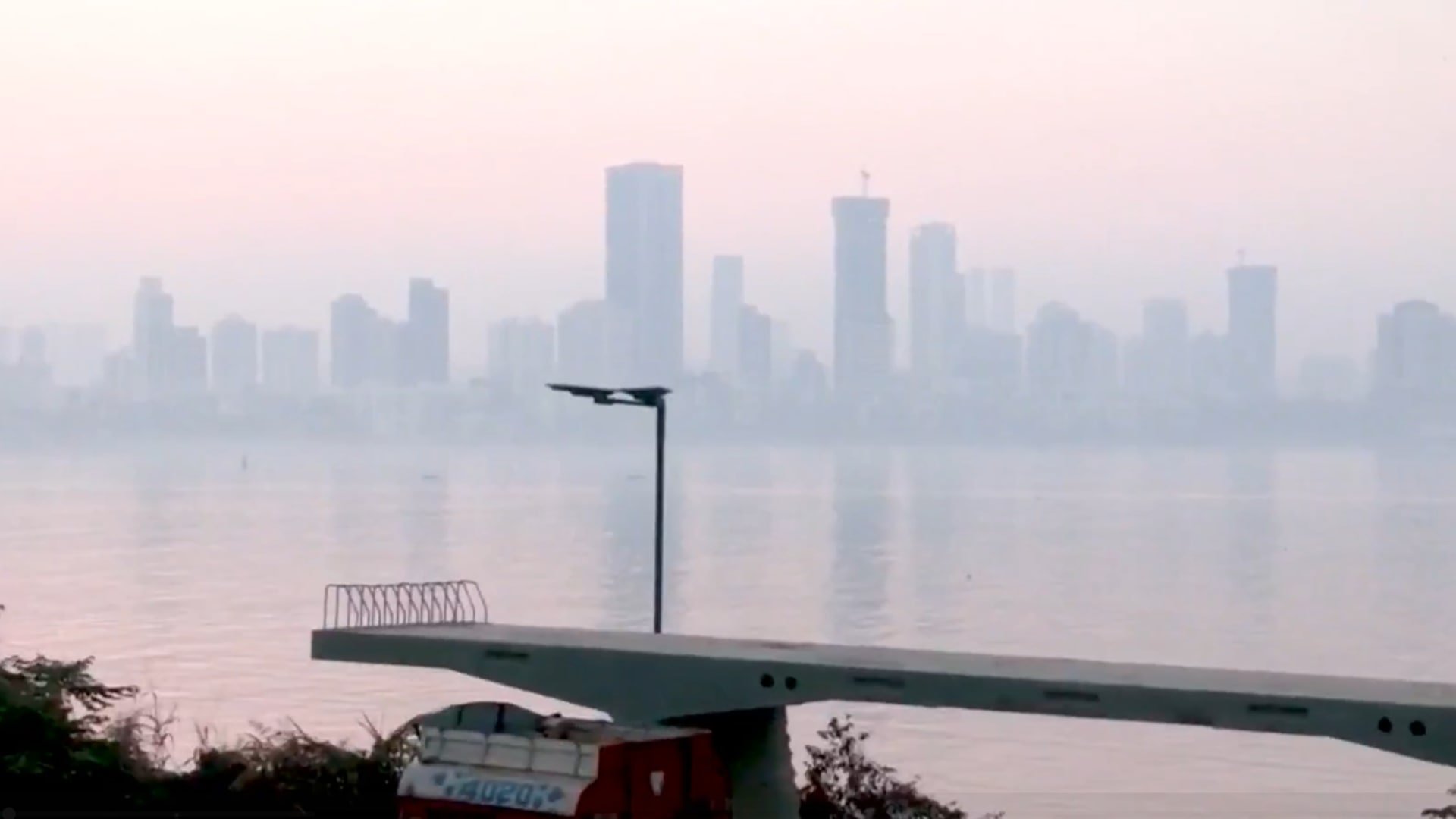
Delhi witnessed what meteorologists described as cold day conditions, with the mercury struggling to rise. The city recorded a maximum temperature of around 17 degrees Celsius, while the minimum dipped to approximately 8 degrees Celsius, intensifying discomfort amid the persistent haze. Thick layers of smog lingered through much of the day, blurring skylines and limiting outdoor activity.
#WATCH | Delhi: Drone visuals around the ISBT Kashmere Gate area as a layer of toxic smog blankets the city. AQI (Air Quality Index) in the area is 448, categorised as 'Severe', as claimed by CPCB (Central Pollution Control Board).
— ANI (@ANI) December 21, 2025
(Visuals shot around 8.10 am) pic.twitter.com/M5X1vqXbK5
Experts attribute the pollution spike to a combination of unfavourable meteorological conditions, including low wind speeds and temperature inversion, which trap pollutants close to the ground.
As winter tightens its grip, Delhi continues to grapple with recurring episodes of air pollution, underscoring the urgent need for sustained mitigation measures and long-term solutions to improve air quality in the region.
(Except for the headline, this story has not been edited by NDTV staff and is published from a syndicated feed.)
Published: December 21, 2025 08:58 IST
 Reported by Reet Kaur Sahni | Friday August 07, 2026
As per the ministry, prior Environmental Clearance becomes mandatory for data centres depending on their physical footprint under Schedule 8 of the EIA Notification, 2006.
- Written by Sambhav Kumar | Thursday August 06, 2026
Keerthy Suresh's 41-hour no-sleep stretch highlights the intense demands many professionals face, but experts warn that prolonged sleep deprivation should never become routine.
- Written by Sambhav Kumar | Wednesday August 05, 2026
Preliminary evidence suggests the blood filtration treatment could reduce some microplastic particles, though findings are limited and require more study.
- Monday August 03, 2026 , New Delhi
Study reveals black crust from pollution weakens Humayuns Tomb sandstone
- Written by Debosmita Ghosh | Saturday August 01, 2026
Lung cancer is often diagnosed at an advanced stage because its early symptoms are easy to overlook. A persistent cough is among the most commonly ignored warning signs.



................................ Advertisement ................................


Blog | Well Done, Delhi. You've Turned Lung Sacrifice Into A Badge Of HonourSaikat Kumar Bose
Monday November 10, 2025Till some years back, Delhiites would ask angry questions to those in power about the capitals annual tryst with toxic air. This has changed. Those in the driving seat dont see the need to answer now.
Opinion | Why Indians Have Just Given Up On Air Pollution CrisisTanushree Ganguly
Friday December 20, 2024While some may argue that people in Delhi are now more aware of air pollution than they were a decade back, my rebuttal would be that awareness does not mean that people are concerned.
Opinion | You Must Outrage Over Filthy Air More Than Once A YearJyoti Pande Lavakare
Tuesday December 10, 2024Delhi welcomed us with monsoon rains and mangos. We were home. Fast forward a couple of years, in the winter of 2012, I found myself in denial about something other parents, mostly expats, were calling toxic air.
Opinion | Delhi's Air Pollution Situation Is Like A Bad MarriageNishtha Gautam
Friday November 22, 2024On a good day, such as today, the AQI reading in Delhi is 407. We are jubilant at the sickly sunshine trickling through the slightly dissipated smog. At least its not 1600.
दिवाली... पराली... सियासी जुगाली!Ashwini kumar
Monday November 18, 2024दिल्ली-एनसीआर में प्रदूषण का समाधान तो आज तक मिला नहीं. हर साल चिंतित होकर हम-आप सांसों की तकलीफ के साथ-साथ दिल और ब्लड प्रेशर के मरीज भी क्यों बनें?


