


- Home/
- Delhi Considering Revival Of Shared Taxi Rides To Curb Air Pollution
Delhi Considering Revival Of Shared Taxi Rides To Curb Air Pollution
Press Trust of India | Updated: December 27, 2025 00:17 IST
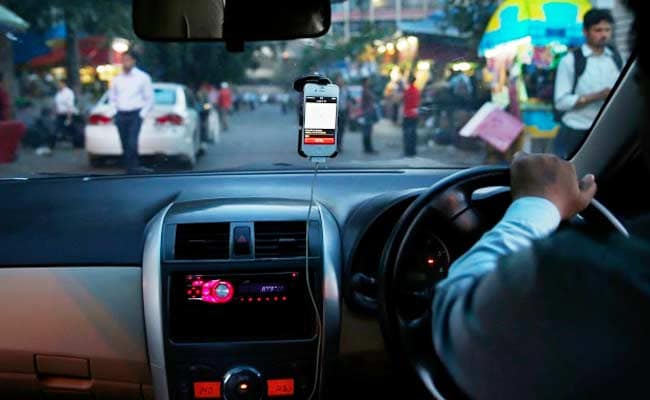
Shared taxi services were available in Delhi before the COVID-19 pandemic.
To curb air pollution, the Delhi government is considering reviving shared rides provided by ride-hailing services that were discontinued during the COVID-19 pandemic, officials said on Friday.
The government is also increasing the number of automated commercial vehicle fitness testing stations to ensure that no vehicle in the capital contributes to pollution, according to an official statement.
It will soon hold a meeting with transportation network companies to provide better passenger services in Delhi.
Shared taxi services, which were available in Delhi before the COVID-19 pandemic but were discontinued, are now being considered for revival to provide affordable and convenient transport options to commuters, the statement added.
Chief Minister Rekha Gupta said the core objective of the Delhi government's transport policy is to reduce the number of vehicles on the roads while ensuring that passengers do not face any inconvenience in their daily commute.
The government is in continuous dialogue with transportation network companies such as Ola and Uber and expects them to prioritise shared rides, increase the participation of women drivers, and promote environment-friendly services, she said.
Gupta said the upcoming meeting with transportation network companies will deliberate on restarting shared taxi services, increasing the number of women drivers, and exploring the integration of private electric vehicles into taxi services.
She said the government is seriously deliberating on ways to ensure that fewer vehicles can safely, conveniently and affordably transport a larger number of passengers, thereby reducing road congestion and pollution levels.
According to the chief minister, this policy is not only a response to present-day traffic challenges but also an important step towards a long-term, sustainable and environment-friendly transport model for Delhi.
Gupta said the government also aims to increase the number of women drivers in the city's taxi services to provide women passengers with safer and more reliable travel options.
The Delhi Government is firmly committed to ensuring that every vehicle in the capital is pollution-free. To achieve this, automated commercial vehicle fitness testing stations are being rapidly established.
The fitness centre at Jhuljhuli is already operational and is testing around 70,000 vehicles annually, while the fitness centre at Burari is being upgraded, the chief minister said.
Two similar centres at Nand Nagri and Tehkhand are expected to become operational by March next year, she said, adding that these four centres, collectively, will be able to conduct fitness tests for approximately 2.5 to 3 lakh commercial vehicles annually.
The government has decided to install five additional automated vehicle fitness testing stations at various DTC depots, all of which have received the necessary approvals. These stations will be established at Bawana, Ghazipur, Savda Ghevra, GTK Depot and Dichau Kalan.
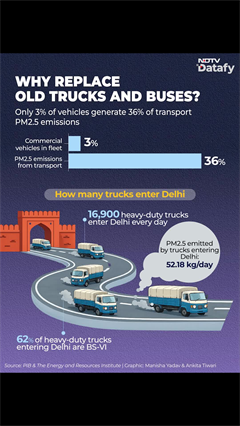
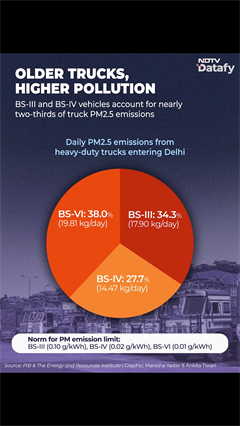
Various research reports have clearly established vehicular emissions as a major contributor to air pollution, Gupta said.
Certain corridors of Delhi Metro Phase-5A have received in-principle approval from the Central government, enabling further expansion of the metro network. This expansion will reduce pressure on road traffic and provide a sustainable solution to pollution control.
(Except for the headline, this story has not been edited by NDTV staff and is published from a syndicated feed.)
Published: December 27, 2025 00:17 IST
 Thursday July 30, 2026
Air pollution has links to health risks in pregnant woman as they can face reproductive issues. Here is how genetic and environmental factors could impact reproductive health.
- Written by Sambhav Kumar | Tuesday July 28, 2026
Heavy monsoon rains in Delhi-NCR may clear outdoor pollutants temporarily but increase indoor humidity and mould growth, affecting respiratory health.
- Written by Dr Ramanarayanan | Sunday July 26, 2026
Invasive fungal infections are rising in India, affecting more patients and showing resistance to treatments, posing serious health risks.
- Written by Ashwini Sehgal | Thursday July 23, 2026
The study included 85 adults and children with poorly controlled asthma who lived in homes or apartments with gas stoves. Asthma control was determined from responses to a standard questionnaire.
- Written by Rupashi Chhabra | Tuesday July 21, 2026
Dr Bhuvan Chugh explains how hidden environmental toxicants cause lung cancer in young non-smokers. Here is how fine air pollution triggers hidden mutations.


................................ Advertisement ................................

Blog | Well Done, Delhi. You've Turned Lung Sacrifice Into A Badge Of HonourSaikat Kumar Bose
Monday November 10, 2025Till some years back, Delhiites would ask angry questions to those in power about the capitals annual tryst with toxic air. This has changed. Those in the driving seat dont see the need to answer now.
Opinion | Why Indians Have Just Given Up On Air Pollution CrisisTanushree Ganguly
Friday December 20, 2024While some may argue that people in Delhi are now more aware of air pollution than they were a decade back, my rebuttal would be that awareness does not mean that people are concerned.
Opinion | You Must Outrage Over Filthy Air More Than Once A YearJyoti Pande Lavakare
Tuesday December 10, 2024Delhi welcomed us with monsoon rains and mangos. We were home. Fast forward a couple of years, in the winter of 2012, I found myself in denial about something other parents, mostly expats, were calling toxic air.
Opinion | Delhi's Air Pollution Situation Is Like A Bad MarriageNishtha Gautam
Friday November 22, 2024On a good day, such as today, the AQI reading in Delhi is 407. We are jubilant at the sickly sunshine trickling through the slightly dissipated smog. At least its not 1600.
दिवाली... पराली... सियासी जुगाली!Ashwini kumar
Monday November 18, 2024दिल्ली-एनसीआर में प्रदूषण का समाधान तो आज तक मिला नहीं. हर साल चिंतित होकर हम-आप सांसों की तकलीफ के साथ-साथ दिल और ब्लड प्रेशर के मरीज भी क्यों बनें?


