


- Home/
- Delhi Covered In Thick Smog After Celebrating Diwali With Firecrackers
Delhi Covered In Thick Smog After Celebrating Diwali With Firecrackers
Asian News International | Updated: November 13, 2023 15:19 IST

Supreme Court and Delhi Government banned bursting firecrackers on Diwali
New Delhi:
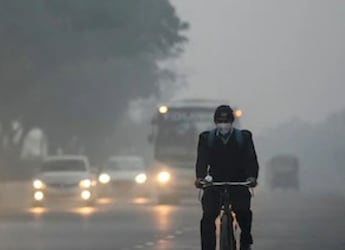
A thick layer of smog engulfed the national capital after people burst crackers on Diwali night, leading to heavy pollution all across the city, which is already battling with its deteriorating air quality.
Visuals from various parts of Delhi showed thick haze covering the roads, significantly reducing visibility and making it difficult to see beyond a few hundred metres.
What is important to note is that the national capital has already been struggling with pollution for the last few weeks. The AQI at many places had peaked in the 'severe' category and continued to remain toxic for several days, but after Diwali, it is now very likely that the national capital will once again witness a rise in pollution levels, making it difficult for the people inside the city to breathe.
Recently, Arvind Kejriwal-led AAP government in Delhi imposed a complete ban on firecrackers. In wake of the pollution situation, the government even considered the idea of 'artificial rain' to tackle the foul air in the city, until sudden rainfall brought a major respite, lowering the pollution level.
The latest posts shared on social media sites and reports have shown that a large number of people at different places have taken part in the burning of firecrackers. Sunday night's visuals from Lodhi Road, RK Puram, Karol Bagh, and Punjabi Bagh showed intense fireworks lighting up the night sky across several areas in the national capital.
Previous data related to pollution shows that since the last week of October, the national capital's air quality has been at its worst. The concentration of PM 2.5 in the city has been recorded at 20 times the limit prescribed by the World Health Organisation, prompting the city government to order the closure of all primary classes and restrict the entry of trucks.
Despite the Delhi government's 'Diya Jalao, Patakhe nahi' campaign and the Supreme Court's order on firecrackers, rising pollution is likely to dim the light in the city after festivity ends.
(Except for the headline, this story has not been edited by NDTV staff and is published from a syndicated feed.)
Published: November 13, 2023 05:53 IST
 Wednesday August 26, 2026
Almost the entire global population (99 per cent) breathes air containing pollutant levels exceeding the World Health Organization's air quality guidelines, with the highest exposures seen in low and middle-income countries, the researchers said.
- Reported by Reet Kaur Sahni | Friday August 07, 2026
As per the ministry, prior Environmental Clearance becomes mandatory for data centres depending on their physical footprint under Schedule 8 of the EIA Notification, 2006.
- Written by Sambhav Kumar | Thursday August 06, 2026
Keerthy Suresh's 41-hour no-sleep stretch highlights the intense demands many professionals face, but experts warn that prolonged sleep deprivation should never become routine.
- Written by Sambhav Kumar | Wednesday August 05, 2026
Preliminary evidence suggests the blood filtration treatment could reduce some microplastic particles, though findings are limited and require more study.
- Monday August 03, 2026 , New Delhi
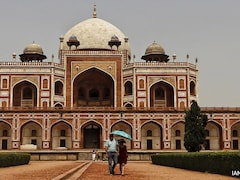
Study reveals black crust from pollution weakens Humayuns Tomb sandstone


................................ Advertisement ................................

Blog | Well Done, Delhi. You've Turned Lung Sacrifice Into A Badge Of HonourSaikat Kumar Bose
Monday November 10, 2025Till some years back, Delhiites would ask angry questions to those in power about the capitals annual tryst with toxic air. This has changed. Those in the driving seat dont see the need to answer now.
Opinion | Why Indians Have Just Given Up On Air Pollution CrisisTanushree Ganguly
Friday December 20, 2024While some may argue that people in Delhi are now more aware of air pollution than they were a decade back, my rebuttal would be that awareness does not mean that people are concerned.
Opinion | You Must Outrage Over Filthy Air More Than Once A YearJyoti Pande Lavakare
Tuesday December 10, 2024Delhi welcomed us with monsoon rains and mangos. We were home. Fast forward a couple of years, in the winter of 2012, I found myself in denial about something other parents, mostly expats, were calling toxic air.
Opinion | Delhi's Air Pollution Situation Is Like A Bad MarriageNishtha Gautam
Friday November 22, 2024On a good day, such as today, the AQI reading in Delhi is 407. We are jubilant at the sickly sunshine trickling through the slightly dissipated smog. At least its not 1600.
दिवाली... पराली... सियासी जुगाली!Ashwini kumar
Monday November 18, 2024दिल्ली-एनसीआर में प्रदूषण का समाधान तो आज तक मिला नहीं. हर साल चिंतित होकर हम-आप सांसों की तकलीफ के साथ-साथ दिल और ब्लड प्रेशर के मरीज भी क्यों बनें?


