


- Home/
- Delhi's EV Policy 2.0: What It Means For Legacy 2-Wheelers And Repair Shops
Delhi's EV Policy 2.0: What It Means For Legacy 2-Wheelers And Repair Shops
| Updated: July 01, 2026 06:42 IST
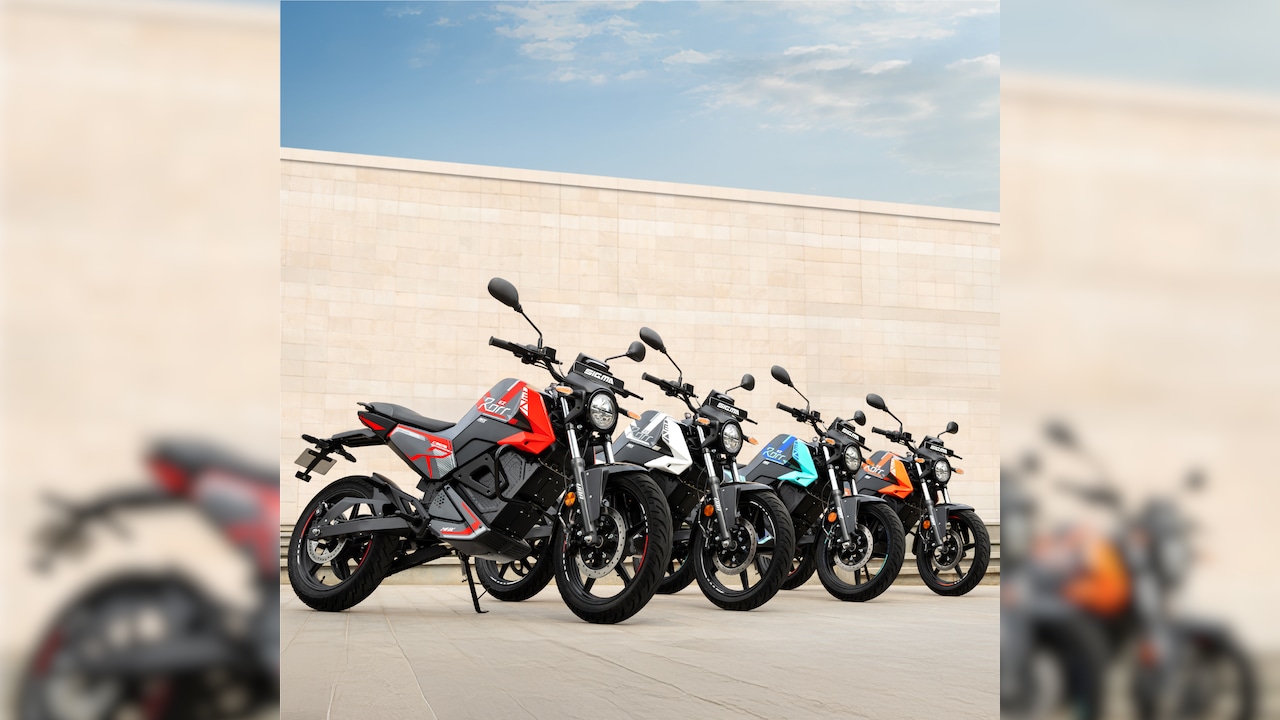
Delhi EV Policy 2.0: Apart from automakers, repair shop owners may also be hit by the policy.
Highlights
- Delhi's EV Policy 2.0 focuses on electrifying two-wheelers and auto-rickshaws
- Two-wheelers dominate Delhi roads, offering the largest environmental impact
- Policy aims to create a full ecosystem beyond incentives, including infrastructure
New Delhi: 
Delhi has made its biggest electric mobility bet yet. But it isn't on cars.
The national capital's new EV Policy 2.0 puts the spotlight on the vehicles that dominate its roads every day -- motorcycles, scooters and auto-rickshaws. The logic is simple. If Delhi wants cleaner air and lower emissions, it has to electrify the vehicles people use the most.
The policy lays out an ambitious roadmap. From phasing in electric auto-rickshaws to pushing electric two-wheelers as the default choice over the coming years, it signals that the next phase of India's EV journey will be about mass adoption, not niche buyers.
Industry leaders say the policy is a step in the right direction. But they also caution that incentives alone won't be enough. Charging stations, financing, after-sales support and consumer confidence will determine whether the policy rollout succeeds.
Why Are Two-Wheelers At The Centre Of Delhi's EV Strategy?
The answer lies in the numbers.
Two-wheelers account for the largest share of vehicles on Delhi's roads. Every day, millions of commuters depend on motorcycles and scooters for work, education and daily travel. Electrifying this segment can therefore deliver a far bigger environmental impact than focusing only on passenger cars.
According to Madhumita Agrawal, Founder & CEO of Oben Electric, motorcycles represent "the backbone of personal mobility" and offer the biggest opportunity to accelerate electrification at scale.
She said Delhi's EV Policy 2.0 creates a clear roadmap by combining consumer incentives, charging infrastructure expansion and long-term ecosystem investments. According to her, such policy certainty gives both buyers and manufacturers the confidence to invest in electric mobility.
Agrawal added that the industry's responsibility now extends beyond making electric motorcycles. Manufacturers must build products that can genuinely replace petrol bikes on performance, safety, reliability and overall ownership experience.
Delhi's EV Push Could Prove Disruptive For Many
In China, when the government wanted people to switch to electric vehicles, it made number plates for combustion engine vehicles extremely expensive. Most people could not afford them. As a result, Chinese citizens shifted to EVs. The policy was rolled out province by province. Today, Beijing's roads are far quieter and air quality has improved compared to a decade ago.
India, for obvious reasons, cannot enforce such strict measures. However, Delhi's EV policy rollout could be equally disruptive (if not more) as its impact will not be uniform across players. Major two-wheeler makers will have to step up and compete with EV-focused companies that have been building electric scooters since their inception.
While large companies like Honda, Bajaj, Hero and TVS now have EV line-ups, most of their earnings still come from petrol vehicles. It is also harder for large corporations to quickly adapt and change direction compared to smaller firms. Speaking on this, Naveen Gupta, Founder & CEO of Trev Mobility, said, "The policy is limited to Delhi, so the financial impact, if any, will not be dramatic. Besides, they all have investments in EVs. For instance, Hero has a significant investment in Ather."
Apart from automakers, repair shop owners may also be hit by Delhi's EV push. Their livelihood largely depends on servicing combustion engines. When asked if they can seamlessly shift to EV repairs, Gupta said, "They can still work on braking and suspension, but not on engines. EV systems are like a black box and very different from combustion engines. It may be uncomfortable initially, but people will have to adapt."
He added, "Overall, Delhi's new EV policy is a positive step. People in Delhi-NCR deserve better air quality, and this policy moves in that direction. China faced a similar challenge and has managed to control pollution over time."
Delhi's Policy About More Than Just Selling EVs
For many in the industry, Delhi's latest policy marks a shift in thinking. Instead of merely encouraging people to buy electric vehicles, it attempts to build an ecosystem where EVs become the default mode of transport.
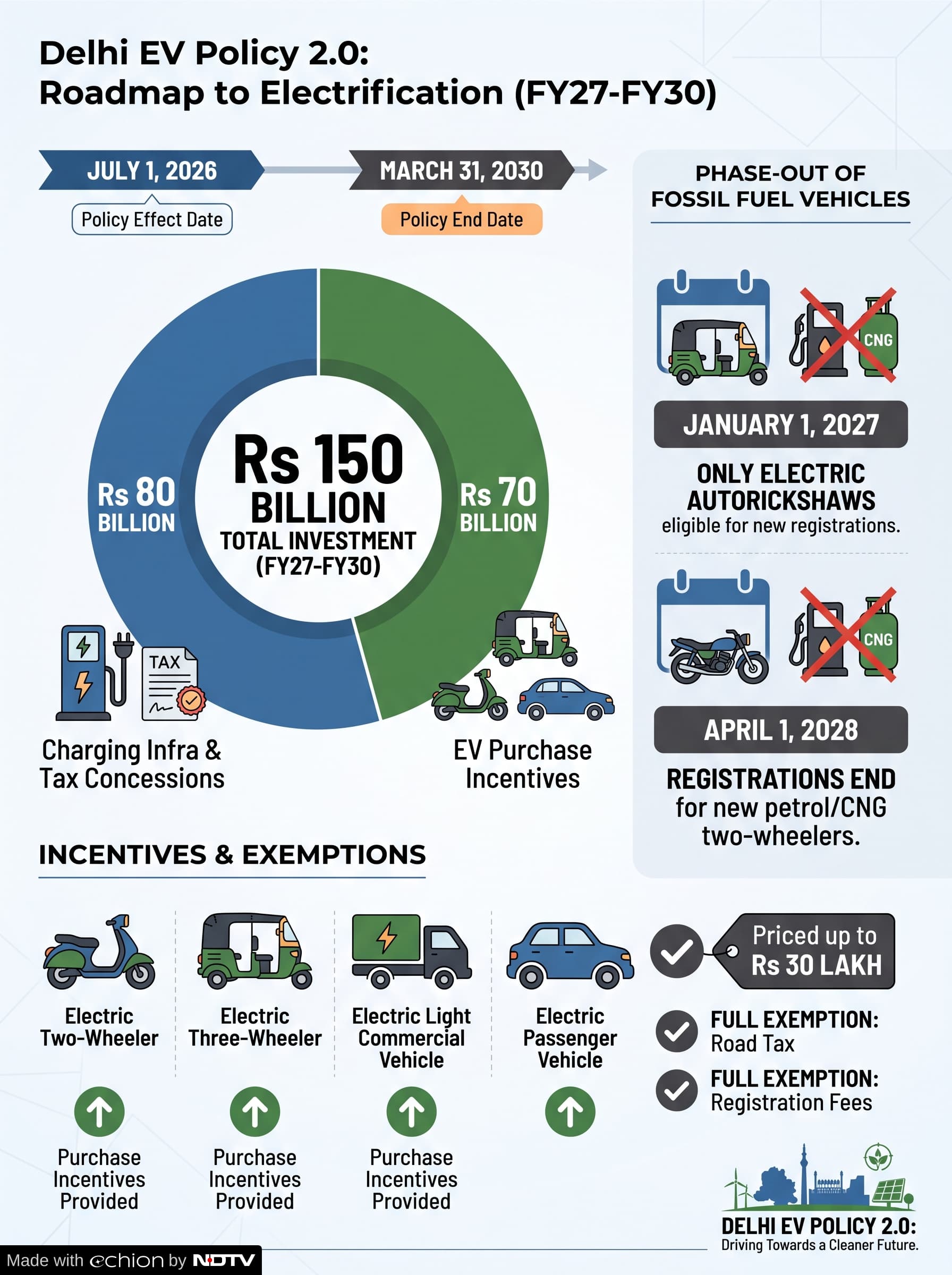
Hari Krishna, Founder & CEO of Green Drive Mobility, said the phased transition towards registering only electric auto-rickshaws from 2027 and electric two-wheelers from 2028 provides much-needed policy clarity.
He also pointed to the proposed investment of Rs 15,000 crore over the next four years as evidence of Delhi's long-term commitment to electric mobility.
However, Krishna stressed that policy announcements must be matched by execution. He said expanding charging infrastructure, improving financing options, strengthening after-sales service and ensuring smooth implementation will be critical to building consumer confidence and helping businesses scale.
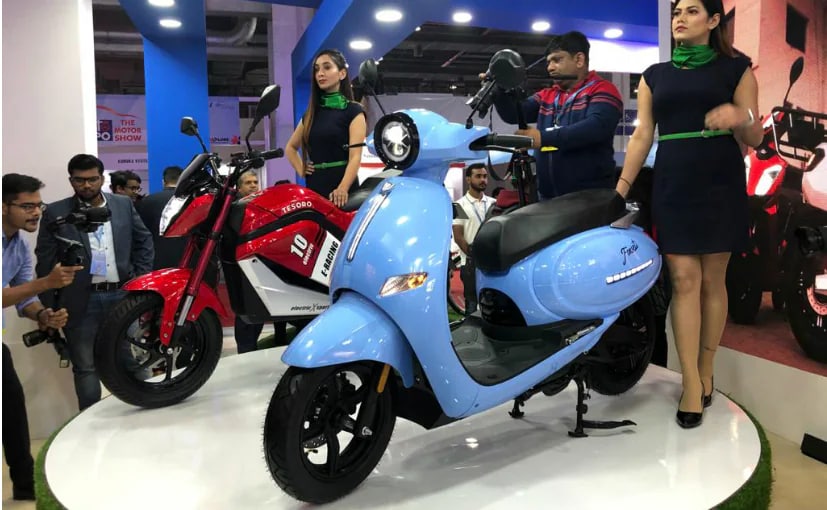
Major 2-wheeler companies like Honda, Bajaj, Hero and TVS already have EV line-ups.
Vimal Singh SV, Founder & CEO, ReadyAssist, told NDTV, "While policy support and incentives will drive faster EV adoption, the real differentiator will be the ownership experience. Consumers need confidence that help is always within reach, whether it is roadside assistance, charging support, specialised EV servicing, or access to trained technicians. As the EV ecosystem matures, building a robust service and support network will be just as important as expanding vehicle adoption."
Shared Mobility Could Be The Biggest Winner
The policy's impact may be felt even more strongly in commercial transport.
Ride-hailing fleets, rental operators and shared mobility companies collectively cover far more kilometres than privately owned vehicles. Electrifying these fleets can therefore reduce emissions at a much faster pace.
Naveen Gupta believes fleet electrification is one of the most significant aspects of the new framework. He said shared mobility operators play a major role in urban transportation, making them critical to improving air quality and reducing dependence on conventional fuels.
But Gupta argued that simply replacing petrol vehicles with electric ones is not enough.
The ecosystem around EVs has to evolve simultaneously. That means reliable charging infrastructure, better vehicle utilisation models, financing support, driver adoption and greater consumer trust.
He said the next phase of India's EV transition will be defined by creating mobility solutions that are reliable, convenient and experience-driven rather than merely putting more electric vehicles on the road.
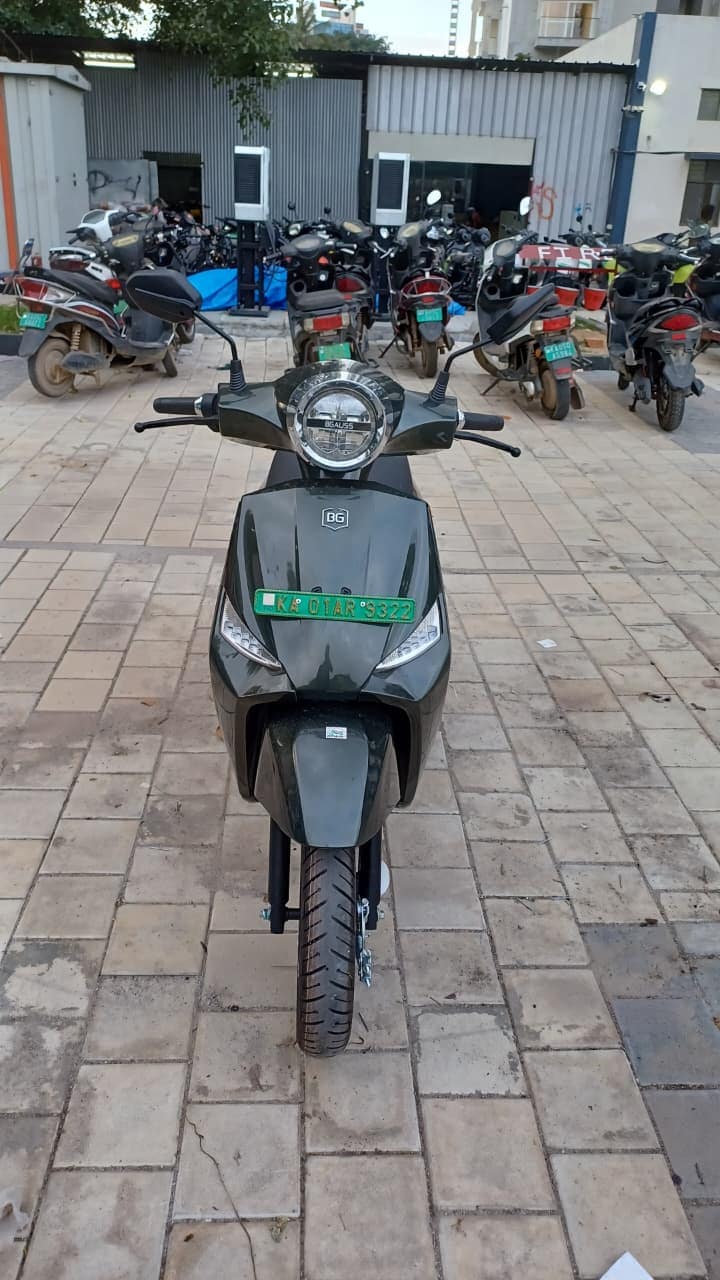
For Delhi's EV Policy 2.0 to succeed, charging stations have to expand rapidly.
Delhi's EV Policy 2.0: Clean Mobility Ambitions
If implemented effectively, the policy could reshape how millions of people commute every day while creating fresh opportunities for manufacturers, charging companies, fleet operators and financing firms.
The challenge, however, begins now.
Consumer incentives may attract early buyers, but sustained adoption will depend on whether charging networks expand fast enough, financing becomes easier, and EV ownership becomes as convenient as owning a petrol vehicle.
For Delhi, the success of the policy will not be measured only by the number of electric vehicles sold. It will depend on whether electric mobility becomes the easiest, most practical choice for everyday commuters.
"This move has the potential to significantly accelerate electric two-wheeler adoption, reduce vehicular emissions, and support the city's broader sustainability goals. With the right ecosystem in place, Delhi can set a strong benchmark for electric mobility adoption across India," said Ayush Lohia, CEO, Youdha.
Published: June 30, 2026 15:15 IST
- Reported by Subham Singh | Thursday July 02, 2026
The new policy proposes to stop the registration of new petrol-powered two-wheelers from April 2028 and restrict new registration of CNG-powered three-wheelers from the end of this year.
- Written by Rupashi Chhabra | Wednesday July 01, 2026
The invisible ozone gas in Delhi-NCR is affecting lung health. Here is what a new analysis highlights and why India needs to focus on implementing a multi-pollutant strategy.
- Extreme Heat And Severe Air Pollution Make For A Lethal Combination, Know How It Impacts Your HealthWritten by Debosmita Ghosh | Tuesday June 30, 2026
Extreme heat and severe air pollution are becoming major health concerns across the world. While both of these environmental conditions are dangerous on their own, together they can create a deadly combination.
- Written by Debosmita Ghosh | Friday June 26, 2026
One natural and effective way to improve lung capacity is through yoga. There are several yoga asanas that focus on opening the chest, improving posture, and encouraging deep, controlled breathing.
- Written by Ambika Singh Kahma | Friday June 19, 2026
NDTV Lifeline's first episode gives India a wake-up call to recognise sleep apnea as a critical public health issue


................................ Advertisement ................................
Blog | Well Done, Delhi. You've Turned Lung Sacrifice Into A Badge Of HonourSaikat Kumar Bose
Monday November 10, 2025Till some years back, Delhiites would ask angry questions to those in power about the capitals annual tryst with toxic air. This has changed. Those in the driving seat dont see the need to answer now.
Opinion | Why Indians Have Just Given Up On Air Pollution CrisisTanushree Ganguly
Friday December 20, 2024While some may argue that people in Delhi are now more aware of air pollution than they were a decade back, my rebuttal would be that awareness does not mean that people are concerned.
Opinion | You Must Outrage Over Filthy Air More Than Once A YearJyoti Pande Lavakare
Tuesday December 10, 2024Delhi welcomed us with monsoon rains and mangos. We were home. Fast forward a couple of years, in the winter of 2012, I found myself in denial about something other parents, mostly expats, were calling toxic air.
Opinion | Delhi's Air Pollution Situation Is Like A Bad MarriageNishtha Gautam
Friday November 22, 2024On a good day, such as today, the AQI reading in Delhi is 407. We are jubilant at the sickly sunshine trickling through the slightly dissipated smog. At least its not 1600.
दिवाली... पराली... सियासी जुगाली!Ashwini kumar
Monday November 18, 2024दिल्ली-एनसीआर में प्रदूषण का समाधान तो आज तक मिला नहीं. हर साल चिंतित होकर हम-आप सांसों की तकलीफ के साथ-साथ दिल और ब्लड प्रेशर के मरीज भी क्यों बनें?


