


- Home/
- Opinion | Delhi Has Every Pollution Control Policy - Except One That Works
Opinion | Delhi Has Every Pollution Control Policy - Except One That Works
| Updated: November 09, 2026 17:04 IST
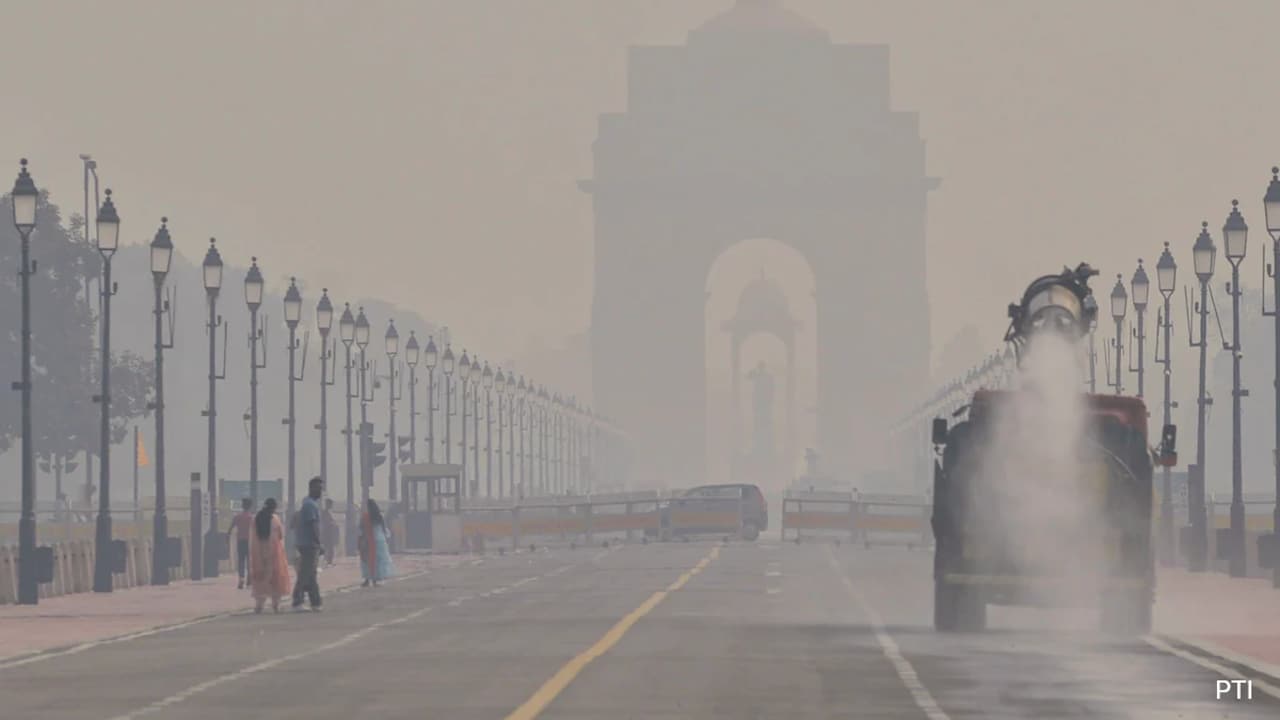
Every November, Delhi performs the same ritual. We check the AQI before stepping outdoors, children are kept indoors, masks reappear, schools consider shutting, construction is restricted, and emergency meetings are convened. Politicians blame the weather, neighbouring states, farmers, or firecrackers. And then, as the season changes, the urgency disappears.
What we rarely ask is this: after decades of policies, court orders, committees, monitoring systems, and enormous public expenditure, why are we still breathing the same toxic air?
Delhi's latest Diwali offers a telling illustration. The Supreme Court permitted certified green crackers for restricted hours on November 7 and 8. Yet, fireworks continued well beyond the permitted windows. The morning after, the city woke to a thick blanket of smoke, with several monitoring stations recording severe pollution. Green crackers may reduce certain emissions, but they are not pollution-free. The larger question is why even clearly defined court restrictions remain so difficult to enforce.
There is an uncomfortable contradiction here. We have witnessed substantial police deployment to manage peaceful citizen protests demanding clean air. Yet, why is the same urgency not consistently visible in preventing violations of environmental laws and court orders? Citizens demanding their right to breathe should not be easier to manage than those repeatedly violating pollution regulations.
But firecrackers are only the most visible part of a much larger failure.
A recent report revealed that 39 of Delhi's 87 installed Online Continuous Emission Monitoring Systems (OCEMS) were offline. Of the remaining 48 transmitting data, 26 had been flagged for exceeding permissible emission limits. Twenty-four had breached particulate matter limits. The report also highlighted suspiciously flat data patterns and other technical inconsistencies that raised questions about possible manipulation. These are not occasional festive emissions. Industrial pollution continues throughout the year. When monitoring systems are offline or unreliable, how can regulators establish compliance, let alone hold polluters accountable?
The credibility of ambient air monitoring also needs attention. On the morning after Diwali, 10 of Delhi's 59 monitoring stations were reportedly not transmitting data. This is precisely when comprehensive information is most critical. Citizens who have independently monitored neighbourhood air for years are increasingly questioning discrepancies between official readings and their own observations. Transparency cannot simply mean publishing an AQI number. It must mean accessible raw data, explanations for missing readings, investigation of anomalies, and independent verification.
We must also communicate pollution beyond colour-coded AQI categories. AQI is a useful public communication tool, but PM2.5 concentration, measured in micrograms per cubic metre, tells us how much fine particulate matter is actually present in the air. Both measurements matter. A city cannot understand the scale of exposure, assess trends, or protect public health adequately if the conversation stops at whether the air is 'poor', 'very poor', or 'severe'.
Then there is stubble burning. Every year, farmers become the convenient face of Delhi's pollution crisis. But a farmer cannot be expected to transform an entire agricultural economy overnight. The problem is rooted in procurement incentives, water-intensive paddy cultivation, narrow sowing windows, labour shortages, and the economics of residue management. Solutions require crop diversification, viable markets for alternative crops, financial incentives, and practical support for residue management. Even our measurement systems need improvement. Counting satellite-detected fires is not equivalent to measuring the land actually burnt. CAQM has acknowledged the need to validate its burnt area assessment methodology because satellite estimates and ground verification have diverged. Better measurement must lead to better policy, not more convenient statistics.
Our approach to vehicular pollution reveals the same absence of integrated thinking. We move from banning 10- and 15-year-old vehicles to BS-IV and BS-VI restrictions, and increasingly towards electric vehicles. Cleaner technology is necessary, but where is the corresponding transformation in how we manage our roads? The same traffic jams, idling vehicles, chaotic parking, and bottlenecks persist throughout the year. We need integrated public transport, better traffic management, parking regulation, road discipline, and pedestrian infrastructure. We have confused changing vehicle technology with solving the problem of mobility.
The same short-term thinking is evident elsewhere; sprinklers instead of fixing dusty roads, smog towers instead of controlling emissions at source, incinerators instead of segregating waste, and emergency construction bans instead of consistent dust control enforcement. These interventions may create the appearance of action, but they cannot substitute for addressing the causes of pollution.
This is not simply an administrative problem. It reflects decades of systemic inaction, weak institutional accountability, and entrenched vested interests. We must be willing to examine regulatory capture, corruption, and compromised enforcement wherever evidence points to them. This is not an accusation against every official; it is a demand to investigate why a system with so many laws and institutions repeatedly fails to deliver compliance.
The judiciary has an equally important role. Its directions cannot remain words on paper. In its October 29 order in Arjun Gopal v. Union of India, the Supreme Court acknowledged the recurring problem of non-implementation, directed authorities to submit detailed compliance affidavits and prosecution reports by December 14, and warned of contempt action against responsible officials for non-compliance. This is significant. Accountability must extend beyond those bursting crackers to the authorities entrusted with enforcing the law. Periodic judicial monitoring and independently verifiable compliance are essential if directions are to translate into action.
Ultimately, this is also a question of governance across departments and across the NCR airshed. Pollution does not respect municipal, state, or departmental boundaries. Yet transport, traffic police, urban development, sanitation, construction, industry, environment, and public health agencies often operate in silos. Without clear institutional responsibility, shared targets, adequate staffing, coordinated enforcement, and consequences for failure, even well-designed policies will remain ineffective.
There is also a human cost we have slowly learnt to normalise. We check an app, buy an air purifier, wear a mask, and carry on. Those who can afford to retreat indoors do so. Sanitation workers, traffic police, street vendors, construction workers, and daily-wage earners have no such option. They continue to breathe the same air, often with greater exposure and fewer protections. An environmental emergency has become an accepted feature of urban life.
Delhi does not need another November rescue operation. It needs year-round, airshed-level governance, independent monitoring, transparent data, adequately staffed enforcement agencies, prosecution of repeat offenders, and accountability for public expenditure. It needs policies that address the economics and sources of pollution, not just its symptoms. Above all, it needs institutions that work together and are answerable for the outcomes they promise.
The real test of a government is not how many meetings it holds when the skies turn grey. It is how many violations it prevents when nobody is watching.
We have spent decades learning to live with polluted air. It is time our institutions learnt to govern in a way that makes this unnecessary.
(The author is an environmentalist spearheading public movements to focus and call for action on environmental justice issues)
Disclaimer: These are the personal opinions of the author
Published: November 09, 2026 17:04 IST
also read
Just 30 km From Delhi, Air In This UP Town Is Among Most Polluted In World
Reported by Kumar KunalOpposition Claims Data Fraud As Delhi Chokes Post Diwali, BJP Blames '25 Years Of Inaction'
Edited by Debanish AchomDelhi AQI Above 1,000 And Below 500 At Same Time? Conflicting Data Explained
Edited by Debanish Achom
 Written by Varsha Vats | Monday November 09, 2026
Taking immediate steps to limit your exposure to fine particulate matter is the most effective way to protect your lungs and heart.
- Monday November 09, 2026
Every November, Delhi performs the same ritual. We check the AQI before stepping outdoors, children are kept indoors, masks reappear, schools consider shutting, construction is restricted, and emergency meetings are convened. Politicians blame the weather, neighbouring states, farmers, or firecrackers. And then, as the season changes, the urgency d...
- Written by Urvashi Prasad | Monday November 09, 2026
Lung cancer is rising in young non-smokers, especially women, linked to air pollution rather than tobacco use in India.
- Reported by Kumar Kunal | Monday November 09, 2026
Over the past 12 months, Loni recorded average PM2.5 concentrations of 112.5 micrograms per cubic metre, which is over 22 times the World Health Organisation's (WHO's) recommended annual limit of five.
- Written by Vishesh Nagar | Monday November 09, 2026
The final between Janice Tjen and Magda Linette was postponed after rain delays and smoke from Diwali firecrackers affected visibility.


................................ Advertisement ................................


Opinion | Delhi Has Every Pollution Control Policy - Except One That Works
Monday November 09, 2026Every November, Delhi performs the same ritual. We check the AQI before stepping outdoors, children are kept indoors, masks reappear, schools consider shutting, construction is restricted, and emergency meetings are convened. Politicians blame the weather, neighbouring states, farmers, or firecrackers. And then, as the season changes, the urgency d...
दीवाली की चौखट पर दिल्ली में सांसों का संकट: 30 साल की स्टडी ने हरियाली को लेकर क्या बताया?
Thursday November 05, 2026अध्ययन में हरियाली की मात्रा के साथ उसके फैलाव और आपसी जुड़ाव को भी महत्वपूर्ण पाया गया. जिन इलाकों में हरियाली ज्यादा बिखरी हुई थी, वहां सतही तापमान अधिक रहा. इसके विपरीत, बड़े और आपस में जुड़े हरित क्षेत्रों में तापमान कम पाया गया.
Opinion: Why Delhi's Smog Can't Be Fixed From SpaceDavid Fickling, Bloomberg
Monday October 19, 2026The clearest sign that Delhi is on a path to cleaner air would be a decline in the amount of paddy grown nearby, and therefore the acreage liable to be burned each year.
Don't Normalise Air Purifiers As Delhi Chokes | The Reason Why
Thursday December 11, 2025More than 90 cities in the world's top 100 polluting list are in India. With every passing year, the AQI is rising, reaching 'hazardous' levels.
Blog | Well Done, Delhi. You've Turned Lung Sacrifice Into A Badge Of HonourSaikat Kumar Bose
Monday November 10, 2025Till some years back, Delhiites would ask angry questions to those in power about the capitals annual tryst with toxic air. This has changed. Those in the driving seat dont see the need to answer now.



