


- Home/
- Delhi Sees Second-Worst December Day With Air Quality Index At 461
Delhi Sees Second-Worst December Day With Air Quality Index At 461
Press Trust of India | Updated: December 14, 2025 21:17 IST
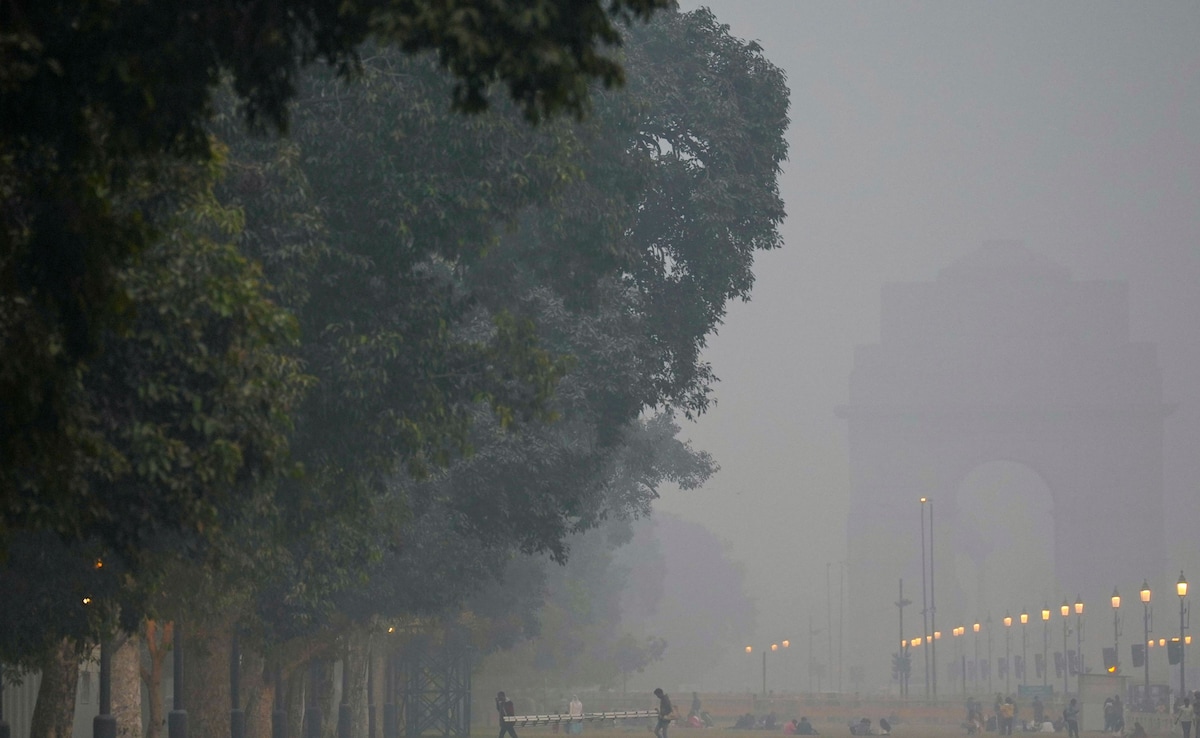
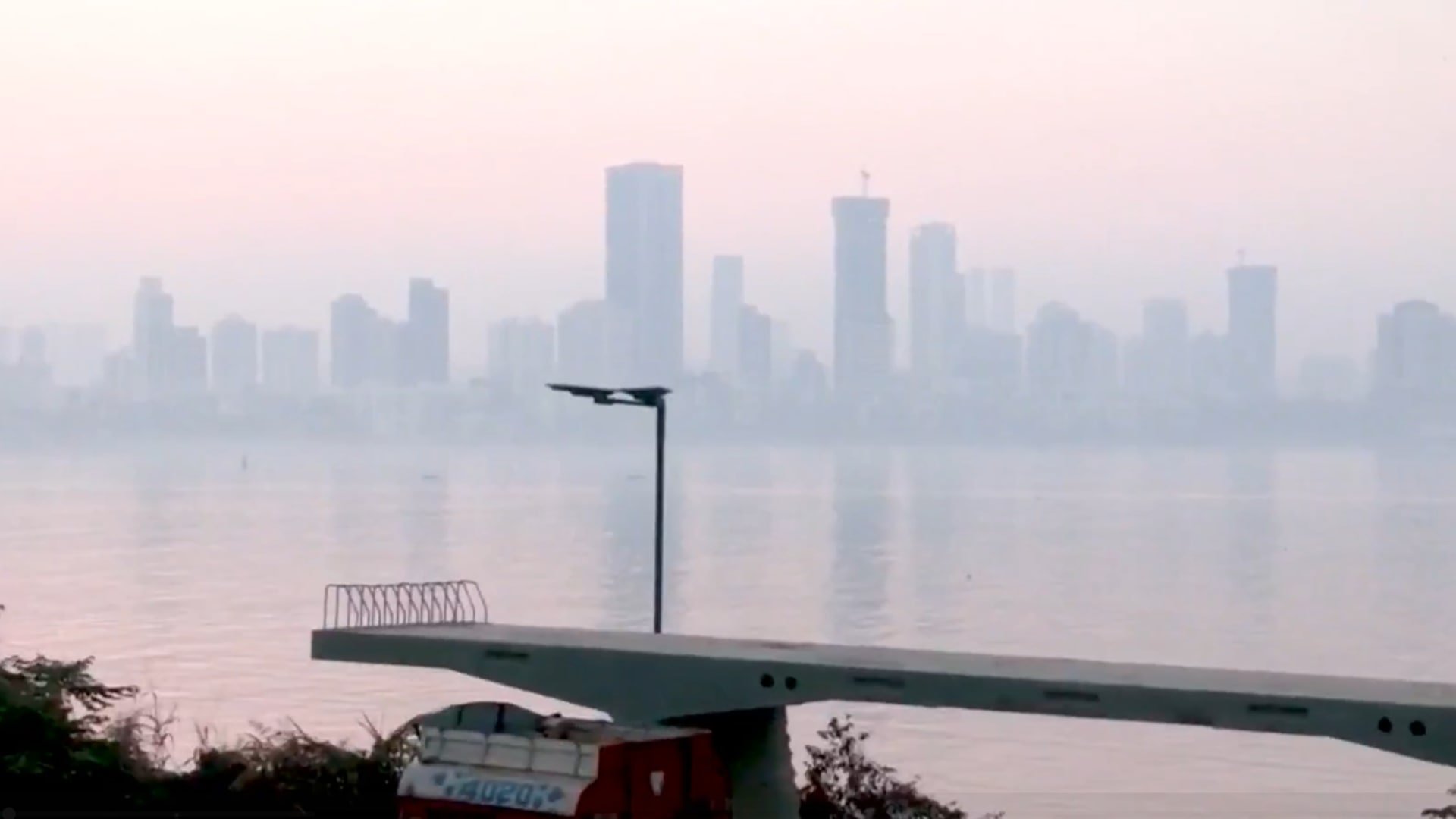
Delhi Air Pollution: Dense smog engulfed the national capital.
New Delhi:
The AQI in Delhi climbed to 461 on Sunday and marked the city's most polluted day this winter and the second-worst December air quality day on record, as weak winds and low temperatures trapped pollutants close to the surface.
The air quality monitoring station at Wazirpur recorded the maximum possible Air Quality Index (AQI) value of 500 during the day, beyond which the Central Pollution Control Board (CPCB) does not register data.
By 4 pm, 38 of Delhi's 39 active air quality monitoring stations reported 'severe' pollution levels, according to the CPCB's Sameer app, with only Shadipur remaining in the ‘very poor' category.
Rohini also touched 500 during the day, while Ashok Vihar, Jahangirpuri and Mundka recorded AQI readings of 499.
Dense smog engulfed the national capital, and the AQI rose from 432 a day earlier to set the record -- since the AQI monitoring system was introduced in April 2015.
The only instance of higher pollution in the month was on December 21, 2017, when the average AQI reached 469.
Although wind speeds are expected to increase after noon on Monday, forecasts suggest that any improvement in air quality will be gradual.
As per the Central Pollution Control Board (CPCB), an AQI between zero and 50 is considered 'good', 51 and 100 'satisfactory', 101 and 200 'moderate', 201 and 300 'poor', 301 and 400 'very poor' and 401 and 500 'severe'.
Health experts warned of serious public health risks due to the prolonged exposure to hazardous air.
Shila Yadav, a health expert, said that with the AQI hovering between 300 and 400 and even breaching the 450 mark, people should avoid outdoor walking or exercise, particularly in the morning hours.
She said while physical activity should not be stopped, it must be shifted indoors, as exposure to polluted air can cause fine particulate matter such as PM2.5 to penetrate deep into the lungs.
Yadav advised people to step out only when necessary, preferably later in the day when sunlight improves dispersion, and said wearing masks was essential for those who must go out for work.
She also cautioned against strenuous activities that involve heavy breathing and stressed the importance of a healthy diet, adequate hydration and consumption of seasonal fruits to help the body flush out toxins.
The Commission for Air Quality Management (CAQM) on Saturday invoked the strictest measures (Stage IV) under its air pollution control plan, Graded Response Action Plan (GRAP), including a ban on all construction and demolition activities in Delhi-NCR after pollution levels rose sharply amid unfavourable meteorological conditions.
The Sub-Committee on GRAP decided to invoke Stage III of the GRAP earlier on Saturday across the entire NCR with immediate effect as air quality continued to worsen.
On the weather front, the minimum temperature settled at 8.2 degrees Celsius on Sunday, 0.4 notch below the season's average, and the maximum temperature recorded at 24 degrees Celsius.
The relative humidity was 87 per cent at 5.30 pm, the India Meteorological Department said.
Environmentalist Bhavreen Khandari said the current actions are reactive, emphasising that long-term improvement depends on present systemic policy decisions.
Pointing to massive construction, she stressed the need to address resource and staffing deficiencies in government bodies.
The weather department has forecast moderate fog for Monday, with maximum and minimum temperatures expected to hover around 23 degrees Celsius and 8 degrees Celsius, respectively.
(Except for the headline, this story has not been edited by NDTV staff and is published from a syndicated feed.)
Published: December 14, 2025 21:17 IST
 Wednesday August 26, 2026
Almost the entire global population (99 per cent) breathes air containing pollutant levels exceeding the World Health Organization's air quality guidelines, with the highest exposures seen in low and middle-income countries, the researchers said.
- Reported by Reet Kaur Sahni | Friday August 07, 2026
As per the ministry, prior Environmental Clearance becomes mandatory for data centres depending on their physical footprint under Schedule 8 of the EIA Notification, 2006.
- Written by Sambhav Kumar | Thursday August 06, 2026
Keerthy Suresh's 41-hour no-sleep stretch highlights the intense demands many professionals face, but experts warn that prolonged sleep deprivation should never become routine.
- Written by Sambhav Kumar | Wednesday August 05, 2026
Preliminary evidence suggests the blood filtration treatment could reduce some microplastic particles, though findings are limited and require more study.
- Monday August 03, 2026 , New Delhi
Study reveals black crust from pollution weakens Humayuns Tomb sandstone



................................ Advertisement ................................


Blog | Well Done, Delhi. You've Turned Lung Sacrifice Into A Badge Of HonourSaikat Kumar Bose
Monday November 10, 2025Till some years back, Delhiites would ask angry questions to those in power about the capitals annual tryst with toxic air. This has changed. Those in the driving seat dont see the need to answer now.
Opinion | Why Indians Have Just Given Up On Air Pollution CrisisTanushree Ganguly
Friday December 20, 2024While some may argue that people in Delhi are now more aware of air pollution than they were a decade back, my rebuttal would be that awareness does not mean that people are concerned.
Opinion | You Must Outrage Over Filthy Air More Than Once A YearJyoti Pande Lavakare
Tuesday December 10, 2024Delhi welcomed us with monsoon rains and mangos. We were home. Fast forward a couple of years, in the winter of 2012, I found myself in denial about something other parents, mostly expats, were calling toxic air.
Opinion | Delhi's Air Pollution Situation Is Like A Bad MarriageNishtha Gautam
Friday November 22, 2024On a good day, such as today, the AQI reading in Delhi is 407. We are jubilant at the sickly sunshine trickling through the slightly dissipated smog. At least its not 1600.
दिवाली... पराली... सियासी जुगाली!Ashwini kumar
Monday November 18, 2024दिल्ली-एनसीआर में प्रदूषण का समाधान तो आज तक मिला नहीं. हर साल चिंतित होकर हम-आप सांसों की तकलीफ के साथ-साथ दिल और ब्लड प्रेशर के मरीज भी क्यों बनें?


