


- Home/
- Delhi's Severe Pollution Takes Centre Stage At COP29
Delhi's Severe Pollution Takes Centre Stage At COP29
Press Trust of India | Updated: November 19, 2024 10:57 IST

Delhi's hazardous air quality was a key focus at COP29
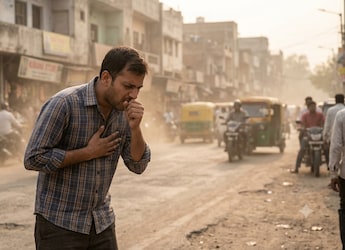
Delhi's hazardous air quality was a key focus at COP29, as experts warned about the health risks of air pollution and called for immediate global action.
Aarti Khosla, Director of Climate Trends, said that Delhi's Air Quality Index (AQI) had reached dangerous levels, with some areas recording particulate pollution above 1,000 microgram per cubic metre. "Pollution comes from many sources like black carbon, ozone, burning fossil fuels, and farm fires. We need solutions that tackle all of these," she said.
Khosla also explained that low wind speeds during the La Niña weather pattern are trapping pollutants in the air, making the situation worse. "While we discuss major global issues, millions of people's health is at risk. We must act fast," she said.
Courtney Howard, Vice-Chair of the Global Climate and Health Alliance, shared her experience from Canada, where wildfires forced the evacuation of 70 per cent of her population in 2023. "This was expensive, even for a rich country like ours. Poorer nations need financial help to deal with such disasters," she said.
Howard also criticised the lack of funds for health care, despite massive subsidies given to large corporations. "We are giving USD 1 trillion to corporations making huge profits, but we say there's no money for health care. We must fund health to protect everyone," she said.
Enkhun Byambadorj, Co-Founder of Breathe Mongolia, highlighted the serious air pollution problem in his country. "Children in cities have 40 per cent lower lung capacity compared to those in rural areas. The air we breathe is a choice we make as a society, but it's hurting our children's future," he said.
(Except for the headline, this story has not been edited by NDTV staff and is published from a syndicated feed.)
Published: November 19, 2024 10:57 IST
 Written by Shreya Goswami | Thursday October 01, 2026
October's changing temperatures, dry air, dust and rising pollution can leave Delhi-NCR residents with a scratchy throat, cough or hoarseness.
- Written by Dr Shivanshu Raj Goyal | Thursday October 01, 2026
Since most people spend a lot of time indoors, the air quality indoors becomes essential in relation to respiratory health. Considering different environments, air inside can contain dirt, allergens and several pollutants from multiple sources.
- Wednesday September 30, 2026 , France
In a new analysis covering the first eight months of 2026, the European Union's Copernicus Climate Atmosphere Monitoring Service (CAMS) highlighted the close relationship between climate change and air pollution.
- Reported by Reet Kaur Sahni | Tuesday September 29, 2026
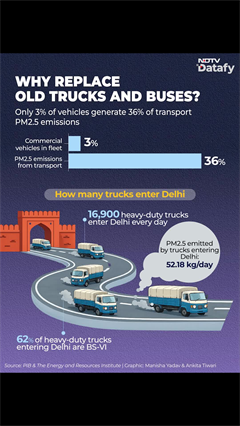
Starting November 1, petrol and diesel vehicles registered outside Delhi and not meeting BS-VI standards will be banned from entering the city, though CNG and electric vehicles are exempt.
- Written by Dr Sabine Kapasi | Tuesday September 29, 2026
Air pollution is often discussed as a cause of respiratory disease, but its effects extend to the heart and blood vessels.




................................ Advertisement ................................


Blog | Well Done, Delhi. You've Turned Lung Sacrifice Into A Badge Of HonourSaikat Kumar Bose
Monday November 10, 2025Till some years back, Delhiites would ask angry questions to those in power about the capitals annual tryst with toxic air. This has changed. Those in the driving seat dont see the need to answer now.
Opinion | Why Indians Have Just Given Up On Air Pollution CrisisTanushree Ganguly
Friday December 20, 2024While some may argue that people in Delhi are now more aware of air pollution than they were a decade back, my rebuttal would be that awareness does not mean that people are concerned.
Opinion | You Must Outrage Over Filthy Air More Than Once A YearJyoti Pande Lavakare
Tuesday December 10, 2024Delhi welcomed us with monsoon rains and mangos. We were home. Fast forward a couple of years, in the winter of 2012, I found myself in denial about something other parents, mostly expats, were calling toxic air.
Opinion | Delhi's Air Pollution Situation Is Like A Bad MarriageNishtha Gautam
Friday November 22, 2024On a good day, such as today, the AQI reading in Delhi is 407. We are jubilant at the sickly sunshine trickling through the slightly dissipated smog. At least its not 1600.
दिवाली... पराली... सियासी जुगाली!Ashwini kumar
Monday November 18, 2024दिल्ली-एनसीआर में प्रदूषण का समाधान तो आज तक मिला नहीं. हर साल चिंतित होकर हम-आप सांसों की तकलीफ के साथ-साथ दिल और ब्लड प्रेशर के मरीज भी क्यों बनें?


