


- Home/
- GRAP IV In Action In Delhi: What Is Open And Closed? Check Full List
GRAP IV In Action In Delhi: What Is Open And Closed? Check Full List
Edited by Abhinav Singh | Updated: December 17, 2025 10:48 IST
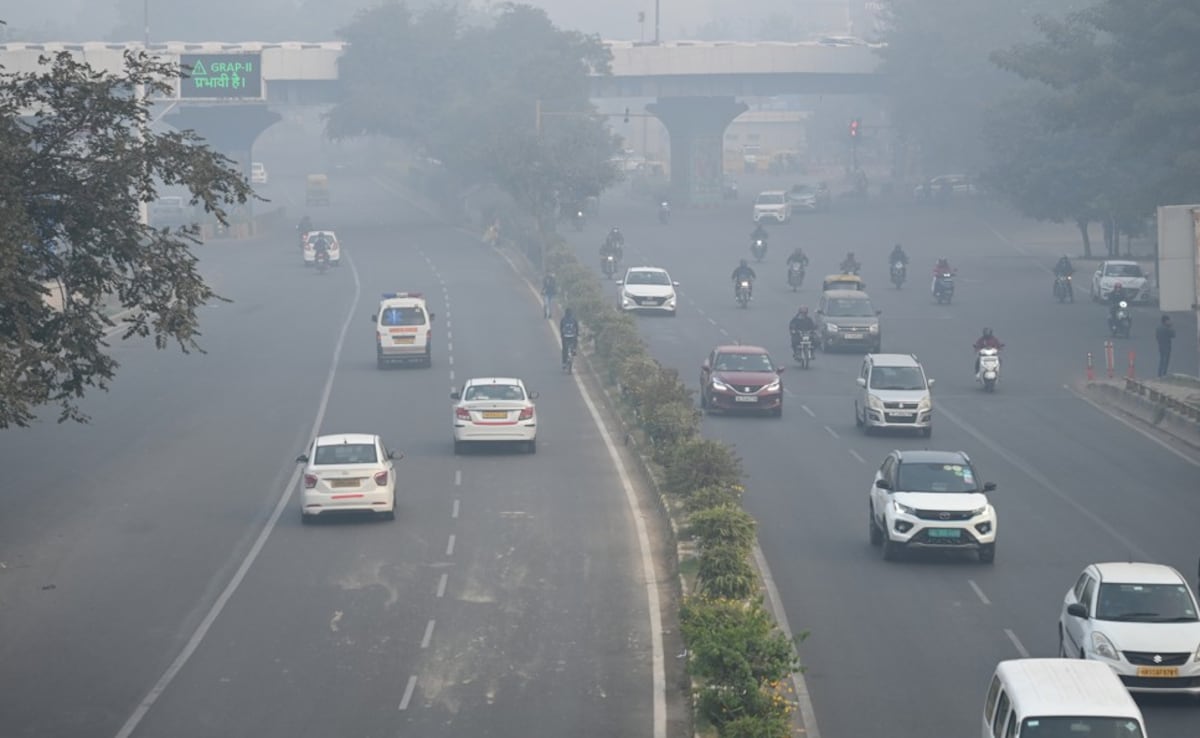
Delhi's air quality index (AQI) has been in the 'severe' category.
Highlights
- Stage IV of Delhi's GRAP implemented due to severe winter pollution in Delhi-NCR region
- Schools closed for nursery to class 5; hybrid classes for classes 6 to 9 and 11
- Only BS-VI vehicles allowed; non-BS-VI banned from entering Delhi from Dec 18
Delhi GRAP IV: To combat hazardous winter pollution in Delhi-NCR, the Commission for Air Quality Management (CAQM) has implemented Stage IV of the Graded Response Action Plan (GRAP). This seasonal spike is driven by stagnant weather patterns, vehicle emissions, firecrackers, and stubble burning.
According to the Central Pollution Control Board (CPCB) air quality standards, an AQI of 0–50 is 'good,' while levels escalating from 'poor' (201–300) to 'severe' (401–500) trigger these emergency interventions. GRAP IV was implemented last week after the national capital's AQI consistently crossed the severe category.
Here Are All The Things Open And Closed In Delhi During This Period:
What Is Closed Or Restricted?
Schools: On Monday, the Delhi government announced that physical classes were discontinued for students from nursery to class 5. Until now, the Delhi government gave a choice to parents whether they want to send their children to school or attend classes online. Now, there is no such choice. For classes 6 to 9 and 11, schools are operating in hybrid mode with students allowed to attend classes online.
Offices: Government and private offices have been mandated to operate with only 50 per cent staff on-site, requiring the rest to work from home, as part of the emergency measures. The government also urged all private entities to adopt flexible working hours, if possible.
Vehicle Ban: Only Bharat Stage-VI (BS) compliant vehicles will be allowed to enter Delhi starting tomorrow (Dec 18) as the national capital battles a severe pollution crisis. Delhi Environment Minister Manjinder Singh Sirsa announced the move, which means all non-BS-6 vehicles will be effectively banned from entering the city.
No Fuel For Vehicles: Vehicles without a valid Pollution Under Control (PUC) certificate will not be allowed to refuel at petrol pumps in the national capital from December 18. Cameras installed at petrol pumps will automatically identify vehicles without valid PUC certificates.
Construction Activities: All construction and demolition activities are banned, including linear public projects such as highways, roads, flyovers, power transmission lines, pipelines and telecom works, which are otherwise allowed in lower stages.
Tandoors Banned: Restaurants and eateries have been instructed by the Delhi Pollution Control Committee (DPCC) to discontinue the use of coal and firewood tandoors. The directive states that establishments may only run electric or gas-operated tandoors, and compliance must be enforced without exception.
Also Read | Techie Loses Job At 35, Shares 'Scary' Reality: 'No Savings, Two Kids'
What is Allowed?
Public Transport: Delhi residents have been urged to opt for public modes of transport, such as the Metro and DTC buses, for commuting.
Permitted Vehicles: All LNG/ CNG / Electric/ BS-VI Diesel trucks are permitted to enter Delhi.
Airport and Railways: Barring severe environmental conditions like thick smog and low visibility, all railway stations and airports are fully functional throughout the country.
Emergency Services: Public and private health establishments, fire services, prisons, electricity, water, sanitation and related municipal services, disaster management and related services are fully functional.
Other Exemptions: Forest and environment departments/agencies engaged in air pollution control, monitoring, and enforcement activities (like teams deployed to curb biomass burning, dust control and GRAP measures), and other essential/emergency services are also exempted from GRAP IV directives.
Published: December 17, 2025 10:47 IST
also read
 AFP | Monday November 09, 2026 , India
Toxic air in parts of India's capital New Delhi soared to more than 58 times the World Health Organization's recommended daily limit Monday.
- Edited by Debanish Achom | Monday November 09, 2026 , New Delhi
Real-time figures from the CPCB's Sameer mobile application and station-level monitoring indicated widespread pockets of extreme toxicity across the national capital
- Reported by Kumar Kunal | Monday November 09, 2026 , New Delhi
Sudden discontinuation of online data is not surprising for those who follow the website on Diwali evening regularly.
- Written by Vaishnavi Mishra | Monday November 09, 2026
The Commission for Air Quality Management had already invoked Stage III of the Graded Response Action Plan across Delhi-NCR on Friday.
- Reported by Reet Kaur Sahni | Monday November 09, 2026 , New Delhi
In the run-up to Diwali, the Commission for Air Quality Management (CAQM) enforced Stage 3 of the Graded Response Action Plan (GRAP) across Delhi-NCR.


................................ Advertisement ................................



दीवाली की चौखट पर दिल्ली में सांसों का संकट: 30 साल की स्टडी ने हरियाली को लेकर क्या बताया?
Thursday November 05, 2026अध्ययन में हरियाली की मात्रा के साथ उसके फैलाव और आपसी जुड़ाव को भी महत्वपूर्ण पाया गया. जिन इलाकों में हरियाली ज्यादा बिखरी हुई थी, वहां सतही तापमान अधिक रहा. इसके विपरीत, बड़े और आपस में जुड़े हरित क्षेत्रों में तापमान कम पाया गया.
Opinion: Why Delhi's Smog Can't Be Fixed From SpaceDavid Fickling, Bloomberg
Monday October 19, 2026The clearest sign that Delhi is on a path to cleaner air would be a decline in the amount of paddy grown nearby, and therefore the acreage liable to be burned each year.
Don't Normalise Air Purifiers As Delhi Chokes | The Reason Why
Thursday December 11, 2025More than 90 cities in the world's top 100 polluting list are in India. With every passing year, the AQI is rising, reaching 'hazardous' levels.
Blog | Well Done, Delhi. You've Turned Lung Sacrifice Into A Badge Of HonourSaikat Kumar Bose
Monday November 10, 2025Till some years back, Delhiites would ask angry questions to those in power about the capitals annual tryst with toxic air. This has changed. Those in the driving seat dont see the need to answer now.
Opinion | Why Indians Have Just Given Up On Air Pollution CrisisTanushree Ganguly
Friday December 20, 2024While some may argue that people in Delhi are now more aware of air pollution than they were a decade back, my rebuttal would be that awareness does not mean that people are concerned.




