


- Home/
- Fix System, Clean Air Will Follow: Kiran Bedi's 5 Reforms To Tack Pollution
Fix System, Clean Air Will Follow: Kiran Bedi's 5 Reforms To Tack Pollution
Press Trust of India | Updated: December 03, 2025 10:01 IST
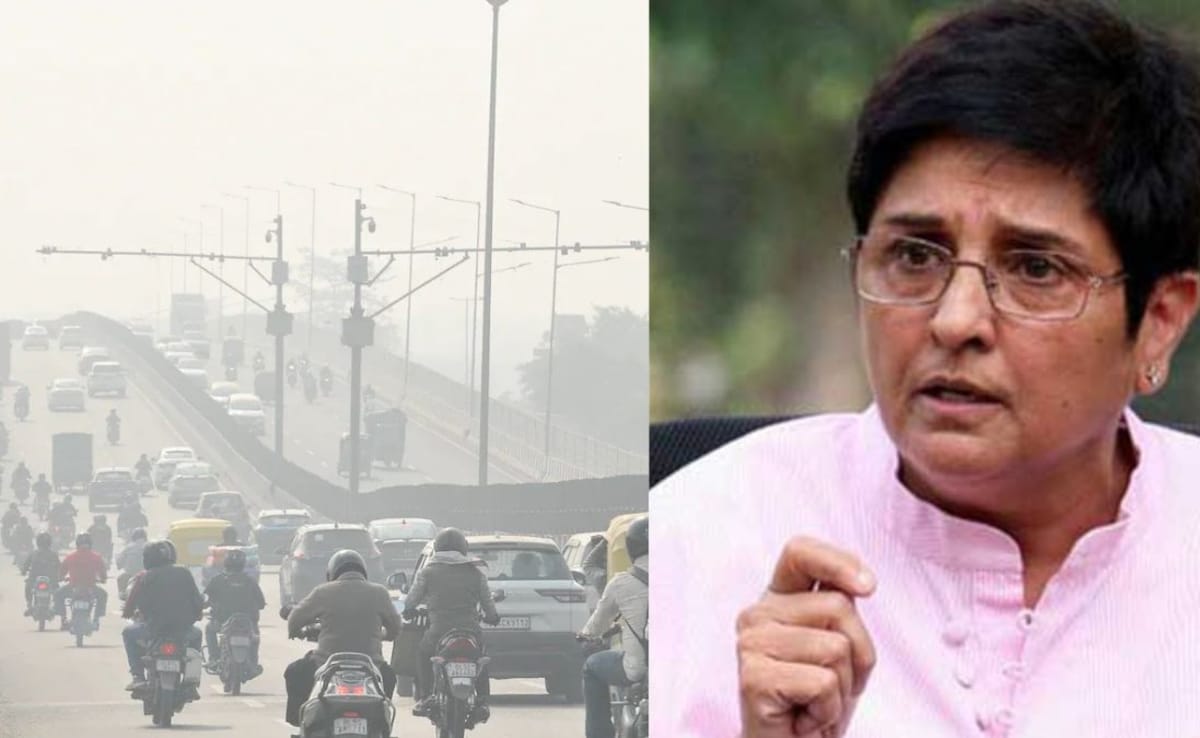
She said the Commission for Air Quality Management (CAQM) needs "leadership with real authority".
New Delhi:
Former IPS officer and former Puducherry Lieutenant Governor Kiran Bedi on Wednesday called for basic but major institutional reforms to tackle India's air pollution, saying the crisis "won't respond to half-measures" and requires institutions with "authority, clarity and staying power".
In a blog titled "Five Reforms India Needs for Clean Air", Bedi said the country must move from firefighting to systemic change.
"Fix the system and the air will follow. India deserves institutions strong enough to deliver the most basic public good: breathable air," Bedi said.
She said the Commission for Air Quality Management (CAQM) needs "leadership with real authority".
Bedi said that the commission is led by a retired official who, while experienced, lack the administrative leverage and political heft essential to move ministries and influence budgets.
She wrote that "a serving secretary-level officer can coordinate across states, bargain with chief secretaries and push execution at the speed the crisis requires".
Bedi urged integration of CAQM into the Environment Ministry, saying the body currently operates beside the ministry rather than within it.
"To have impact, it must become MoEFCC's operational engine, working daily with agriculture, power, transport, industry and urban development," she wrote, and added that clean air must be "a core function of governance, not a peripheral report-writing body".
She also proposed creation of a five-year "Clean Air Mission Fund" to provide stable, multi-year financing for monitoring networks, enforcement teams, district clean-air cells, scientific modelling and public-health communication.
"Stable financing is what turns vision into outcomes," Bedi wrote.
On enforcement, she said a regulator needs its own team and asked that the CAQM build its own enforcement wing.
"A regulator without its own inspectorate is a regulator in name only," she wrote, noting the commission currently depends on overstretched state agencies and should have a district-level force empowered to inspect, penalise and shut down violators.
Bedi called for a "National Council of Environment Ministers", chaired by MoEFCC, to align standards, coordinate fuel and transport reforms, manage cross-border pollution and ensure shared accountability across states.
She also urged a stronger digital backbone, proposing a "National Clean Air Data Centre" that is AI-enabled, real-time and integrating industrial, vehicular, agricultural, meteorological and satellite data" to enable predictive governance rather than reactive responses.
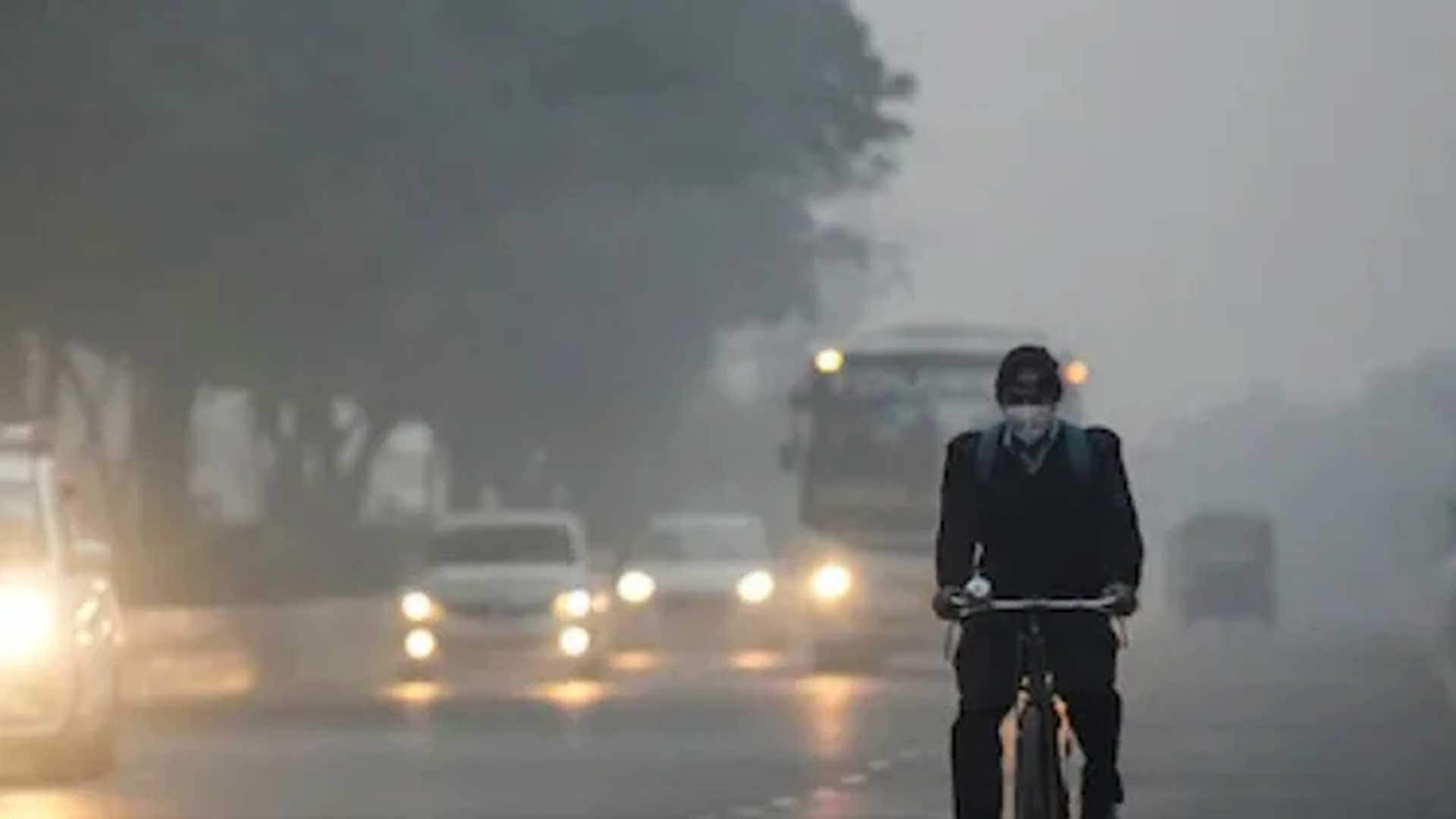
Delhi-NCR grapples with high air pollution year-round and the problem worsens in winter when unfavourable meteorological conditions, combined with increasing vehicular emissions, paddy-straw burning, firecrackers and other local pollution sources, make the air quality hazardous.
Delhi is equally a victim of its own pollution generated year round.
On December 1, the Supreme Court directed the central government and CAQM to revisit their action plan for tackling air pollution in the Delhi-NCR region.
The court stressed that air pollution cannot be viewed as a seasonal or short-term problem and asked the government to evaluate whether the measures taken so far have been "effective, ineffective or only partially effective".
Experts, environmental groups and petitioners have long argued that the Centre's air pollution control plan called GRAP and other emergency curbs cannot substitute for a long-term structural plan that addresses the underlying causes of Delhi's chronic pollution.
(Except for the headline, this story has not been edited by NDTV staff and is published from a syndicated feed.)
Published: December 03, 2025 09:13 IST
 Written by Shreya Goswami | Thursday October 01, 2026
October's changing temperatures, dry air, dust and rising pollution can leave Delhi-NCR residents with a scratchy throat, cough or hoarseness.
- Written by Dr Shivanshu Raj Goyal | Thursday October 01, 2026
Since most people spend a lot of time indoors, the air quality indoors becomes essential in relation to respiratory health. Considering different environments, air inside can contain dirt, allergens and several pollutants from multiple sources.
- Wednesday September 30, 2026 , France
In a new analysis covering the first eight months of 2026, the European Union's Copernicus Climate Atmosphere Monitoring Service (CAMS) highlighted the close relationship between climate change and air pollution.
- Reported by Reet Kaur Sahni | Tuesday September 29, 2026
Starting November 1, petrol and diesel vehicles registered outside Delhi and not meeting BS-VI standards will be banned from entering the city, though CNG and electric vehicles are exempt.
- Written by Dr Sabine Kapasi | Tuesday September 29, 2026
Air pollution is often discussed as a cause of respiratory disease, but its effects extend to the heart and blood vessels.


................................ Advertisement ................................

Blog | Well Done, Delhi. You've Turned Lung Sacrifice Into A Badge Of HonourSaikat Kumar Bose
Monday November 10, 2025Till some years back, Delhiites would ask angry questions to those in power about the capitals annual tryst with toxic air. This has changed. Those in the driving seat dont see the need to answer now.
Opinion | Why Indians Have Just Given Up On Air Pollution CrisisTanushree Ganguly
Friday December 20, 2024While some may argue that people in Delhi are now more aware of air pollution than they were a decade back, my rebuttal would be that awareness does not mean that people are concerned.
Opinion | You Must Outrage Over Filthy Air More Than Once A YearJyoti Pande Lavakare
Tuesday December 10, 2024Delhi welcomed us with monsoon rains and mangos. We were home. Fast forward a couple of years, in the winter of 2012, I found myself in denial about something other parents, mostly expats, were calling toxic air.
Opinion | Delhi's Air Pollution Situation Is Like A Bad MarriageNishtha Gautam
Friday November 22, 2024On a good day, such as today, the AQI reading in Delhi is 407. We are jubilant at the sickly sunshine trickling through the slightly dissipated smog. At least its not 1600.
दिवाली... पराली... सियासी जुगाली!Ashwini kumar
Monday November 18, 2024दिल्ली-एनसीआर में प्रदूषण का समाधान तो आज तक मिला नहीं. हर साल चिंतित होकर हम-आप सांसों की तकलीफ के साथ-साथ दिल और ब्लड प्रेशर के मरीज भी क्यों बनें?


