


- Home/
- Men Record Higher Lung Deposition Of Air Pollutants In Delhi, Says Study
Men Record Higher Lung Deposition Of Air Pollutants In Delhi, Says Study
Press Trust of India | Updated: December 19, 2025 11:41 IST
New Delhi:
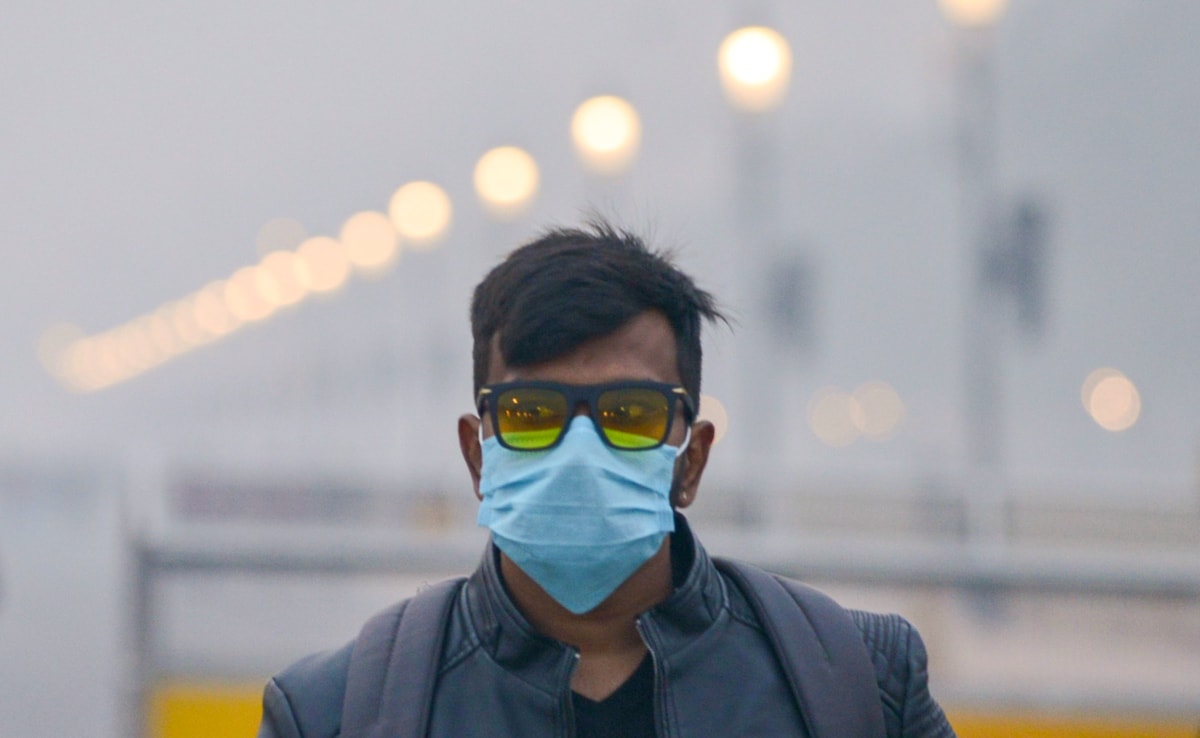
Sitting in vehicles stuck in traffic or walking along crowded footpaths as they make their way back home from work, men in Delhi are absorbing more of the city's polluted air into their lungs than women, according to a study conducted over five years.
Titled ‘Respiratory deposition of particulate matter in Delhi: A five-year assessment of exposure patterns and health risks', the study was conducted by researchers from the Netaji Subhas University of Technology, Delhi, along with researchers from a Noida-based environmental consultancy.
The team analysed data from 39 air quality monitoring stations across Delhi between 2019 and 2023.
The findings point to a clear difference between men and women in terms of lung deposition of air pollutants.
While sitting, men recorded about 1.4 times higher PM2.5 lung deposition and about 1.34 times higher PM10 lung deposition than women.
While walking, men inhale more pollution, with lung deposition about 1.2 times higher than women for both PM2.5 and PM10, according to the study.
Researchers said this difference is linked to higher breathing volume and airflow in men, which leads to more polluted air entering the lungs.
Using an internationally accepted scientific model, the researchers calculated how much particulate matter actually enters and settles in different parts of the lungs, rather than only measuring the pollution present in the air.
The study said this dose-based approach highlights the urgent need for immediate policy changes to reduce everyday exposure, especially for commuters and outdoor workers.
After comparing men and women, the researchers assessed how Delhi residents fare against the safety limits.
The study found that lung deposition of fine particulate matter among Delhi residents was about 10 times higher than what would be expected under India's air quality standards, and nearly 40 times higher than the levels estimated under the World Health Organization (WHO) guidelines.
The National Ambient Air Quality Standards prescribe a daily PM2.5 limit of 60 micrograms per cubic metre and a PM10 limit of 100 micrograms per cubic metre.
The WHO's daily guidelines are stricter, at 15 micrograms per cubic metre for PM2.5 and 45 micrograms per cubic metre for PM10.
The study said lung exposure in Delhi far exceeds doses corresponding to both benchmarks.
The study compared activity levels and found that walking resulted in two to three times higher particulate matter deposition in the lungs than sitting, across both men and women.
Among all the groups analysed, men while walking recorded the highest lung deposition, followed by women walking, men sitting, and women sitting.
Based on this, the researchers said pedestrians and street-level workers face the greatest risk, as they combine physical activity with prolonged outdoor exposure.
Fine particles such as PM2.5, which are small enough to penetrate deep into the lungs, were identified as the most harmful.
Exposure was found to rise further during the evening commute. The study showed that lung deposition during evening travel hours was 39 per cent higher for PM2.5 and 23 per cent higher for PM10 as compared to the morning.
This was attributed to higher traffic emissions and weather conditions that trap pollution close to the ground in the evening.
Short-term pollution spikes were also observed during Diwali and other festivals. On Diwali nights, particulate matter deposition in the lungs was found to nearly double compared to pre-festival days, with elevated exposure continuing for several days after the festival.
Area-wise analysis showed that industrial areas recorded the highest lung deposition, followed by commercial zones.
Central Delhi areas with higher green cover recorded comparatively lower exposure, the study found.
During the Covid-19 lockdown in 2020, lung deposition of particulate matter fell sharply by around 60 to 70 per cent across several areas. This showed that large-scale reductions in traffic and industrial activity can quickly reduce health risks, the researchers said.
(Except for the headline, this story has not been edited by NDTV staff and is published from a syndicated feed.)
Published: December 18, 2025 16:04 IST
also read
Great Pacific Garbage Patch Fuels Microplastics, Contributing To Climate Change
Edited by Srishti Singh SisodiaChildhood Asthma On The Rise: Causes, Triggers, And Management Strategies
Written by Debosmita GhoshAsthma Day: Indoor Triggers You Didn't Know Are Worsening Your Symptoms
Written by Dr Sharad Joshi
 Edited by Srishti Singh Sisodia | Thursday May 07, 2026
As plastic tumbles against itself, it fragments, and a new study shows those fragments don't stay in the water.
- Written by Debosmita Ghosh | Tuesday May 05, 2026
Childhood asthma arises from a mix of genetic predisposition and environmental factors that inflame and narrow airways in children.
- Written by Dr Sharad Joshi | Tuesday May 05, 2026
Most people tend to look outside for reasons behind their worsening asthma symptoms, blaming factors like pollution, pollen, or changes in the weather.
- Friday May 01, 2026 , New Delhi
Climate change poses an escalating threat to brain health, with extreme heat, rapid humidity shifts and exposure to dust and sandstorms increasing the risk of having a stroke, according to a scientific statement by experts from the World Stroke Organ
- Written by Sambhav Kumar | Tuesday April 28, 2026
Seasonal allergies occur when the immune system reacts to airborne substances like pollen, causing symptoms such as sneezing and itchy eyes.



................................ Advertisement ................................




Blog | Well Done, Delhi. You've Turned Lung Sacrifice Into A Badge Of HonourSaikat Kumar Bose
Monday November 10, 2025Till some years back, Delhiites would ask angry questions to those in power about the capitals annual tryst with toxic air. This has changed. Those in the driving seat dont see the need to answer now.
Opinion | Why Indians Have Just Given Up On Air Pollution CrisisTanushree Ganguly
Friday December 20, 2024While some may argue that people in Delhi are now more aware of air pollution than they were a decade back, my rebuttal would be that awareness does not mean that people are concerned.
Opinion | You Must Outrage Over Filthy Air More Than Once A YearJyoti Pande Lavakare
Tuesday December 10, 2024Delhi welcomed us with monsoon rains and mangos. We were home. Fast forward a couple of years, in the winter of 2012, I found myself in denial about something other parents, mostly expats, were calling toxic air.
Opinion | Delhi's Air Pollution Situation Is Like A Bad MarriageNishtha Gautam
Friday November 22, 2024On a good day, such as today, the AQI reading in Delhi is 407. We are jubilant at the sickly sunshine trickling through the slightly dissipated smog. At least its not 1600.
दिवाली... पराली... सियासी जुगाली!Ashwini kumar
Monday November 18, 2024दिल्ली-एनसीआर में प्रदूषण का समाधान तो आज तक मिला नहीं. हर साल चिंतित होकर हम-आप सांसों की तकलीफ के साथ-साथ दिल और ब्लड प्रेशर के मरीज भी क्यों बनें?


