


- Home/
- Mumbai Shrouded In Smog, Civic Body's Plan To Tackle Air Pollution Challenge
Mumbai Shrouded In Smog, Civic Body's Plan To Tackle Air Pollution Challenge
Reported by Radhika Ramaswamy | Updated: November 27, 2025 20:39 IST

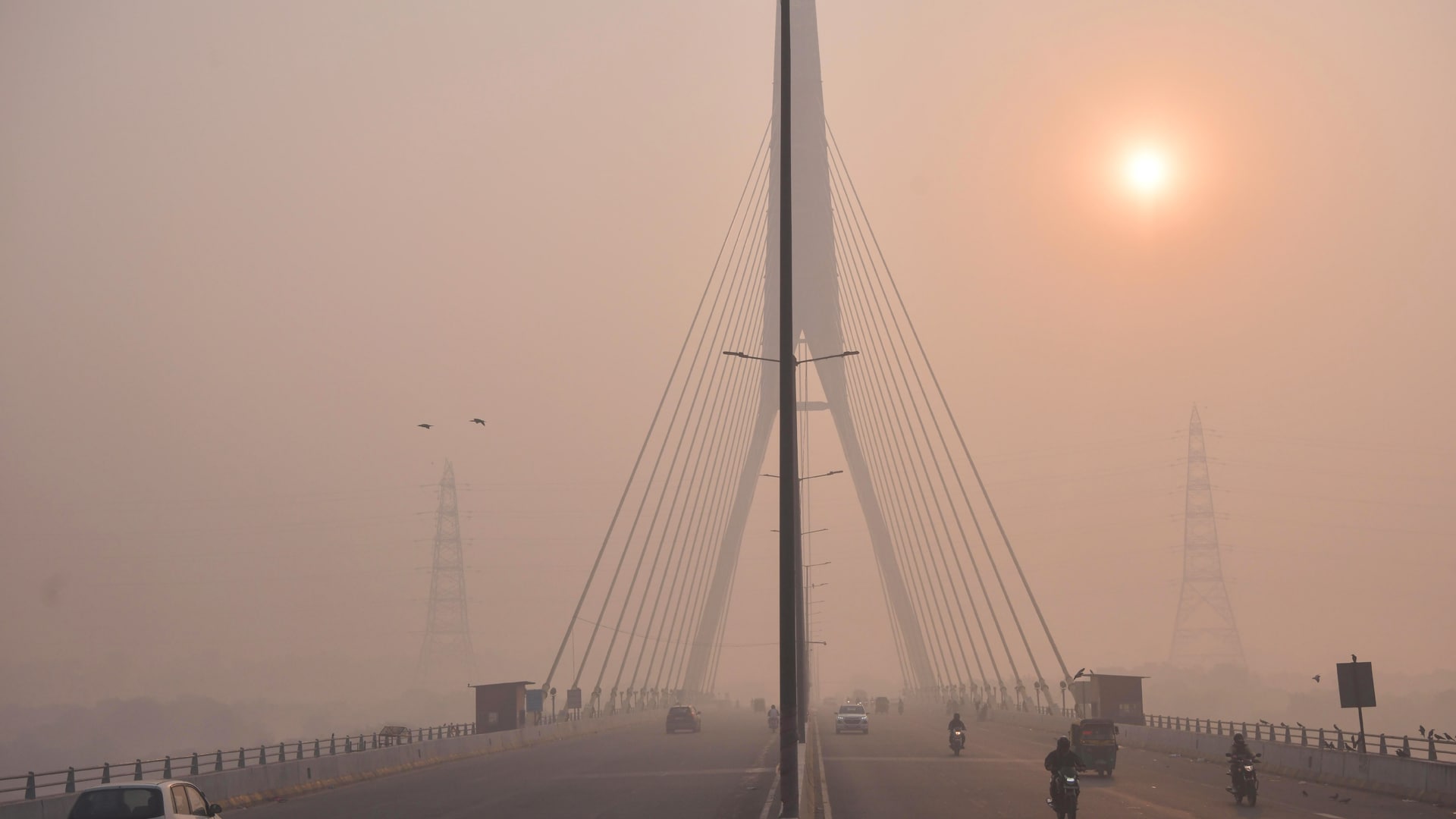
A train runs on a railway track amid thick smog at Bandra, in Mumbai on Thursday.
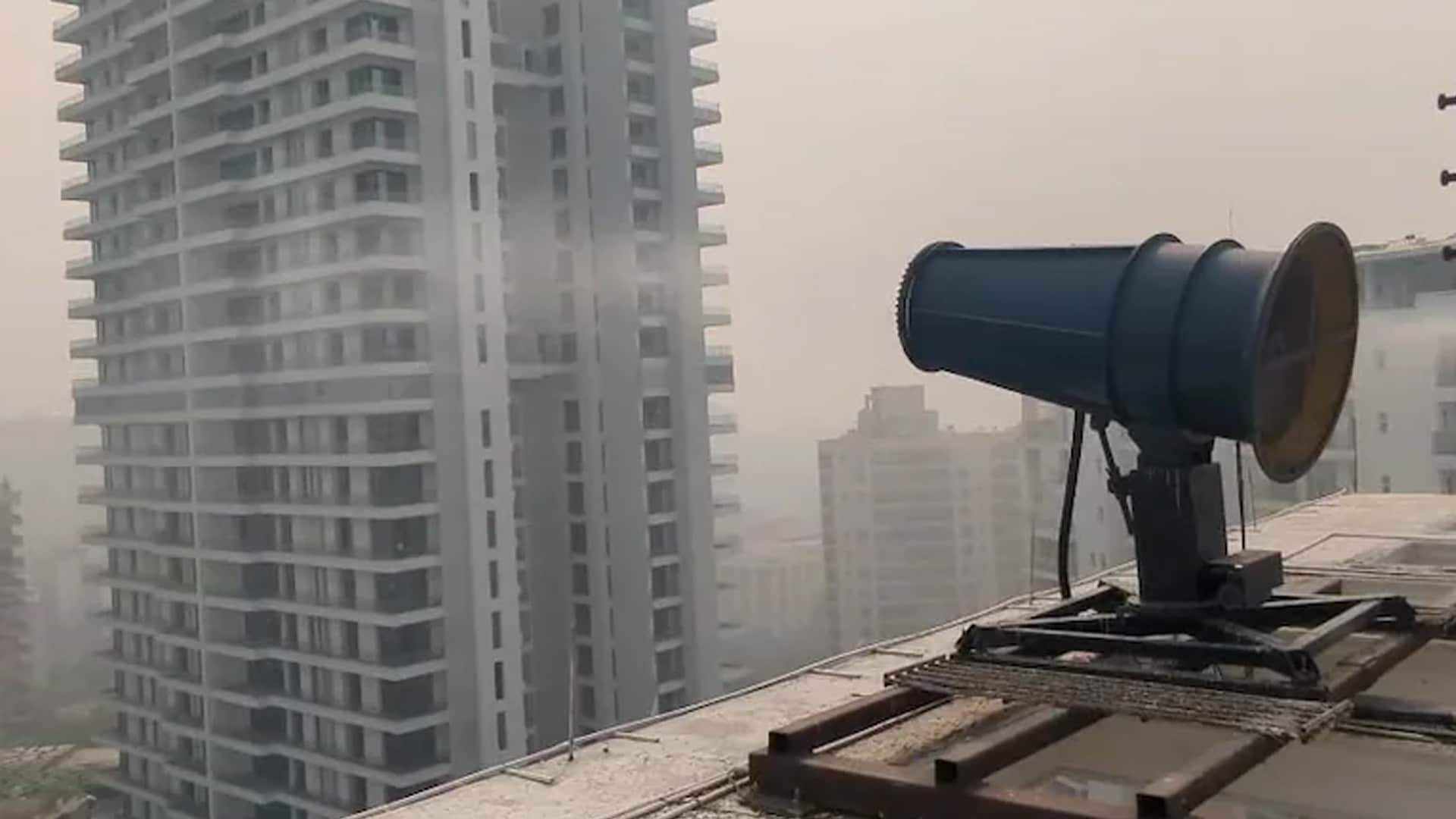
Mumbai woke up to yet another smoggy morning today, with its air quality continuing to be in the poor category. To tackle the challenge, the city's civic body, Brihanmumbai Municipal Corporation (BMC), held a review meeting to assess progress on the installation of sensor-based air-pollution monitors at construction sites across the city. According to BMC officials, a total of 662 pollution-sensor units have been installed so far, with 251 more installations still underway.
Out of the installed units, 400 devices have been integrated with the central dashboard developed by CEEW. Of these, 283 sensors are active, while 117 remain inactive; the inactivity was attributed to challenges such as lack of electricity or Wi-Fi at sites, delays in fabrication work, or non-receipt of required technical data from project proponents.
The civic body has decided to compile a list of all construction sites with inactive pollution indicators and share it with the Environment and Climate Change Department. The department has been instructed to carry out physical site inspections, verify vendor submissions, and issue compliance notices in line with orders from the Bombay High Court, wherever non-compliance is found. The BMC has also warned construction firms that action will be taken against any sites found violating pollution-monitoring norms.
This comes even as the Bombay High Court dismissed claims that the recent deterioration in air quality in Mumbai was due to ash from a volcanic eruption in Ethiopia, stating that the city's poor air quality levels predate the ash cloud.
A bench comprising Chief Justice Shree Chandrashekhar and Gautam Ankhad was hearing a batch of public-interest petitions filed in 2023 related to long-standing air pollution in the city. Senior counsels appearing for the petitioners noted that the city's Air Quality Index (AQI) this month has frequently exceeded 300.
During the hearing, additional government pleader Jyoti Chavan argued that the ash plume from the eruption of the Hayli Gubbi volcano in Ethiopia had worsened air quality. The bench, however, rejected this explanation. "Even before this eruption, if one stepped out, visibility was poor beyond 500 metres," the court observed.
The court expressed concern over persistently high Air Quality Index (AQI) levels, especially over the past month, when several monitoring stations in Mumbai recorded AQI scores well above 300, repeatedly crossing the "hazardous" threshold.
Questioning the effectiveness of previous pollution-control efforts, the bench directed civic and state authorities to adopt concrete preventive measures. It stressed that what Mumbai needs is not sporadic fixes but a robust, enforceable mechanism to curb emissions from construction activities, industries, open burning, and other chronic sources.
The court questioned what effective measures have been taken so far to combat pollution, pointing out that previous efforts have failed to bring any discernible improvement. It urged authorities to adopt concrete steps, noting that while the situation in Delhi has worsened sharply, Mumbai has long grappled with poor air quality.
The matter has been posted for further hearing on Friday, with the court asking the government to submit a plan of action to improve air quality in the city.
Published: November 27, 2025 20:39 IST
 Written by Debosmita Ghosh | Thursday November 12, 2026
Even people who do not have asthma can experience respiratory symptoms when pollution levels are high. In some cases, repeated or prolonged exposure may also affect lung function and increase the risk of respiratory and other health problems.
- Written by Vishesh Nagar | Thursday November 12, 2026
The ranking was led by Bulandshahr, followed by Aligarh and Faridkot, as AQI readings crossed 600 in all 10 cities.
- Written by Debosmita Ghosh | Thursday November 12, 2026
There is no single recovery time for everyone. It depends on how much pollution a person was exposed to and whether the exposure was brief or repeated.
- Written by Vishesh Nagar | Thursday November 12, 2026
The national capital's AQI was above 600, significantly higher than the readings recorded in Mumbai, Kolkata, Chennai, Hyderabad and Bengaluru.
- Written by Sneha Mordani | Thursday November 12, 2026
Worse than Delhi, Loni is the world's most polluted city. Beyond Diwali, illegal kilns, dust, and toxic waste make every breath a daily battle.

................................ Advertisement ................................
Opinion | Delhi Has Every Pollution Control Policy - Except One That Works
Monday November 09, 2026Every November, Delhi performs the same ritual. We check the AQI before stepping outdoors, children are kept indoors, masks reappear, schools consider shutting, construction is restricted, and emergency meetings are convened. Politicians blame the weather, neighbouring states, farmers, or firecrackers. And then, as the season changes, the urgency d...
दीवाली की चौखट पर दिल्ली में सांसों का संकट: 30 साल की स्टडी ने हरियाली को लेकर क्या बताया?
Thursday November 05, 2026अध्ययन में हरियाली की मात्रा के साथ उसके फैलाव और आपसी जुड़ाव को भी महत्वपूर्ण पाया गया. जिन इलाकों में हरियाली ज्यादा बिखरी हुई थी, वहां सतही तापमान अधिक रहा. इसके विपरीत, बड़े और आपस में जुड़े हरित क्षेत्रों में तापमान कम पाया गया.
Opinion: Why Delhi's Smog Can't Be Fixed From SpaceDavid Fickling, Bloomberg
Monday October 19, 2026The clearest sign that Delhi is on a path to cleaner air would be a decline in the amount of paddy grown nearby, and therefore the acreage liable to be burned each year.
Don't Normalise Air Purifiers As Delhi Chokes | The Reason Why
Thursday December 11, 2025More than 90 cities in the world's top 100 polluting list are in India. With every passing year, the AQI is rising, reaching 'hazardous' levels.
Blog | Well Done, Delhi. You've Turned Lung Sacrifice Into A Badge Of HonourSaikat Kumar Bose
Monday November 10, 2025Till some years back, Delhiites would ask angry questions to those in power about the capitals annual tryst with toxic air. This has changed. Those in the driving seat dont see the need to answer now.



