


- Home/
- No Farm Fires In December, Delhi Pollution Still Increased Significantly
No Farm Fires In December, Delhi Pollution Still Increased Significantly
Indo-Asian News Service | Updated: December 31, 2025 18:39 IST
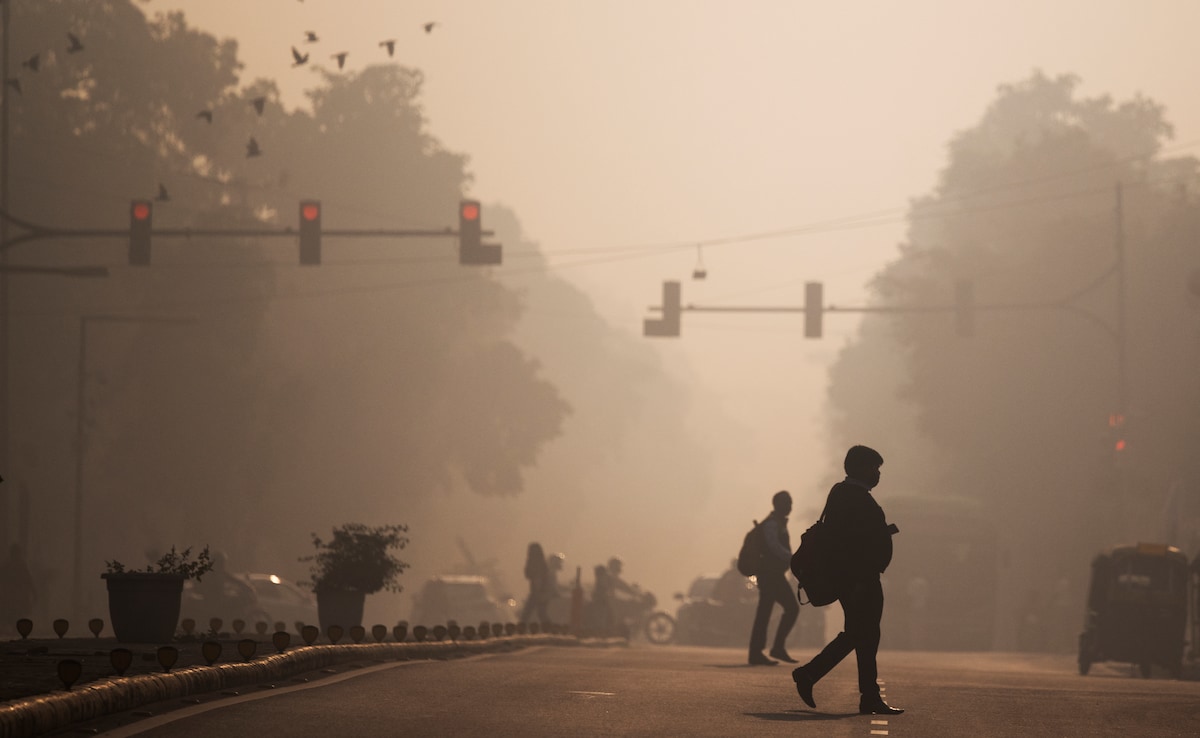
The persistence of pollution beyond farm fires is strongly evident in the analysis.
New Delhi:
A new analysis by the Centre for Science and Environment (CSE) on Wednesday shed light on the shifting air quality trends in Delhi and the National Capital Region (NCR).
The study compares the "early winter" months of October and November, a period heavily influenced by farm fires, with the "post-farm fire" period of December, when the impact of stubble burning becomes negligible.
This post-stubble phase has experienced intense, widespread smog across NCR -- more severe than the stubble burning period. The persistence of pollution beyond farm fires is strongly evident in the analysis.
"These findings reveal a concerning reality: Delhi's winter pollution does not dissipate once stubble burning ends; instead, it intensifies. Despite the farm-fire contribution to PM2.5 levels dropping sharply in December, the average PM2.5 levels have actually increased. The stark contrast between declining fire influence and rising pollution levels indicates dominance of local and regional sources -- vehicles, industry, waste burning, solid fuels for domestic cooking and heating," said Anumita Roychowdhury, Executive Director-Research and Advocacy at CSE.
"While managing farm fires is important, air quality goals cannot be met without aggressive, year-round action against urban and regional emission sources for a zero emissions transition. The smog is sustained by a combination of local emissions, regional inflows, and secondary aerosol formation, requiring coordinated airshed-level action alongside aggressive control of local sources."
"The build-up of pollution was felt across various urban centres in the NCR. While some towns saw marginal declines, most cities recorded a sharp rise in PM2.5 levels: Noida: 38 per cent increase; Ballabhgarh: 32 per cent increase; Baghpat: 31 per cent increase and Delhi: 29 per cent increase. This regional spike is driven by local emission sources and exacerbated by stagnant winter meteorology, which prevents the dispersion of pollutants," said Sharanjeet Kaur, deputy programme manager, Urban Lab, CSE.
"Moreover, data from the Decision Support System (DSS) for December 1-15 highlights the complexity of the problem. During this period, local sources within Delhi accounted for only about 35 per cent of the total PM2.5. The remaining 65 per cent originated from neighbouring NCR districts and regions further away. Within Delhi's local contribution, vehicles are the dominant primary source, accounting for nearly half of all local emissions," said Shambhavi Shukla, programme manager, Clean Air programme at CSE.
This analysis is based on the real-time data available from the current working air quality monitoring stations in Delhi-NCR.
The estimate of the contribution of farm stubble fire smoke to Delhi's air quality is sourced from the Ministry of Earth Science's System of Air Quality and Weather Forecasting and Research (SAFAR).
Real-time source contribution and chemical composition data are taken from the Decision Support System (DSS) developed by IITM.
(Except for the headline, this story has not been edited by NDTV staff and is published from a syndicated feed.)
Published: December 31, 2025 18:39 IST
 Written by Shreya Goswami | Thursday October 01, 2026
October's changing temperatures, dry air, dust and rising pollution can leave Delhi-NCR residents with a scratchy throat, cough or hoarseness.
- Written by Dr Shivanshu Raj Goyal | Thursday October 01, 2026
Since most people spend a lot of time indoors, the air quality indoors becomes essential in relation to respiratory health. Considering different environments, air inside can contain dirt, allergens and several pollutants from multiple sources.
- Wednesday September 30, 2026 , France
In a new analysis covering the first eight months of 2026, the European Union's Copernicus Climate Atmosphere Monitoring Service (CAMS) highlighted the close relationship between climate change and air pollution.
- Reported by Reet Kaur Sahni | Tuesday September 29, 2026
Starting November 1, petrol and diesel vehicles registered outside Delhi and not meeting BS-VI standards will be banned from entering the city, though CNG and electric vehicles are exempt.
- Written by Dr Sabine Kapasi | Tuesday September 29, 2026
Air pollution is often discussed as a cause of respiratory disease, but its effects extend to the heart and blood vessels.



................................ Advertisement ................................



Blog | Well Done, Delhi. You've Turned Lung Sacrifice Into A Badge Of HonourSaikat Kumar Bose
Monday November 10, 2025Till some years back, Delhiites would ask angry questions to those in power about the capitals annual tryst with toxic air. This has changed. Those in the driving seat dont see the need to answer now.
Opinion | Why Indians Have Just Given Up On Air Pollution CrisisTanushree Ganguly
Friday December 20, 2024While some may argue that people in Delhi are now more aware of air pollution than they were a decade back, my rebuttal would be that awareness does not mean that people are concerned.
Opinion | You Must Outrage Over Filthy Air More Than Once A YearJyoti Pande Lavakare
Tuesday December 10, 2024Delhi welcomed us with monsoon rains and mangos. We were home. Fast forward a couple of years, in the winter of 2012, I found myself in denial about something other parents, mostly expats, were calling toxic air.
Opinion | Delhi's Air Pollution Situation Is Like A Bad MarriageNishtha Gautam
Friday November 22, 2024On a good day, such as today, the AQI reading in Delhi is 407. We are jubilant at the sickly sunshine trickling through the slightly dissipated smog. At least its not 1600.
दिवाली... पराली... सियासी जुगाली!Ashwini kumar
Monday November 18, 2024दिल्ली-एनसीआर में प्रदूषण का समाधान तो आज तक मिला नहीं. हर साल चिंतित होकर हम-आप सांसों की तकलीफ के साथ-साथ दिल और ब्लड प्रेशर के मरीज भी क्यों बनें?


