


- Home/
- Parliament Set For Key Discussion On Pollution As Delhi Air Quality Plummets
Parliament Set For Key Discussion On Pollution As Delhi Air Quality Plummets
Reported by Shreya Ghosh | Updated: December 17, 2025 20:21 IST
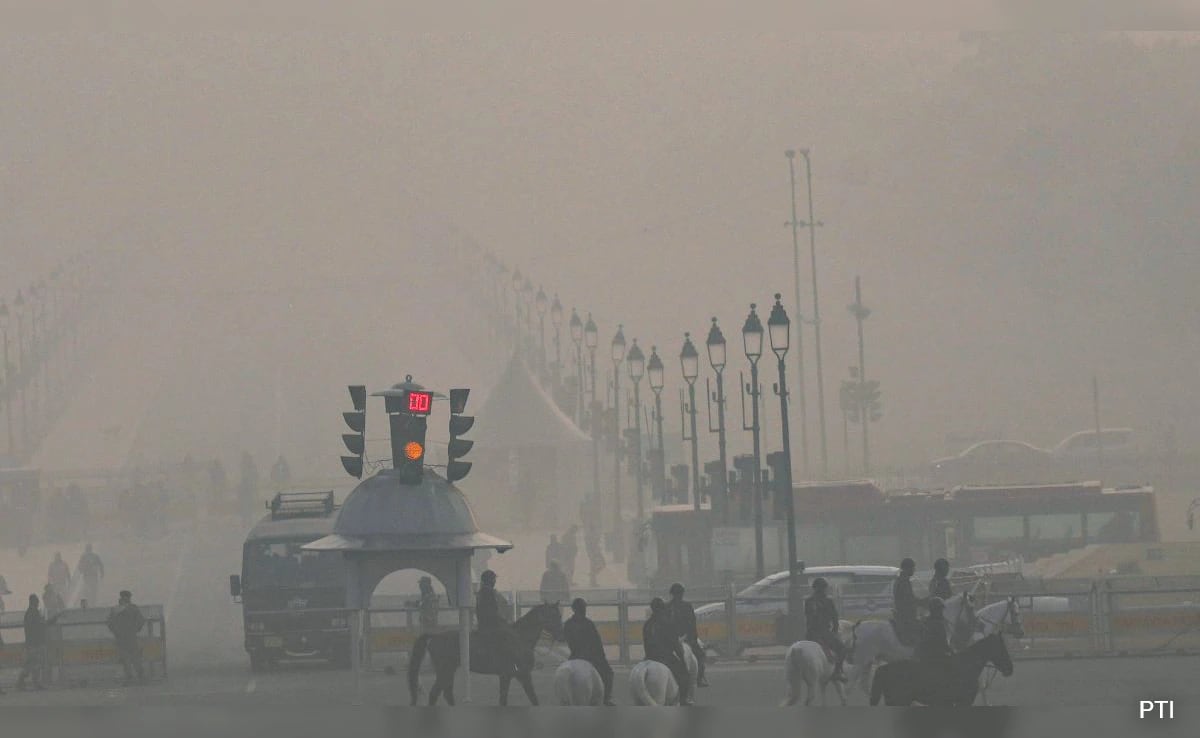
A long-awaited discussion on air pollution is likely to take place during the Parliament's Winter Session proceedings on Thursday. Union Environment minister Bhupender Yadav is set to speak on the matter.
The debate stems from a demand raised by Leader of the Opposition in Lok Sabha Rahul Gandhi on December 12, who described the crisis as a "national health emergency" affecting millions, particularly children who are developing lung diseases.
Gandhi urged a bipartisan approach, emphasising that air pollution should not be treated as an ideological issue. "Most of our major cities are living under a blanket of poisonous air," he said, calling for a structured discussion focused on future solutions rather than blame. Parliamentary Affairs Minister Kiren Rijiju responded positively, assuring the House that the government is ready for the debate and would work with the Business Advisory Committee to allocate time.
Yadav on Wednesday chaired the third in a series of high-level review meetings focused on air pollution mitigation in Delhi-NCR. The session specifically examined the action plans of municipal bodies in Delhi and Sonipat.
Yadav stressed a "practical approach" to identifying pollution sources and developing implementable solutions, prioritising action against major polluters while avoiding undue inconvenience to the public. He advocated a 'Whole-of-Government' and 'Whole-of-Society' strategy to improve the National Capital's global image.
Key directives issued during the meeting include:
- Prohibiting construction and demolition (C&D) activities without proper waste handling infrastructure within a 10 km radius, and banning demolitions during the peak pollution season (October-December).
- Launching immediate inspection drives across NCR with strict enforcement, but emphasising motivation and persuasion over excessive fines.
- Removing encroachments and illegal parking from 62 identified traffic hotspots in Delhi, and planning signal-free corridors during peak hours (9-11 am and 4-7 pm), restricting vehicles below BS-IV standards.
- Enhancing last-mile public transport connectivity, especially for high-rise residents, and exploring waste-to-energy expansion at legacy dump sites like Okhla, Bhalswa, and Ghazipur, targeting full liquidation by 2026.
- Promoting public participation through awareness campaigns, CSR-funded heating for workers to curb biomass burning, and greening open spaces.
The meeting was attended by senior officials from the Ministry, Commission for Air Quality Management (CAQM), Central Pollution Control Board (CPCB), Delhi Pollution Control Committee (DPCC), and municipal commissioners.
Published: December 17, 2025 20:21 IST
 Reported by Reet Kaur Sahni | Tuesday September 29, 2026
Starting November 1, petrol and diesel vehicles registered outside Delhi and not meeting BS-VI standards will be banned from entering the city, though CNG and electric vehicles are exempt.
- Written by Dr Sabine Kapasi | Tuesday September 29, 2026
Air pollution is often discussed as a cause of respiratory disease, but its effects extend to the heart and blood vessels.
- Edited by Debanish Achom | Monday September 28, 2026 , New Delhi
The steps include doubling parking charges, a complete ban on construction and demolition activity and work-from-home for government and private employees
- Written by Debosmita Ghosh | Friday September 25, 2026
Air purifiers are mainly designed to clean pollutants that are suspended in the air. A HEPA filter can trap very small particles and may help reduce indoor levels of particulate matter, dust, pollen and some other airborne particles. However, the performance of a purifier depends on several factors.
- Written by Dr Ankit Kumar Sinha | Friday September 25, 2026
To improve respiratory health, it is important to minimise exposure to polluted air, enhance indoor ventilation, adhere to workplace safety regulations, and promote physical activity.


................................ Advertisement ................................

Blog | Well Done, Delhi. You've Turned Lung Sacrifice Into A Badge Of HonourSaikat Kumar Bose
Monday November 10, 2025Till some years back, Delhiites would ask angry questions to those in power about the capitals annual tryst with toxic air. This has changed. Those in the driving seat dont see the need to answer now.
Opinion | Why Indians Have Just Given Up On Air Pollution CrisisTanushree Ganguly
Friday December 20, 2024While some may argue that people in Delhi are now more aware of air pollution than they were a decade back, my rebuttal would be that awareness does not mean that people are concerned.
Opinion | You Must Outrage Over Filthy Air More Than Once A YearJyoti Pande Lavakare
Tuesday December 10, 2024Delhi welcomed us with monsoon rains and mangos. We were home. Fast forward a couple of years, in the winter of 2012, I found myself in denial about something other parents, mostly expats, were calling toxic air.
Opinion | Delhi's Air Pollution Situation Is Like A Bad MarriageNishtha Gautam
Friday November 22, 2024On a good day, such as today, the AQI reading in Delhi is 407. We are jubilant at the sickly sunshine trickling through the slightly dissipated smog. At least its not 1600.
दिवाली... पराली... सियासी जुगाली!Ashwini kumar
Monday November 18, 2024दिल्ली-एनसीआर में प्रदूषण का समाधान तो आज तक मिला नहीं. हर साल चिंतित होकर हम-आप सांसों की तकलीफ के साथ-साथ दिल और ब्लड प्रेशर के मरीज भी क्यों बनें?


