


- Home/
- 'Need To Align Policy With Health-Based Science': Experts On Air Quality Standards
'Need To Align Policy With Health-Based Science': Experts On Air Quality Standards
Reported by Shreya Ghosh | Updated: December 12, 2025 05:13 IST
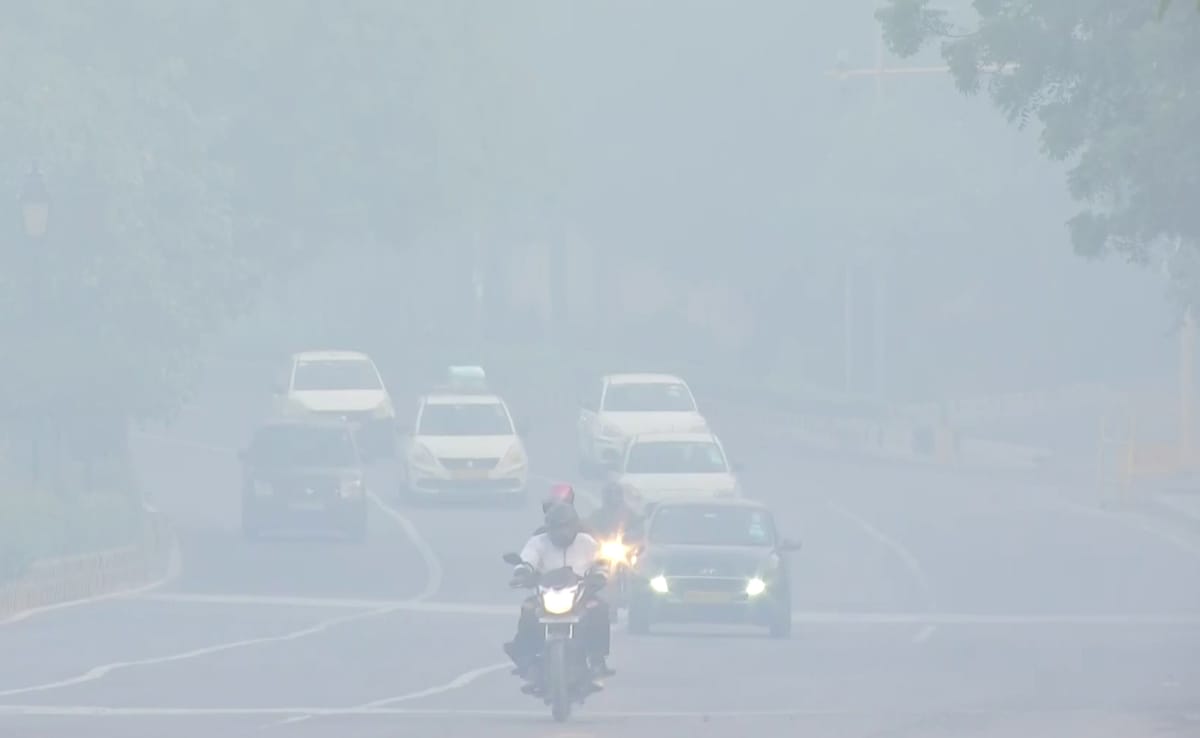
Experts pointed out that India ranks among the countries with the highest PM 2.5 pollution.
In a move critics are calling a calculated deflection, the Union government has doubled down on its stance that World Health Organization (WHO) air quality guidelines are merely "guidance documents" and not enforceable rules.
Minister of State for Environment Kirti Vardhan Singh's written reply to the Rajya Sabha on Thursday came just days after the 2024 World Air Quality Report by Swiss firm IQAir exposed the scale of the problem: 13 of the globe's 20 most polluted cities are in India, with Meghalaya's Byrnihat claiming the unwanted top spot and Delhi enduring its sixth consecutive year as the world's most-polluted capital.
Singh argued that such global assessments lack "official authority," insisting instead that India tailors its standards to "local geography, socio-economic factors".
He said the country's 2009 National Ambient Air Quality Standards - unchanged for 16 years despite experts' pleas for updates - were fitting for these realities, with an annual PM 2.5 limit of 40 micrograms per cubic meter deemed "appropriate".
The WHO's 2021 guidelines recommend a far stricter annual PM 2.5 average of just 5 micrograms per cubic meter - eight times lower than India's threshold.
Independent monitoring by IQAir pegs India's 2024 urban average at 50.6 micrograms per cubic meter, routinely breaching even the government's own limits.
While Singh is correct in saying that WHO norms carry no legal weight and nations often adapt them locally, environmental experts have urged alignment with cutting-edge science.
The government's preferred metric, the Swachh Vayu Survekshan, fares little better under scrutiny - it evaluates cities largely on bureaucratic compliance with the National Clean Air Programme (accounting for 64% of scores), with not enough emphasis on raw pollution data where "top performers" still hover at 70-80 micrograms per cubic meter, said experts.
Progress under the Rs 10,000-crore National Clean Air Programme has also been a mixed bag.
Officials highlighted fewer "Severe+" days in Delhi this winter and a bump in "Good-Moderate" readings in 2025, crediting expanded monitoring networks. But annual averages in the capital linger around 90 micrograms per cubic meter - the highest among global capitals - and the programme's ambitious 20-30% pollution cut by 2024 was not achieved.
'No Correlation'
The central government reiterated that there is "no conclusive national data to establish a direct correlation between deaths or diseases occurring exclusively due to air pollution", while admitting that "air pollution is one of the triggering factors for respiratory ailments and associated diseases".
However, the 'State of Global Air 2020' report says air pollution claimed 1.67 million lives prematurely in India in 2019, the latest full estimate, slashing average life expectancy by 5.2 years and draining up to 3% of GDP annually through lost productivity and medical bills.
"While official rankings may not be mandated by a global authority, independent scientific analysis, including the 2024 World Air Quality Report, consistently shows that India ranks among the countries with the highest PM 2.5 pollution, with several cities repeatedly recorded as some of the world's most polluted," environmentalist Bhavreen Kandhari told NDTV.
"Experts have warned repeatedly that national standards permitting concentrations many times higher than WHO's recommended levels mean public health remains at risk, and that dismissing global data as 'not official' should not distract from the urgent need to align policy with health-based science and real-world measurements," she added.
Anju Goel, environmentalist at TERI, acknowledged the non-binding nature of WHO rules, but warned against complacency. "Yes, WHO guidelines are not binding," she said, "and also in India, we can never achieve WHO guidelines without transboundary cooperation as even our background levels are much higher than WHO guidelines."
In November 2025, wellness advocate Luke Coutinho filed a public interest litigation in the Supreme Court of India, seeking time-bound revision of the 2009 National Ambient Air Quality Standards (NAAQS) to at least interim levels aligned with WHO 2021 guidelines. On November 18, the Supreme Court permitted the withdrawal of the petition with liberty to intervene in the ongoing MC Mehta vs Union of India case, where issues of NAAQS revision and stricter enforcement continue to be actively considered.
Published: December 11, 2025 23:53 IST
 Written by Shreya Goswami | Thursday October 01, 2026
October's changing temperatures, dry air, dust and rising pollution can leave Delhi-NCR residents with a scratchy throat, cough or hoarseness.
- Written by Dr Shivanshu Raj Goyal | Thursday October 01, 2026
Since most people spend a lot of time indoors, the air quality indoors becomes essential in relation to respiratory health. Considering different environments, air inside can contain dirt, allergens and several pollutants from multiple sources.
- Wednesday September 30, 2026 , France
In a new analysis covering the first eight months of 2026, the European Union's Copernicus Climate Atmosphere Monitoring Service (CAMS) highlighted the close relationship between climate change and air pollution.
- Reported by Reet Kaur Sahni | Tuesday September 29, 2026
Starting November 1, petrol and diesel vehicles registered outside Delhi and not meeting BS-VI standards will be banned from entering the city, though CNG and electric vehicles are exempt.
- Written by Dr Sabine Kapasi | Tuesday September 29, 2026
Air pollution is often discussed as a cause of respiratory disease, but its effects extend to the heart and blood vessels.



................................ Advertisement ................................

Blog | Well Done, Delhi. You've Turned Lung Sacrifice Into A Badge Of HonourSaikat Kumar Bose
Monday November 10, 2025Till some years back, Delhiites would ask angry questions to those in power about the capitals annual tryst with toxic air. This has changed. Those in the driving seat dont see the need to answer now.
Opinion | Why Indians Have Just Given Up On Air Pollution CrisisTanushree Ganguly
Friday December 20, 2024While some may argue that people in Delhi are now more aware of air pollution than they were a decade back, my rebuttal would be that awareness does not mean that people are concerned.
Opinion | You Must Outrage Over Filthy Air More Than Once A YearJyoti Pande Lavakare
Tuesday December 10, 2024Delhi welcomed us with monsoon rains and mangos. We were home. Fast forward a couple of years, in the winter of 2012, I found myself in denial about something other parents, mostly expats, were calling toxic air.
Opinion | Delhi's Air Pollution Situation Is Like A Bad MarriageNishtha Gautam
Friday November 22, 2024On a good day, such as today, the AQI reading in Delhi is 407. We are jubilant at the sickly sunshine trickling through the slightly dissipated smog. At least its not 1600.
दिवाली... पराली... सियासी जुगाली!Ashwini kumar
Monday November 18, 2024दिल्ली-एनसीआर में प्रदूषण का समाधान तो आज तक मिला नहीं. हर साल चिंतित होकर हम-आप सांसों की तकलीफ के साथ-साथ दिल और ब्लड प्रेशर के मरीज भी क्यों बनें?


