


- Home/
- Stubble Burning In Punjab, Haryana Reduced By 50% This Year: Top Expert To NDTV
Stubble Burning In Punjab, Haryana Reduced By 50% This Year: Top Expert To NDTV
Reported by Himanshu Shekhar Mishra, Edited by Manjiri Chitre | Updated: November 04, 2025 07:59 IST

The data comes amid the rising air pollution in Delhi.
Highlights
- Stubble burning in Punjab and Haryana dropped 50% this season compared to last year, ICAR DG told NDTV
- Punjab recorded a 42% decrease in crop residue burning incidents this year
- Haryana saw stubble burning incidents fall from 838 last year to 122 this year
New Delhi :
The stubble burning in Punjab and Haryana has reduced by 50 per cent this season as compared to last year, Secretary of the Department of Agricultural Research and Education and Director General of the Indian Council for Agricultural Research (ICAR), Mangi Lal Jat, told NDTV.
According to the data compiled by the ICAR's Consortium for Research on Agroecosystem Monitoring and Modeling from Space (CREAMS) laboratory, a total of 4,754 stubble burning incidents were recorded in Punjab and Haryana between September 15 and November 2 last year. This year, it has dropped to 2,384.
Jat, citing satellite data, said Punjab alone reported a 42 per cent drop in crop residue burning - from 3,916 incidents between September 15 and November 2 in 2024 to 2,262 this year. Haryana has also witnessed a significant drop in stubble burning - from 838 incidents between September 15 and November 2 last year to 122 this year, he said.
"This was possible due to the efforts of the government of India and the state government to encourage farmers to adopt alternative methods, and the strictness of the local police. In fact, if we analyse stubble burning incidents since 2020, another major change is clearly visible. Data showed that a total of 41,176 stubble burning incidents were recorded in Punjab between September 15 and November 2, 2020, which has reduced to 2,262 this year - a reduction by 94.5 per cent in the last five years," Jat said.
Punjab still the highest in stubble burning
While data shows Punjab has witnessed a massive reduction in crop residue burning, it is still the highest this year among five other states - Uttar Pradesh, Rajasthan, Haryana, Madhya Pradesh, and Delhi. According to the ICAR data, more than 1,000 incidents of stubble burning have been recorded in six states in the last few days.
On October 19, a day before Diwali, 153 incidents of crop residue burning fires were recorded in six states. On October 28, 50 incidents were recorded, 259 on October 31, 535 on November 1, and 230 on November 2. Punjab alone reported 224 incidents on October 31 and 442 the next day.
Between September 15 and November 2, 4,610 crop residue burning fire incidents have been recorded in six states, the data showed. Of these, Punjab recorded 2,262 stubble burning incidents, followed by Uttar Pradesh at 1,018, Rajasthan at 719, Madhya Pradesh at 486, Haryana at 122, and Delhi at 3.
On November 1, satellites detected 535 residue burnings in six states - 442 in Punjab, 19 in Haryana, 27 in Uttar Pradesh, 44 in Rajasthan, and 3 in Madhya Pradesh. On November 2, satellites detected 230 incidents in six states - 178 in Punjab, 4 in Haryana, 14 in UP, and 34 in Rajasthan.
The data comes amid the rising air pollution in Delhi - for which the BJP has blamed stubble burning in other states. The air quality index (AQI) in the national capital stood at 309 at 7 am today morning - in the 'very poor' category.
Published: November 04, 2025 07:59 IST
 The Economic Cost Of Toxic Air: How Pollution Impacts Workforce Productivity And Healthcare SpendingWritten by Dr Sabine Kapasi | Thursday November 12, 2026
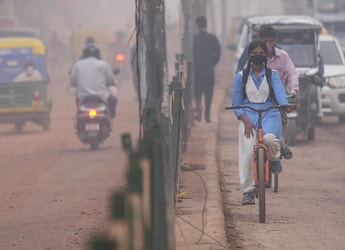
India pays for toxic air every year, through lost wages, hospital bills and slower growth, writes Dr. Sabine Kapasi.
- Written by Debosmita Ghosh | Thursday November 12, 2026
Pneumonia starts when an infection reaches the lungs and causes inflammation. The immune system responds to the infection, causing the air sacs to become inflamed and fill with fluid or pus. As the lungs become affected, oxygen exchange becomes harder.
- Written by Varsha Vats | Thursday November 12, 2026
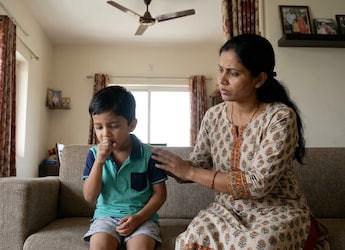
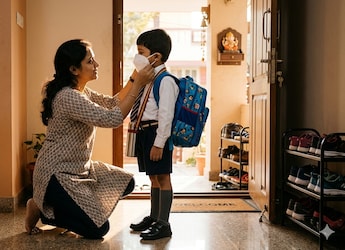
Exposure to pollutants can harm your child's developing lungs and trigger symptoms such as cough, blocked nose, shortness of breath, and a scratchy throat.
- Written by Vaishnavi Mishra | Thursday November 12, 2026
Mumbai recorded an AQI of 154, in the poor category, with PM2.5 at 76 g/m and PM10 at 130 g/m, despite sunny skies and 28 degrees Celsius.
- Reported by Ishika Verma | Thursday November 12, 2026
Krish, a Class 12 student at Sanskriti School, and Samarth, a Class 11 student at Vasant Valley School, are the founders of Project Vayu. Krish has been named to the 2026 Diana Award Roll of Honour for the initiative.

................................ Advertisement ................................
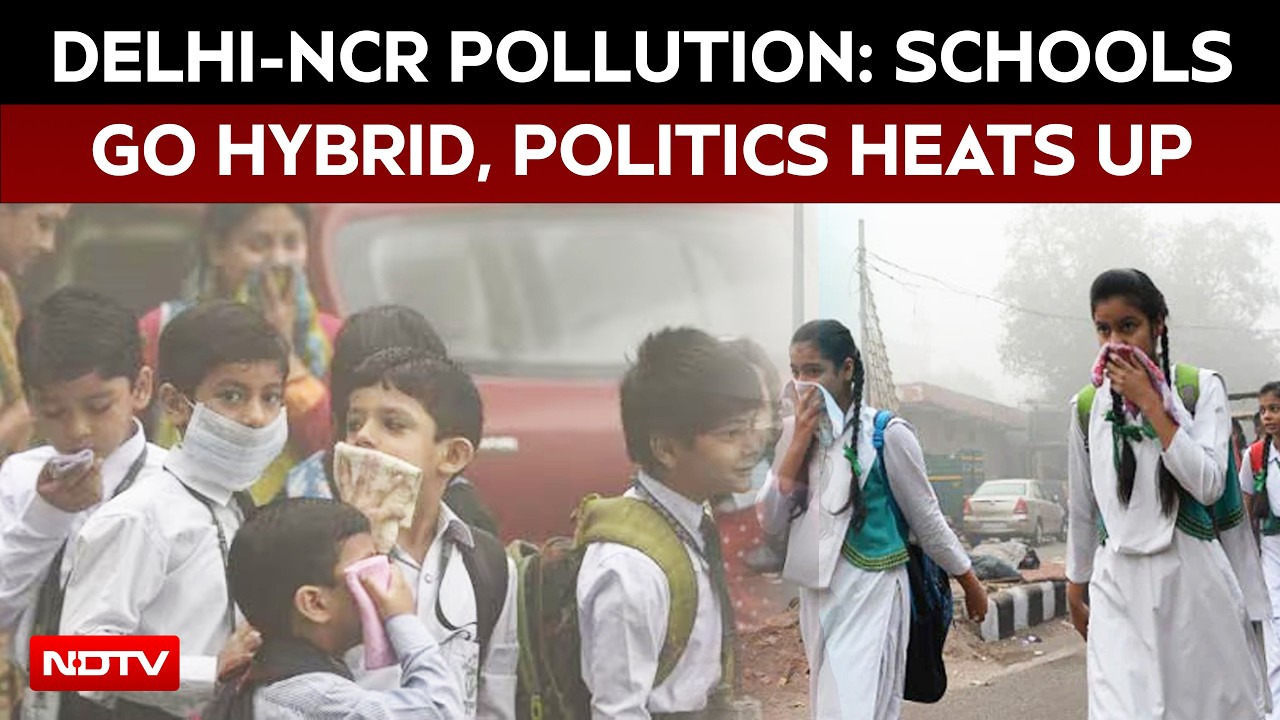
Opinion | Delhi Has Every Pollution Control Policy - Except One That Works
Monday November 09, 2026Every November, Delhi performs the same ritual. We check the AQI before stepping outdoors, children are kept indoors, masks reappear, schools consider shutting, construction is restricted, and emergency meetings are convened. Politicians blame the weather, neighbouring states, farmers, or firecrackers. And then, as the season changes, the urgency d...
दीवाली की चौखट पर दिल्ली में सांसों का संकट: 30 साल की स्टडी ने हरियाली को लेकर क्या बताया?
Thursday November 05, 2026अध्ययन में हरियाली की मात्रा के साथ उसके फैलाव और आपसी जुड़ाव को भी महत्वपूर्ण पाया गया. जिन इलाकों में हरियाली ज्यादा बिखरी हुई थी, वहां सतही तापमान अधिक रहा. इसके विपरीत, बड़े और आपस में जुड़े हरित क्षेत्रों में तापमान कम पाया गया.
Opinion: Why Delhi's Smog Can't Be Fixed From SpaceDavid Fickling, Bloomberg
Monday October 19, 2026The clearest sign that Delhi is on a path to cleaner air would be a decline in the amount of paddy grown nearby, and therefore the acreage liable to be burned each year.
Don't Normalise Air Purifiers As Delhi Chokes | The Reason Why
Thursday December 11, 2025More than 90 cities in the world's top 100 polluting list are in India. With every passing year, the AQI is rising, reaching 'hazardous' levels.
Blog | Well Done, Delhi. You've Turned Lung Sacrifice Into A Badge Of HonourSaikat Kumar Bose
Monday November 10, 2025Till some years back, Delhiites would ask angry questions to those in power about the capitals annual tryst with toxic air. This has changed. Those in the driving seat dont see the need to answer now.



