


- Home/
- Supreme Court Seeks Affidavit Detailing Delhi-NCR's Pollution Curb Measures
Supreme Court Seeks Affidavit Detailing Delhi-NCR's Pollution Curb Measures
Indo-Asian News Service | Updated: November 03, 2025 21:16 IST
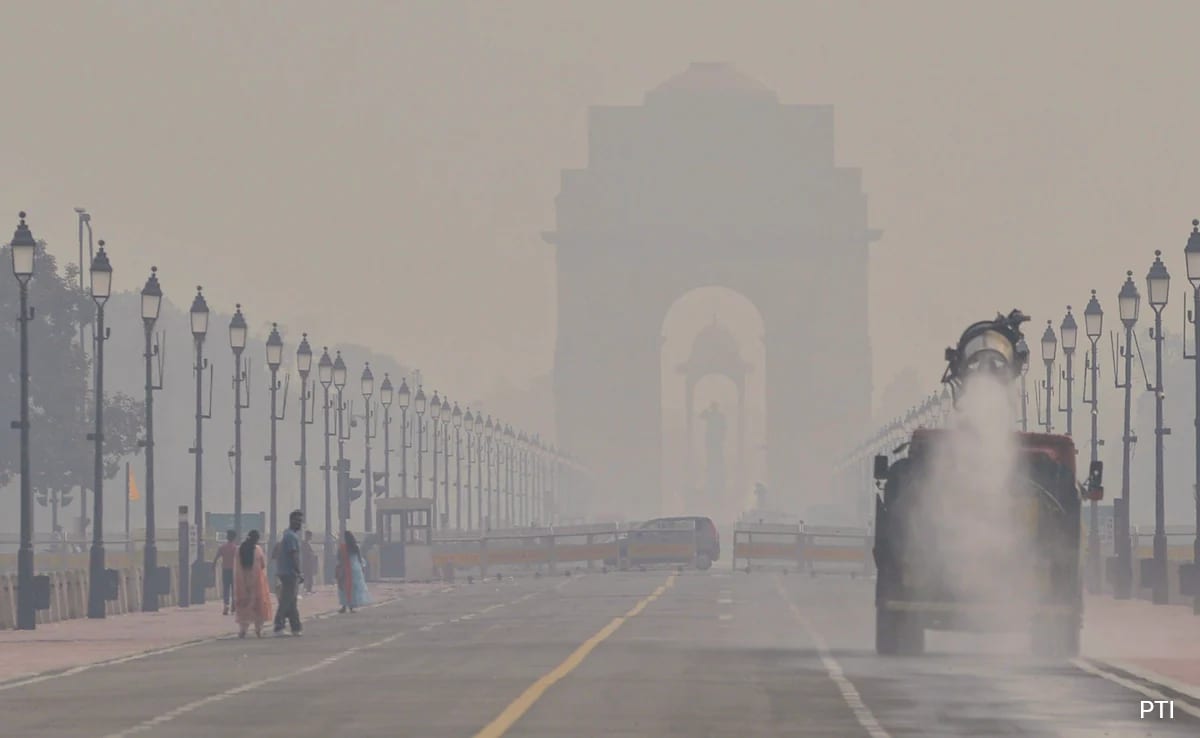
Supreme Court sought clarity on the operational status of the air quality monitoring systems.
New Delhi:
The Supreme Court on Monday asked the Commission for Air Quality Management (CAQM) to file an affidavit detailing the measures undertaken to prevent Delhi-NCR's air quality from deteriorating, after it was told that several air monitoring stations reportedly remained non-functional during Diwali.
A Bench of Chief Justice of India (CJI) B.R. Gavai and Justice K. Vinod Chandran was hearing a Public Interest Litigation (PIL) relating to control of air pollution in the national Capital and the adjoining NCR area.
Senior advocate Aparajita Singh, the amicus curiae in the matter, drew the top court's attention to media reports that out of 37 air quality monitoring systems in Delhi, only nine were functioning during Diwali.
"There needs to be a report from CAQM on the current air pollution status. Out of 37 in Delhi, only 9 monitoring systems were functioning during Diwali," Singh informed the CJI Gavai-led Bench.
The amicus curiae stated that the Supreme Court's earlier directions specifically required authorities to take pre-emptive action rather than wait for the air quality to reach severe levels.
After hearing the submission, the top court directed: "The CAQM is required to place on record an affidavit as to what steps are proposed to be taken so as to prevent the pollution turning to be severe."
It also sought clarity on the operational status of the air quality monitoring systems, after media reports highlighted widespread malfunctioning of stations.
The CAQM's counsel informed the CJI Gavai-led Bench that a report had already been filed on the previous date of hearing but could not be taken up due to paucity of time.
However, the amicus suggested that a fresh affidavit should be submitted, addressing both the malfunctioning of monitoring systems and the measures planned in view of the worsening air situation.
Appearing for the authorities, Additional Solicitor General (ASG) Aishwarya Bhatti assured the top court that the required report would be filed by the concerned authorities, including the Central Pollution Control Board (CPCB), which maintains the monitoring data.
The development came just days after the Supreme Court, while allowing the limited sale and use of green crackers in Delhi-NCR during Diwali, had warned that "commercial considerations and the festive spirit should take a back seat when it concerns the environment and health."
In its order passed on October 15, the CJI Gavai-led Bench had permitted the sale of NEERI-approved crackers from October 18 to 20, restricting bursting to specific hours.
The relaxation, the Supreme Court had clarified, was "only on a test case basis," subject to post-Diwali air quality data.
To ensure compliance, the top court had laid down a detailed enforcement mechanism: Only licensed traders could sell approved products carrying NEERI-issued QR codes, while district administrations and police were tasked with forming patrolling teams to prevent the sale of prohibited crackers.
It had also ordered the CPCB and State Pollution Control Boards to monitor air, water, and soil quality from October 14 to 25 and submit a report before the top court.
(Except for the headline, this story has not been edited by NDTV staff and is published from a syndicated feed.)
Published: November 03, 2025 21:16 IST
 Reported by Reet Kaur Sahni | Tuesday September 29, 2026
Starting November 1, petrol and diesel vehicles registered outside Delhi and not meeting BS-VI standards will be banned from entering the city, though CNG and electric vehicles are exempt.
- Written by Dr Sabine Kapasi | Tuesday September 29, 2026
Air pollution is often discussed as a cause of respiratory disease, but its effects extend to the heart and blood vessels.
- Edited by Debanish Achom | Monday September 28, 2026 , New Delhi
The steps include doubling parking charges, a complete ban on construction and demolition activity and work-from-home for government and private employees
- Written by Debosmita Ghosh | Friday September 25, 2026
Air purifiers are mainly designed to clean pollutants that are suspended in the air. A HEPA filter can trap very small particles and may help reduce indoor levels of particulate matter, dust, pollen and some other airborne particles. However, the performance of a purifier depends on several factors.
- Written by Dr Ankit Kumar Sinha | Friday September 25, 2026
To improve respiratory health, it is important to minimise exposure to polluted air, enhance indoor ventilation, adhere to workplace safety regulations, and promote physical activity.

................................ Advertisement ................................

Blog | Well Done, Delhi. You've Turned Lung Sacrifice Into A Badge Of HonourSaikat Kumar Bose
Monday November 10, 2025Till some years back, Delhiites would ask angry questions to those in power about the capitals annual tryst with toxic air. This has changed. Those in the driving seat dont see the need to answer now.
Opinion | Why Indians Have Just Given Up On Air Pollution CrisisTanushree Ganguly
Friday December 20, 2024While some may argue that people in Delhi are now more aware of air pollution than they were a decade back, my rebuttal would be that awareness does not mean that people are concerned.
Opinion | You Must Outrage Over Filthy Air More Than Once A YearJyoti Pande Lavakare
Tuesday December 10, 2024Delhi welcomed us with monsoon rains and mangos. We were home. Fast forward a couple of years, in the winter of 2012, I found myself in denial about something other parents, mostly expats, were calling toxic air.
Opinion | Delhi's Air Pollution Situation Is Like A Bad MarriageNishtha Gautam
Friday November 22, 2024On a good day, such as today, the AQI reading in Delhi is 407. We are jubilant at the sickly sunshine trickling through the slightly dissipated smog. At least its not 1600.
दिवाली... पराली... सियासी जुगाली!Ashwini kumar
Monday November 18, 2024दिल्ली-एनसीआर में प्रदूषण का समाधान तो आज तक मिला नहीं. हर साल चिंतित होकर हम-आप सांसों की तकलीफ के साथ-साथ दिल और ब्लड प्रेशर के मरीज भी क्यों बनें?


