


- Home/
- GRAP III Imposed In Delhi-NCR Amid Rising Pollution Levels
GRAP III Imposed In Delhi-NCR Amid Rising Pollution Levels
| Updated: November 06, 2026 18:07 IST
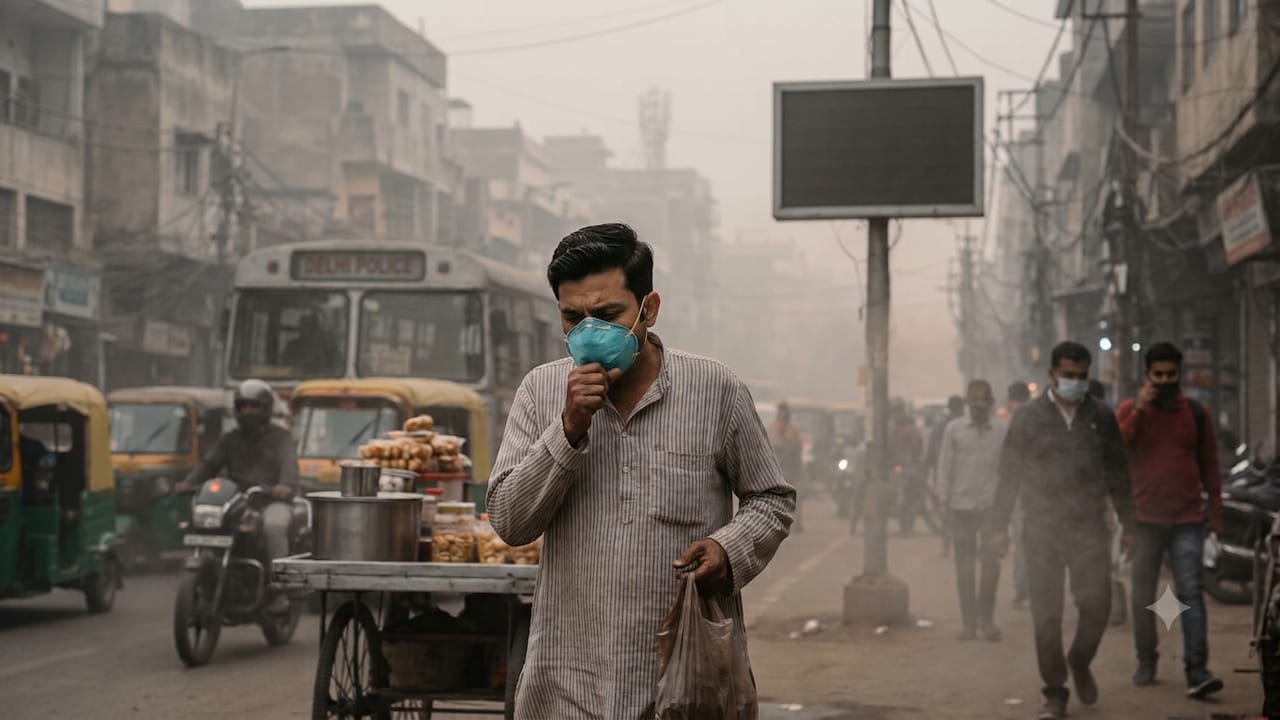
The stage III of GRAP will also restrict inter-state diesel buses
Highlights
- The Commission for Air Quality Management invoked Stage-III of GRAP in Delhi NCR
- GRAP-III includes bans on construction, demolition, and certain vehicle movements
- Restrictions also cover stone crushers, mining, hot-mix plants, and diesel generators
New Delhi:
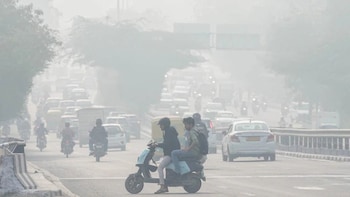
The Commission for Air Quality Management (CAQM) on Friday invoked Stage-III of the Graded Response Action Plan (GRAP) across Delhi and the entire National Capital Region, amid an increase in pollution levels in the National Capital Region (NCR). The announcement comes two days ahead of the Diwali festival, after Delhi's Air Quality Index (AQI) hit 382 on Friday, which falls in the "very poor" category.
While GRAP-III is typically invoked when the air quality turns "severe" and the AQI hits 400, the pollution board invoked it early as a precautionary measure. In a post on X, the CAQM said: "CAQM Sub-Committee on GRAP decides to invoke GRAP III in Delhi NCR as a precautionary measure."
The curbs under GRAP-III comprise a complete ban on non-essential construction and demolition activities, including earthwork, piling, trenching, and open-air operations of Ready-Mix Concrete (RMC) plants, and prohibition on movement of BS-3 petrol and BS-4 diesel four-wheelers in Delhi and neighbouring NCR districts.
The decision will lead to banning the transport of construction materials like sand and cement, especially on unpaved roads; closure of stone crushers, mining, and hot-mix plants not running on clean fuel; and a ban on diesel generator sets, except for emergency and essential services.
The stage III of GRAP will also restrict inter-state diesel buses entering or operating in Delhi.
The restrictions will further include an advisory for private companies to implement work-from-home or hybrid mode to curb vehicular emissions and will require closure of schools up to Class 5, with classes shifted to online mode to protect young children from toxic air.
This comes days after the CAQM invoked GRAP-II in Delhi-NCR after the capital region's daily average AQI rose to 324, placing it in the ‘Very Poor' category.
According to the daily AQI bulletin issued by the Central Pollution Control Board, Delhi recorded an average AQI of 324 on November 2. The CAQM Sub-Committee for operationalisation of GRAP reviewed the current air quality scenario and the forecast provided by the India Meteorological Department and the Indian Institute of Tropical Meteorology.
(This story has not been edited by NDTV staff and is auto-generated from a syndicated feed.)
Published: November 06, 2026 17:57 IST
also read
Delhi Air Pollution: Is There A 'Safer' Time To Step Outdoors? Here's What You Should Know
Written by Debosmita GhoshPost-Diwali Smog Got Your Throat Irritated? Nutritionist Shares 4 Soothing Drinks To Try
Written by NDTV Health DeskFrom Black To Pink: Can Your Lungs Recover From The Damage Caused By Air Pollution?
Written by Sambhav Kumar
 Reported by Pallava Bagla | Thursday November 12, 2026 , New Delhi
All are hoping for rain that may wash away the toxic cloud hanging overhead. But the weather office ended that hope today, saying rain is unlikely in the plains. There might be some over the Himalayan region, but none is expected in Delhi, where the pollution has reached severe levels.
- Reported by Ankita Tiwari | Wednesday November 11, 2026 , New Delhi
According to a Centre for Science and Environment (CSE) report, the average PM2.5 concentration during the week before Diwali stood at 236 micrograms per cubic metre, almost double the 120 ug/m3 recorded in 2025. It was also the highest pre-Diwali average in three years.
- Wednesday November 11, 2026 , New Delhi
The transport sector is expected to be the largest contributor to pollution on Wednesday, while the impact of stubble burning is anticipated to increase on Thursday, potentially worsening air quality further over the next few days, according to Indian Institute of Tropical Meteorology models.
- Reported by Himanshu Shekhar Mishra, Edited by Anindita Sanyal | Wednesday November 11, 2026 , New Delhi
Air pollution in Delhi-NCR has worsened during the onset of winter (from October to mid-November) this year. This has been revealed in a new analysis by the Centre for Science and Environment or CSE, an organisation that monitors environmental issues.
- Written by Vishesh Nagar | Wednesday November 11, 2026
All 10 cities in the ranking fall under the 'Hazardous' category, with Bathinda recording the highest AQI, followed by Rewari and Faridkot.

................................ Advertisement ................................
Opinion | Delhi Has Every Pollution Control Policy - Except One That Works
Monday November 09, 2026Every November, Delhi performs the same ritual. We check the AQI before stepping outdoors, children are kept indoors, masks reappear, schools consider shutting, construction is restricted, and emergency meetings are convened. Politicians blame the weather, neighbouring states, farmers, or firecrackers. And then, as the season changes, the urgency d...
दीवाली की चौखट पर दिल्ली में सांसों का संकट: 30 साल की स्टडी ने हरियाली को लेकर क्या बताया?
Thursday November 05, 2026अध्ययन में हरियाली की मात्रा के साथ उसके फैलाव और आपसी जुड़ाव को भी महत्वपूर्ण पाया गया. जिन इलाकों में हरियाली ज्यादा बिखरी हुई थी, वहां सतही तापमान अधिक रहा. इसके विपरीत, बड़े और आपस में जुड़े हरित क्षेत्रों में तापमान कम पाया गया.
Opinion: Why Delhi's Smog Can't Be Fixed From SpaceDavid Fickling, Bloomberg
Monday October 19, 2026The clearest sign that Delhi is on a path to cleaner air would be a decline in the amount of paddy grown nearby, and therefore the acreage liable to be burned each year.
Don't Normalise Air Purifiers As Delhi Chokes | The Reason Why
Thursday December 11, 2025More than 90 cities in the world's top 100 polluting list are in India. With every passing year, the AQI is rising, reaching 'hazardous' levels.
Blog | Well Done, Delhi. You've Turned Lung Sacrifice Into A Badge Of HonourSaikat Kumar Bose
Monday November 10, 2025Till some years back, Delhiites would ask angry questions to those in power about the capitals annual tryst with toxic air. This has changed. Those in the driving seat dont see the need to answer now.



