




- Home/
- Empowering Women And Strengthening Communities Through USHA Silai School Initiatives
Empowering Women And Strengthening Communities Through USHA Silai School Initiatives
Team NDTV | Updated: February 04, 2025 12:04 IST
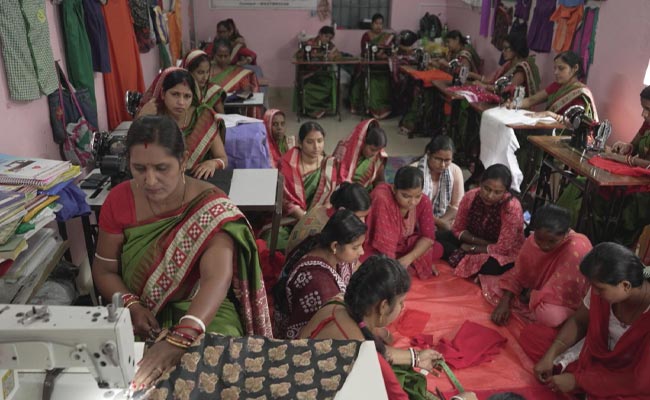
Mumbai, the bustling financial capital of India, is a city of dreams. Yet, for countless women in its underserved communities, achieving economic independence remains a challenge. Bridging this gap are transformative initiatives by USHA, which aim to empower women through skill-building and sustainable livelihood opportunities. One such initiative is led by Sana Aftab, an 11th-grade student at Bombay Scottish School.
Driven by her passion for societal change, Sana spearheaded a fundraising campaign to economically empower marginalized women residing in slum areas of Bandra and Andheri. Her collaboration with Pratham Mumbai Education Initiative and USHAt Silai School focuses on equipping these women with essential sewing skills and tools for self-reliance.
Speaking about her motivation, Sana shared,
“I observed firsthand how Pratham works with the mission of uplifting individuals living in harsh conditions in Mumbai. The indomitable spirit of the women in these areas inspired me. Most of them wanted to work with dignity from home to contribute to their household incomes and ensure better lives for their children.”
Sana's vision is to enable at least 10 women to establish sustainable sewing businesses and mentor others within their communities.
She said,
“I came across the Usha Silai School program while researching impactful social initiatives in India.Their work, which has benefitted over 1.3 million women, inspired me to collaborate with Pratham and Usha for this project.”
Heritage Meets Humanity: Ismail Khatri And The USHA Silai School Connection
Through crowdfunding platforms, Sana successfully raised ₹2.5 lakhs, connecting with over 30 funders, including corporate sponsors.
She added,
“It was a meticulous process, but the resilience and hope of these women motivated me to persist.”
Pratham, an innovative learning organization founded in 1995, has expanded its programs nationwide to improve education and skill development. Partnering with Usha International, they introduced the USHA Silai School's ‘Train the Trainer' model. This 40-day comprehensive course equips women with advanced sewing techniques, enabling them to become Master Trainers.
According to a Pratham representative,
“We adapted a three-hour daily training model to suit the needs of these women, using community centers as training hubs.”
Currently, 10 women are enrolled in the USHA Silai School program. Upon completion, they will receive sewing machines, course booklets, and service manuals. Equipped with these resources, the women will launch their sewing enterprises and mentor others in their community, fostering a cycle of skill development and economic upliftment.
Paresh Narayan Nagpure, State Manager - Maharashtra and Goa for Usha Social Service, explained,
“Through this partnership, women will not only develop their own enterprises but also train others, extending the impact to their families and communities.”
The story continues in Odisha's Bhadrak district, where every day, women from nearby villages gather at a training-cum-production center in Tihidi town. Here, they learn, create, and earn, transforming their lives through acquired skills. The center recently welcomed Amita Kapoor and Neeraj Kapoor, whose contributions have been instrumental in establishing such centers nationwide. Since 2021, the Kapoors have partnered with Usha International to set up five centers across India, benefiting 68 women.
Amita Kapoor shared,
“Our association with Usha began in 2021 with the first production center in Punjab. Seeing its success, we supported centers in Hardoi (UP), Meghalaya, Bhadrak (Odisha), and Telangana. These centers have become sustainable models for empowerment.”
The Empowering Journey Of Sanjay Vidyarthi And USHA Silai School
Neeraj Kapoor added,
“Around our father's 80th birthday, we decided to pursue impactful initiatives over one-time charity. Empowering women and fostering financial inclusivity struck a chord with us. We've learned that sustainable models, supported by NGOs and local authorities, are crucial to success.”
The Bhadrak center has been a beacon of productivity, with women producing garments and products that contribute directly to their incomes.
Amita emphasized,
“We've tried to support these centers by providing as many machines as possible to execute orders. Sustainability and collaboration are key to making these models thrive.”
Thanks to the efforts of individuals like Sana Aftab, Amita Kapoor, Neeraj Kapoor, and the collective support of organizations like USHA International and Pratham, the Silai School program has become a symbol of hope and resilience. By empowering women through skills and collaboration, these initiatives are transforming lives and creating a ripple effect of positive change.
Published: February 04, 2025 11:28 IST
also read
In Karnataka's Chikkballapur, Nutritional Rehabilitation Centres Are Pulling Children Out Of Malnutrition
Reported by Maya Sharma, Written by Aastha Ahuja#Reimagine Telethon: How Can We Protect The Vulnerable Children Affected By COVID-19? Experts, Social Workers & Celebrities Discuss
Written by Anisha BhatiaHow Odisha Government Is Taking The School To Children's Home, Ensuring Learning During COVID-19 Pandemic
Reported by Saurabh Gupta, Written by Aastha Ahuja