

- Home/
- Frontier Needles Of Resilience: Usha Silai School Empowers Border Women
Frontier Needles Of Resilience: Usha Silai School Empowers Border Women
Team NDTV | Updated: February 12, 2026 12:42 IST
New Delhi:
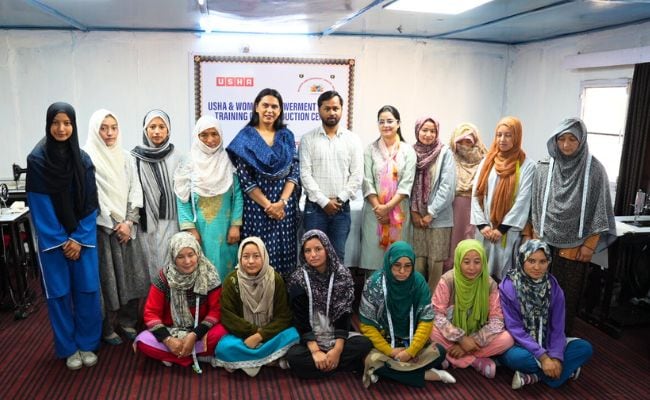
Thin mountain air bites at Turtuk's Karakoram edges, where Shakila Bano's fingers, once idle in tribal hardship, now guide Usha machines with precision. In 2018, Samaarambh Foundation, backed by NHPC and Usha International, launched a 7-day intensive for 30 Balti women—frocks, laptop bags, pillow covers emerging from frosty looms. "Never dreamed of this," Shakila beams, "Usha, Samaarambh, NHPC taught suits, covers—Inshallah, girls toil ahead."[script] Myank Khantwal notes their diligence, untapped sans resources; Uttam Lal hails skilling as family-core empowerment. These Training Cum Production Centres (TCPCs) sustain beyond training: women earn regularly, inspiring kin in Line of Control shadows. Sakina Bano envisions home suits, mentoring peers—self-reliance blooming where opportunities starved.
From resource voids to economic hubs, Usha's model fortifies remote sentinels, blending craft with community sinew.
Kargil's Empowerment Citadel
Snow-veiled Khumbathang in Kargil pulses differently since 2002's Women Empowerment Centre (WEC) under 8 Mountain Division. Chairperson Shikha Krishnan recalls: resilient Ladakhi women craved platforms beyond basic frocks. Partnering Usha, 15 completed 25-day professional tailoring—precision stitches forging not just garments, but purpose. "They travelled far daily," she says, "unsatisfied sans earnings; Usha's brand elevated them." WEC expands: beautician modules, soap-making, oils—home-viable sidelines to tailoring.
Women from villages bond, sharing resilience amid harsh weathers, birthing leadership. "Train professionally," Krishnan urges, "they'll become pros." Impact ripples: home earnings dignify families, preserve crafts, seed more schools. In border bastions, needles knit security—stronger homes, steadfast outposts.
Border Bamboo Symphony
Assam's Dakhinkuchi, hugging Bhutan, hums at the 14th Indo-Bhutan Friendship Fair—fabrics flowing sans protocols. Grameen Vikas Manch's TCPC, HDFC-funded under HRDP, births Birgwshri Fashion and Home Accessories Unit: 12 women master residential training—sewing, cutting, Bodo Aronnai-infused designs for bags, utilities. Jeevan Bhattaray lauds the fair's unity amid diverse communities. Sunita Baro, once tethered to cattle and silkworm whims, now blends Dokhona heritage with modern flair. "Struggles in bordering life eased," she shares, Fair visibility catapulting local produce cross-border. From hesitation to collective decisions—sourcing, marketing, quality—they're entrepreneurs, not laborers. TCPC symbolizes rhythm in bamboo groves: stability where wage whims ruled.
Threads Binding the Nation
Kushalta Ke Kadam chronicles these border bonds: Usha's 2018 Ladakh thrust with Samaarambh-NHPC; Army's 2002 WEC evolution; Assam's fair-fueled collectives. Shakila's joy, Shikha's vision, Sunita's leap echo Uttam Lal: skilled women transform families, regions. TCPCs ensure continuity—production hubs yielding steady incomes, expansions eyed. In unforgiving terrains—scarce resources, isolation—these alliances prove development defends as fiercely as borders. Women, once overlooked, now lead: mentoring, earning, preserving culture amid strategy. From Turtuk's tribes to Kargil's kin, Dakhinkuchi's dreamers, Usha forges belonging. As Krishnan vows, "Vision: trained professionals." Sunita adds cross-border commerce. High altitudes to forested fringes, machines silent at dusk hum promises: empowerment reaches outposts, fortifying India from within. One stitch safeguards sovereignty—self-reliant women, unbreakable frontiers.
Published: February 12, 2026 12:34 IST
also read
Uber Teams Up With NGO Manas Foundation To Conduct Gender Sensitisation Workshops For Partner Drivers
Reported by Ruby Dhingra, Edited by Aishwarya UpadhyayMeet Suganthi, A Woman Uber Driver Who Is Achieving Her Dreams By Driving A Cab Through The Streets Of Bengaluru
Reported by Maya SharmaTo Ensure Safety Of Women, Travel In Delhi Buses And Metro Made Free By Chief Minister Arvind Kejriwal
Edited by Deepshikha Ghosh
NDTV in partnership with UBER is launching a sustained campaign 'Roshan Dilli' to try and raise safety standards in India's capital, New Delhi.
Our focus is to try and improve lighting in public spaces in the city. Lighting is a key factor in shaping women's perceptions of safety
The initiative will provide a platform for all stakeholders to discuss our goal of improving safety standards, to start a conversation about safety of women in the country
It will also highlight various interventions and solutions that help to make women safe and put the spotlight on what more can be done.
The campaign will accentuate the need for Safety to be a shared responsibility
The need for gender sensitization and how law enforcement and civil society through checks and education can try and make women safer
We hope you will join us and help make New Delhi a safer city for women.


