

- Home/
- How Fast Fashion Is Affecting Our Climate?
How Fast Fashion Is Affecting Our Climate?
Written by Anisha Bhatia | Updated: July 14, 2022 16:45 IST
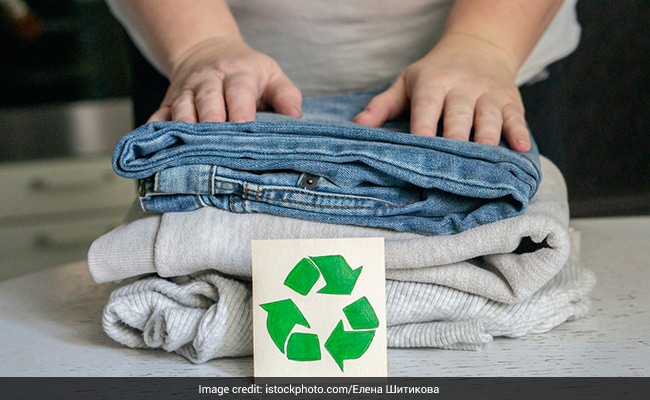
The term ‘Fast fashion' has become very prominent in our day-to-day conversations. There are thousands of brands out there who today are make affordable and fashionable clothing to satisfy the needs of the consumers. While affordable prices are extremely attractive, especially to younger shoppers, the environmental and social impacts of the industry are often overlooked. Here's a look at how fast fashion is affecting the health of our environment:
1. According to the Indian Textile Journal, it is estimated that more than 1 million tons of textiles are thrown away every year, with most of this coming from household sources. This amounts to 0.79 kg of textile waste per capita.
2. Clean Clothes Org states that the garment industry is one of the largest carbon polluters on planet Earth, and one of the greatest producers of waste. It adds that three out of five of the 100 billion garments made in 2018 ended up in landfill within a year.
3. United Nations Environment Programme states that on average consumer buys 60 percent more pieces of clothing than 15 years ago.
4. UNEP further states that the fashion industry is valued at around $2.4 trillion and employs over 75 million people worldwide. It loses about $500 billions of value every year due to the lack of recycling and clothes that are thrown into landfill before ever being sold
5. UNEP states that it takes 3,781 liters of water to make a pair of jeans, from the production of the cotton to the delivery of the final product to the store. That is equivalent to the emission of around 33.4 kilograms of carbon. That is for just one pair of jeans, imagine the environmental cost for everything in our wardrobes.
6. According to the findings from UNEP and the Ellen MacArthur Foundation that works to accelerate the transition to a circular economy, every year the fashion industry uses 93 billion cubic meters of water — enough to meet the consumption needs of five million people. The report further adds that around 20 % of wastewater worldwide is generated from fabric dyeing and treatment
7. The UNEP and the Ellen MacArthur Foundation further states that of the total fibre input used for clothing, 87 percent is incinerated or disposed of in a landfill
8. The fashion industry is responsible for 10% of annual global carbon emissions, more than all international flights and maritime shipping combined. The fashion industry's greenhouse gas emissions will surge more than 50 % by 2030, According to the UNEP and the Ellen MacArthur Foundation findings.
9. The statistics by UNEP also states that every year a half a million tons of plastic microfibers are dumped into the ocean, the equivalent of 50 billion plastic bottles. Not just that - the danger is that microfibers cannot be extracted from the water and they can spread throughout the food chain.
Published: July 12, 2022 14:31 IST
also read
Uber Teams Up With NGO Manas Foundation To Conduct Gender Sensitisation Workshops For Partner Drivers
Reported by Ruby Dhingra, Edited by Aishwarya UpadhyayMeet Suganthi, A Woman Uber Driver Who Is Achieving Her Dreams By Driving A Cab Through The Streets Of Bengaluru
Reported by Maya SharmaTo Ensure Safety Of Women, Travel In Delhi Buses And Metro Made Free By Chief Minister Arvind Kejriwal
Edited by Deepshikha Ghosh
NDTV in partnership with UBER is launching a sustained campaign 'Roshan Dilli' to try and raise safety standards in India's capital, New Delhi.
Our focus is to try and improve lighting in public spaces in the city. Lighting is a key factor in shaping women's perceptions of safety
The initiative will provide a platform for all stakeholders to discuss our goal of improving safety standards, to start a conversation about safety of women in the country
It will also highlight various interventions and solutions that help to make women safe and put the spotlight on what more can be done.
The campaign will accentuate the need for Safety to be a shared responsibility
The need for gender sensitization and how law enforcement and civil society through checks and education can try and make women safer
We hope you will join us and help make New Delhi a safer city for women.


