


- Home/
- AIIMS Delhi Surgeons Remove 21.8 Kg Uterine Sarcoma In High-Risk Surgery
AIIMS Delhi Surgeons Remove 21.8 Kg Uterine Sarcoma In High-Risk Surgery
Press Trust of India | Updated: March 27, 2026 17:34 IST
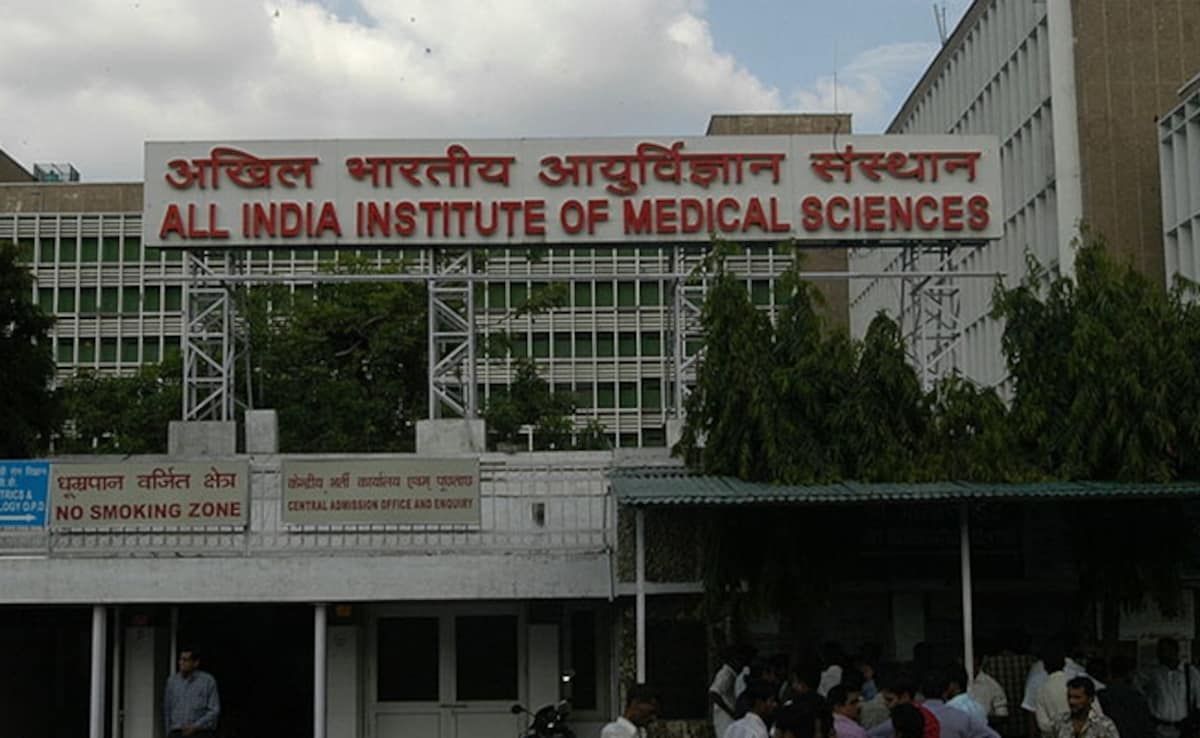
AIIMS Delhi Surgeons Remove Sarcoma
Highlights
- Doctors at AIIMS Delhi removed a 21.8-kg uterine sarcoma tumour from a 46-year-old woman
- The patient had symptoms of abdominal fullness, pain, and functional limitations for months
- The tumour measured 45 cm and compressed vital organs, risking kidney failure and respiratory distress
Doctors at AIIMS Delhi's Dr B R Ambedkar Institute Rotary Cancer Hospital (Dr BRA-IRCH) successfully removed a massive 21.8-kg tumour from a 46-year-old woman diagnosed with advanced uterine sarcoma this week. The Delhi resident, who was also recently diagnosed with diabetes and hypertension, had endured progressive abdominal fullness for four months, followed by severe distension, pain, and functional limitations over the last three months. However, she reported no bowel or bladder issues.
After receiving initial symptomatic treatment, she underwent evaluation and was found to have a gigantic mass filling her entire abdomen and pelvis, according to Dr M D Ray, a professor in the Department of Surgical Oncology at Dr BRA-IRCH.
"On examination, we found a tumour measuring approximately 45 cm, occupying the whole abdomen," Dr Ray said.
The rapidly growing mass was compressing vital organs like the kidneys and ureters, risking renal failure within a month or two. It also triggered lower back pain, walking difficulties, and respiratory distress, he told PTI.
On March 23, the team performed an exploratory laparotomy, which revealed the tumour's origin in the uterus. Surgeons excised the uterus, ovaries, fallopian tubes, and the enormous tumour in a gruelling five-hour procedure.
The operation carried high risks, including potential rupture of major vessels and massive haemorrhage leading to shock, Dr Ray explained.
Yet, blood loss was limited to 500 ml, managed with one unit of packed red blood cells (PRBC) intraoperatively.
Post-surgery, the patient was shifted to the ICU for close monitoring. Dr Rakesh Garg was the anaesthetist in charge who managed intra op and ICU care properly, Dr Ray said, adding that remarkably, she began walking the very next day and is recovering swiftly. "She is likely to be discharged today," he said.
"The takeaway is that a massive tumour does not necessarily mean it is inoperable or considered terminal. With expert care and an expert centre, it can be managed effectively," he added.
(Except for the headline, this story has not been edited by NDTV staff and is published from a syndicated feed.)
Published: March 27, 2026 17:33 IST
 Written by Amit Chaturvedi | Wednesday March 25, 2026
Iran-Israel war: Health experts say exposure to such air can have both short- and long-term consequences.
- Press Trust of India | Friday March 20, 2026 , New Delhi
With the maximum temperature settling at 21.7 degrees Celsius at Safdarjung, 9.6 degrees below normal, Delhi logged its coldest March day since March 8, 2020, when the mercury had dropped to 21.2 degrees Celsius.
- Press Trust of India | Friday March 20, 2026
The AIIMS-Delhi is set to conduct the AIRCARE study, which plans to study the correlation between particulate matter and how it is causing lung cancer.
- Written by Dr Lepakshi Dasari | Thursday March 19, 2026
Extreme heat can affect how the body regulates temperature, fluids and circulation, making pregnant women more vulnerable to heat-related illnesses.
- The Conversation | Tuesday March 17, 2026
People in war zones, where they are already under stress, can reduce their health risks by staying indoors in the days after military attacks, if possible. Keeping windows and doors closed can help reduce the amount of polluted ambient air

................................ Advertisement ................................

Blog | Well Done, Delhi. You've Turned Lung Sacrifice Into A Badge Of HonourSaikat Kumar Bose
Monday November 10, 2025Till some years back, Delhiites would ask angry questions to those in power about the capitals annual tryst with toxic air. This has changed. Those in the driving seat dont see the need to answer now.
Opinion | Why Indians Have Just Given Up On Air Pollution CrisisTanushree Ganguly
Friday December 20, 2024While some may argue that people in Delhi are now more aware of air pollution than they were a decade back, my rebuttal would be that awareness does not mean that people are concerned.
Opinion | You Must Outrage Over Filthy Air More Than Once A YearJyoti Pande Lavakare
Tuesday December 10, 2024Delhi welcomed us with monsoon rains and mangos. We were home. Fast forward a couple of years, in the winter of 2012, I found myself in denial about something other parents, mostly expats, were calling toxic air.
Opinion | Delhi's Air Pollution Situation Is Like A Bad MarriageNishtha Gautam
Friday November 22, 2024On a good day, such as today, the AQI reading in Delhi is 407. We are jubilant at the sickly sunshine trickling through the slightly dissipated smog. At least its not 1600.
दिवाली... पराली... सियासी जुगाली!Ashwini kumar
Monday November 18, 2024दिल्ली-एनसीआर में प्रदूषण का समाधान तो आज तक मिला नहीं. हर साल चिंतित होकर हम-आप सांसों की तकलीफ के साथ-साथ दिल और ब्लड प्रेशर के मरीज भी क्यों बनें?


