


- Home/
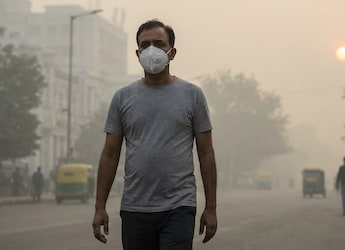
- Delhi Air Quality Drops Back To 'Very Poor' Category, AQI At 313
Delhi Air Quality Drops Back To 'Very Poor' Category, AQI At 313
| Updated: November 11, 2026 21:38 IST
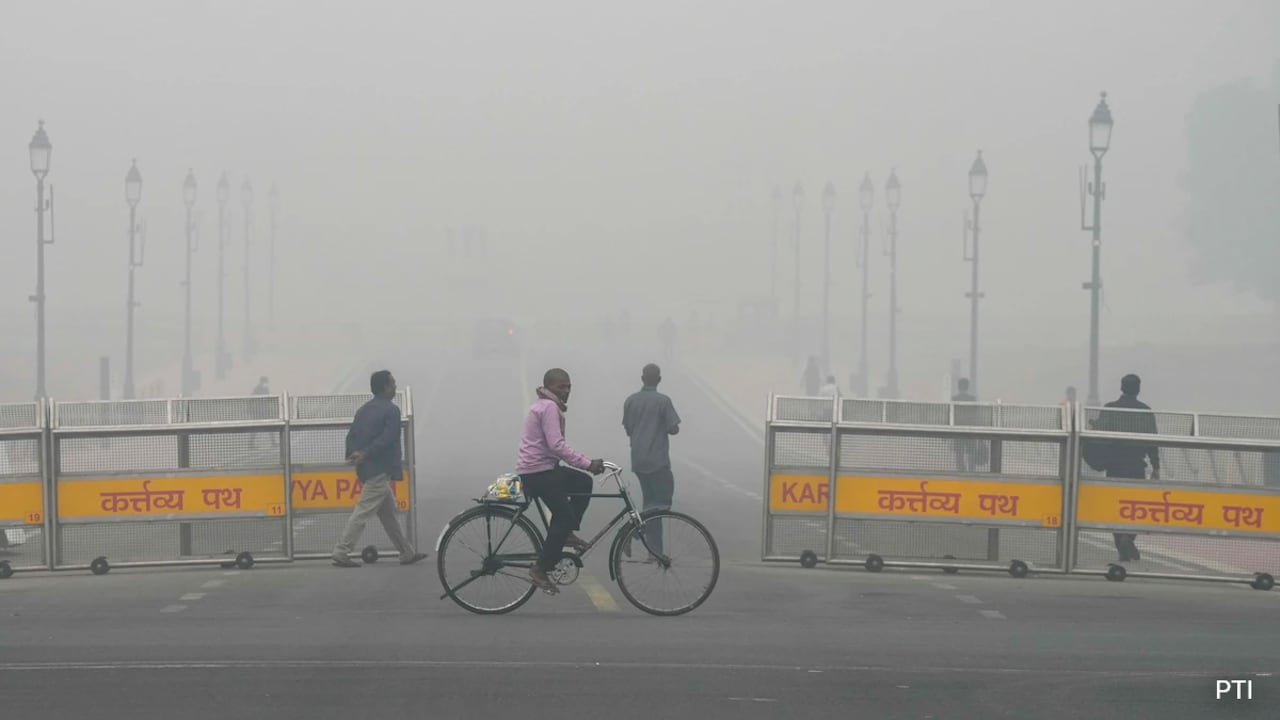
The city's average AQI deteriorated from 299 on Tuesday to 313 on Wednesday.
Highlights
- Delhi's air quality worsened to very poor with an AQI of 313 on Wednesday
- Transport sector contributed 17% to pollution, expected to drop to 13% by Thursday
- Stubble burning's impact to rise from 7% on Wednesday to 20% on Thursday in Delhi
New Delhi:
Delhi's air quality deteriorated back to the 'very poor' category on Wednesday, as the 24-hour average Air Quality Index (AQI) settled at 313, merely a day after increased wind speed provided a slight improvement, lowering the pollution levels to the 'poor' category.
The transport sector is expected to be the largest contributor to pollution on Wednesday, while the impact of stubble burning is anticipated to increase on Thursday, potentially worsening air quality further over the next few days, according to Indian Institute of Tropical Meteorology (IITM) models.
According to the Air Quality Early Warning System (EWS) for Delhi, the particulate matter concentration in the air - PM2.5 and PM10 - is also set to see an increase for the next two days.
Of the 58 monitoring stations that recorded data on Wednesday, only one station was in the 'severe' category, 34 were in the 'very poor' category, 22 in the 'poor' category and only one in the 'moderate' category.
The air quality monitoring station in the Delhi Cantonment area recorded 'moderate' air quality, with an average AQI of 117.
The city's average AQI deteriorated from 299 on Tuesday to 313 on Wednesday.
According to the Central Pollution Control Board (CPCB), an AQI between 0 and 50 is classified as 'good', 51 and 100 as 'satisfactory', 101 and 200 as 'moderate', 201 and 300 as 'poor', 301 and 400 as 'very poor', and 401 and 500 as 'severe'.
PM10 was the predominant pollutant in the national capital on Wednesday.
According to the Decision Support System (DSS) for Delhi, the transport sector is set to be the largest contributor to the city's pollution on Tuesday, accounting for 17 per cent.
In contrast, stubble burning is expected to contribute only 7 per cent on Wednesday, but projections suggest that this contribution could spike to 20% by Thursday. Meanwhile, the contribution from the Delhi transport sector is expected to decrease slightly to 13 per cent by Thursday.
Satellite data on stubble burning revealed that 927 incidents of residue burning were detected across six states on Tuesday.
Of these, 345 incidents were reported in Punjab, 14 in Haryana, 119 in Uttar Pradesh, 64 in Rajasthan, nine in Uttarakhand and 376 in Madhya Pradesh.
A total of 9592 farm-fire incidents have been detected across the six states between September 15 and November 10.
The data was provided by the Consortium for Research on Agroecosystem Monitoring and Modelling from Space (CREAMS) Laboratory of the Indian Agricultural Research Institute in its bulletin.
(Except for the headline, this story has not been edited by NDTV staff and is published from a syndicated feed.)
Published: November 11, 2026 21:38 IST
also read
Even Before Diwali, Delhi-NCR Had Worse Pollution Levels Than Last Year: Study
Reported by Himanshu Shekhar Mishra, Edited by Anindita SanyalNoida, Greater Noida Schools Switch To Hybrid Mode For Classes Up To 5 Amid Pollution
Edited by Aakanksha SinghPakistan's Own Agency Busts Its 'Diwali Firework' Pollution Theory As AQI Crosses 600
Edited by Sanstuti Nath
 Wednesday November 11, 2026 , New Delhi
The transport sector is expected to be the largest contributor to pollution on Wednesday, while the impact of stubble burning is anticipated to increase on Thursday, potentially worsening air quality further over the next few days, according to Indian Institute of Tropical Meteorology models.
- Reported by Himanshu Shekhar Mishra, Edited by Anindita Sanyal | Wednesday November 11, 2026 , New Delhi
Air pollution in Delhi-NCR has worsened during the onset of winter (from October to mid-November) this year. This has been revealed in a new analysis by the Centre for Science and Environment or CSE, an organisation that monitors environmental issues.
- Written by Vishesh Nagar | Wednesday November 11, 2026
All 10 cities in the ranking fall under the 'Hazardous' category, with Bathinda recording the highest AQI, followed by Rewari and Faridkot.
- Written by Debosmita Ghosh | Wednesday November 11, 2026
Recent AQI data has also shown how pollution can change between night, early morning and daytime hours. In Delhi, pollution increased after sunset and in the early hours following Diwali, while levels fell later in the morning.
- Written by NDTV Health Desk | Wednesday November 11, 2026
From tulsi ginger kadha to ABC juice, nutritionist Lovneet Batra shares four easy drink recipes that may help soothe throat irritation during the pollution season.

................................ Advertisement ................................





Opinion | Delhi Has Every Pollution Control Policy - Except One That Works
Monday November 09, 2026Every November, Delhi performs the same ritual. We check the AQI before stepping outdoors, children are kept indoors, masks reappear, schools consider shutting, construction is restricted, and emergency meetings are convened. Politicians blame the weather, neighbouring states, farmers, or firecrackers. And then, as the season changes, the urgency d...
दीवाली की चौखट पर दिल्ली में सांसों का संकट: 30 साल की स्टडी ने हरियाली को लेकर क्या बताया?
Thursday November 05, 2026अध्ययन में हरियाली की मात्रा के साथ उसके फैलाव और आपसी जुड़ाव को भी महत्वपूर्ण पाया गया. जिन इलाकों में हरियाली ज्यादा बिखरी हुई थी, वहां सतही तापमान अधिक रहा. इसके विपरीत, बड़े और आपस में जुड़े हरित क्षेत्रों में तापमान कम पाया गया.
Opinion: Why Delhi's Smog Can't Be Fixed From SpaceDavid Fickling, Bloomberg
Monday October 19, 2026The clearest sign that Delhi is on a path to cleaner air would be a decline in the amount of paddy grown nearby, and therefore the acreage liable to be burned each year.
Don't Normalise Air Purifiers As Delhi Chokes | The Reason Why
Thursday December 11, 2025More than 90 cities in the world's top 100 polluting list are in India. With every passing year, the AQI is rising, reaching 'hazardous' levels.
Blog | Well Done, Delhi. You've Turned Lung Sacrifice Into A Badge Of HonourSaikat Kumar Bose
Monday November 10, 2025Till some years back, Delhiites would ask angry questions to those in power about the capitals annual tryst with toxic air. This has changed. Those in the driving seat dont see the need to answer now.



