


- Home/
- GRAP IV Imposed In Delhi: Check Restrictions On Schools, Offices
GRAP IV Imposed In Delhi: Check Restrictions On Schools, Offices
| Updated: December 17, 2024 11:40 IST

GRAP IV also mandates schools to close for physical classes and public offices to work with 50% strength. (Photo source: PTI)
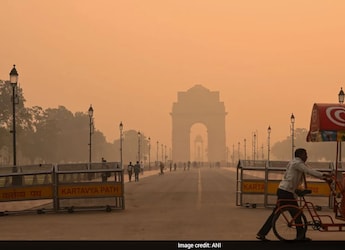
With air quality in the national capital deteriorating to 'severe', the Commission for Air Quality Management has re-imposed Stage 4 of the Graded Response Action Plan in Delhi-NCR. All construction activity has been halted, and a ban imposed on entry of diesel trucks carrying non-essential goods into the national capital.
GRAP IV also mandates schools to close for physical classes, and public offices to work with 50% strength.
The restrictions were imposed after Delhi's 24-hour average Air Quality Index breached the 400-mark around 10 p.m. on Dec. 16, up from 379 recorded earlier in the day at 4 p.m. According to SAFAR India, Delhi's AQI stood at 426 at 9:50 a.m. on Tuesday, still remaining in the ‘severe' category.
What Is GRAP Stage IV?
GRAP or Graded Response Action Plan is a set of emergency measures implemented when the air quality breaches a certain threshold. Stage IV implies the strictest measures under the plan.
GRAP is implemented in four stages based on different AQI categories: Stage I when AQI is between 201 and 300, Stage II when AQI is between 301 and 400, Stage III when AQI is between 401 and 450, and Stage IV when AQI is above 450.
Air India Unveils Five-Year Plan To Optimise International Routes With Delhi HubGRAP IV Imposed In Delhi: What's Open, What's Closed?
Schools to operate under a mandatory hybrid model across Delhi, Gurugram, Gautam Buddh Nagar, Ghaziabad and Faridabad for classes six to nine and class 11. This means classes will be held physically and online for all, except classes 10 and 12.
Online classes for students up to class five. This was already imposed under GRAP Stage III.
Public, municipal, and private offices to decide on 50% staff working from office, while the remaining 50% will work from home.
States mull additional measures, including closing colleges, non-essential businesses and implementation of odd-even vehicle rules.
State governments of Delhi and NCR to operate with staggered timings for public and municipal offices. The Centre may consider this for its own offices.
All construction and demolition activities, including highways, roads, flyovers, power lines, pipelines and other public projects to remain banned.
Truck movement into Delhi has been restricted. Trucks carrying essential items and providing essential services, as well as those operating on LNG/CNG/electricity, are allowed.
Pollution levels spiked during the day on Monday in Delhi NCR due to extremely cold winds and weather conditions that hindered the dispersal of pollutants.
GRAP IV was implemented in Delhi for the first time this season in November after a prolonged period of high pollution levels. However, the restrictions were eased in the first week of December after the Supreme Court intervened, ordering a relaxation once the city's AQI showed signs of improvement.
Delhi Pollution: Can AI Find The Solution?Published: December 17, 2024 11:40 IST
also read
Diwali Crackers Leave Delhi Gasping As AQI Soars; How Polluted Are Mumbai, Bengaluru & Other Indian Cities?
Author: Vaishnavi MishraMumbai, Thane Choke On Diwali Pollution As Firecrackers Push AQI To Severe Levels
Author: Noor Ul HaqDelhi Pollution Alarm: AQI Hits 450, Schools Go Hybrid Up To Class 5. What Else Changes?
Edited by: NDTV Profit News
 Written by Varsha Vats | Monday November 09, 2026
Children (whose lungs are still developing), the elderly, pregnant individuals, and those with pre-existing heart or lung diseases are at the greatest risk for acute complications.
- Edited by Debanish Achom | Monday November 09, 2026 , New Delhi
The war of words comes as a thick layer of smoke covers Delhi-National Capital Region (NCR) after Diwali celebrations, reducing visibility and taking air pollution into the 'severe' category at several locations
- AFP | Monday November 09, 2026 , India
Toxic air in parts of India's capital New Delhi soared to more than 58 times the World Health Organization's recommended daily limit Monday.
- Edited by Debanish Achom | Monday November 09, 2026 , New Delhi
Real-time figures from the CPCB's Sameer mobile application and station-level monitoring indicated widespread pockets of extreme toxicity across the national capital
- Reported by Kumar Kunal | Monday November 09, 2026 , New Delhi
Sudden discontinuation of online data is not surprising for those who follow the website on Diwali evening regularly.


................................ Advertisement ................................


दीवाली की चौखट पर दिल्ली में सांसों का संकट: 30 साल की स्टडी ने हरियाली को लेकर क्या बताया?
Thursday November 05, 2026अध्ययन में हरियाली की मात्रा के साथ उसके फैलाव और आपसी जुड़ाव को भी महत्वपूर्ण पाया गया. जिन इलाकों में हरियाली ज्यादा बिखरी हुई थी, वहां सतही तापमान अधिक रहा. इसके विपरीत, बड़े और आपस में जुड़े हरित क्षेत्रों में तापमान कम पाया गया.
Opinion: Why Delhi's Smog Can't Be Fixed From SpaceDavid Fickling, Bloomberg
Monday October 19, 2026The clearest sign that Delhi is on a path to cleaner air would be a decline in the amount of paddy grown nearby, and therefore the acreage liable to be burned each year.
Don't Normalise Air Purifiers As Delhi Chokes | The Reason Why
Thursday December 11, 2025More than 90 cities in the world's top 100 polluting list are in India. With every passing year, the AQI is rising, reaching 'hazardous' levels.
Blog | Well Done, Delhi. You've Turned Lung Sacrifice Into A Badge Of HonourSaikat Kumar Bose
Monday November 10, 2025Till some years back, Delhiites would ask angry questions to those in power about the capitals annual tryst with toxic air. This has changed. Those in the driving seat dont see the need to answer now.
Opinion | Why Indians Have Just Given Up On Air Pollution CrisisTanushree Ganguly
Friday December 20, 2024While some may argue that people in Delhi are now more aware of air pollution than they were a decade back, my rebuttal would be that awareness does not mean that people are concerned.




Comments
