


- Home/
- Why Delhi's Major Air Quality Stations Stopped Showing Data On Diwali Evening
Why Delhi's Major Air Quality Stations Stopped Showing Data On Diwali Evening
Reported by Kumar Kunal | Updated: November 09, 2026 07:55 IST
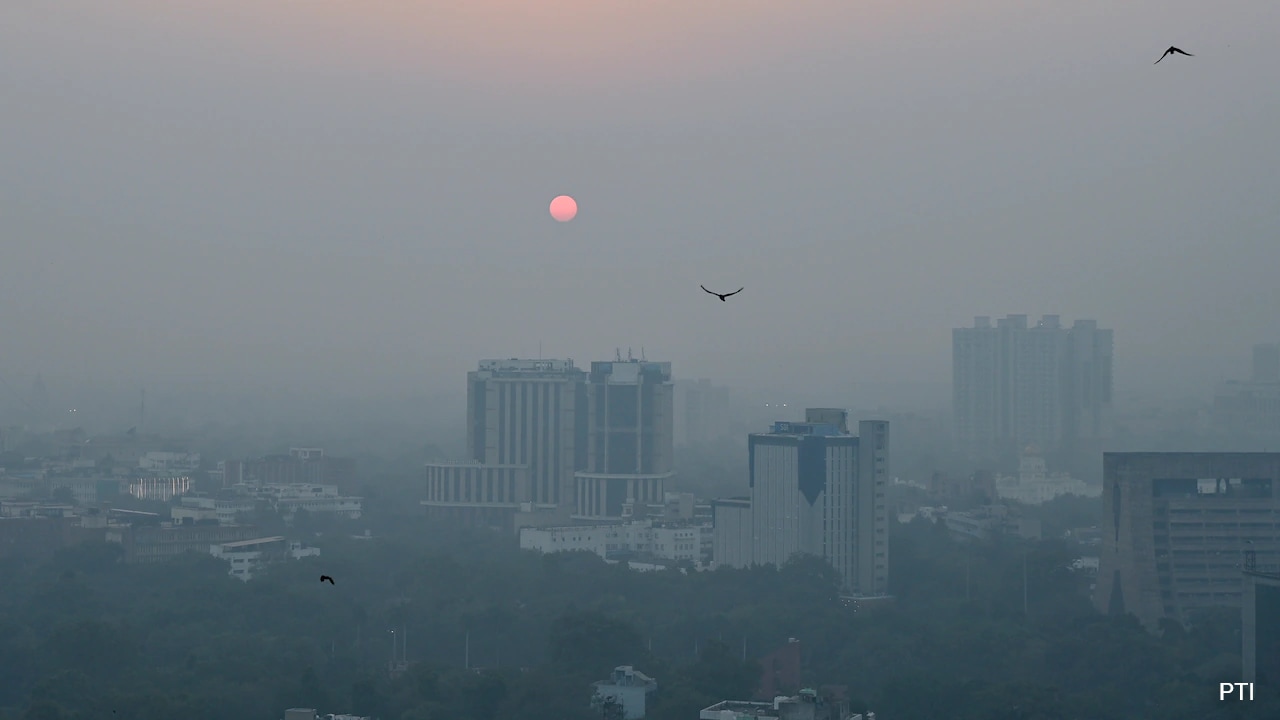
The trend on Diwali evenings when agencies stopped giving online data continued this year as well.
Highlights
- Delhi-NCR saw severe pollution on Diwali despite Supreme Court guidelines being ignored
- Pollution data from key areas like RK Puram and Nehru Nagar stopped showing after 9 PM
- Less polluted areas like JNU showed rising PM2.5 levels, revealing poor pollution control
New Delhi:
Diwali is synonymous with pollution for Delhi-NCR. Despite regulations and instructions by the Supreme Court, the implementation of the strict guideline went in the air like the smoke which was polluting Delhi. In such a scenario the responsibility of the bodies which are looking after the pollution control increases manifold. But, as there was no one to stop the firecrackers in Delhi, similarly, it seems the agencies were either ill-prepared or just not quite transparent about providing the Diwali pollution data.
Many areas of the national capital were many times above the accepted pollution levels. Areas like RK Puram and Nehru Nagar near Lajpat Nagar were most polluted till 9 PM. The real-time data was working well and showing how the pollution graph was going sharply northwards in all these areas. But suddenly the Delhi Pollution Control Committee's website stopped providing the real-time data for many of the stations, which included RK Puram, Nehru Nagar, Mundka, Sonia Vihar and Dwarka, for the next few hours.
The Other Stations Captured The Trend
But when pollution measuring stations from the residential areas stopped providing the real-time data, some of the less polluted areas exposed the agencies on how they failed to provide respite from the cracker pollution despite guidelines issued by the topmost court of the country. Another station from JNU, which is in the less populated area of South Delhi, has shown a sudden spike in the concentration of PM2.5. Till 8 PM the concentration of this Particulate Matter at JNU was only 161 micrograms per meter cube. At the same time in the neighbourhood of RK Puram, this concentration was more than three times at 504 micro gram per meter cube. RK Puram station stopped showing the data after 9 PM when it went up to 924 micrograms per meter cube means almost doubled in just an hour. The JNU data which was available online reached 786 by 11 PM on Diwali night, a jump of almost 5 times if compared to the 8 PM concentration of PM 2.5. Hence, it exposed the poor implementation of the guidelines and also how agencies stopped providing online data at the crucial time when the pollution levels were peaking.
Not The Story Of This Year Only
Sudden discontinuation of online data is not surprising for those who follow the website on Diwali evening regularly. Not providing data to the common man is a normal exercise on the most important evening of the year from the pollution point of view. The website, which is managed by the DPCC, which comes under the Environment Department of the Delhi government, often stopped providing data on previous Diwali evenings as well. Hence the trend on Diwali evenings when the agencies stopped giving online data suddenly continued this year as well. Nonregistration of data is normally being attributed to the technical glitches by them. But surprisingly, these technical glitches come to the rescue of present and earlier governments in the office irrespective of which political party is in power.
Published: November 09, 2026 07:55 IST
 Reported by Kumar Kunal | Monday November 09, 2026 , New Delhi
Sudden discontinuation of online data is not surprising for those who follow the website on Diwali evening regularly.
- Written by Vaishnavi Mishra | Monday November 09, 2026
The Commission for Air Quality Management had already invoked Stage III of the Graded Response Action Plan across Delhi-NCR on Friday.
- Reported by Reet Kaur Sahni | Monday November 09, 2026 , New Delhi
In the run-up to Diwali, the Commission for Air Quality Management (CAQM) enforced Stage 3 of the Graded Response Action Plan (GRAP) across Delhi-NCR.
- Written by Dr Navina Singh | Sunday November 08, 2026
Phthalates, found in certain plastics and personal care products, are potent endocrine disruptors, a classification that is well established and firmly supported by research.
- Written by Noor Ul Haq | Sunday November 08, 2026
Mumbai and Thane recorded severe air quality readings on Diwali night, with AQI at 278 and 298, respectively, as firecracker emissions added to the city's pollution burden.

................................ Advertisement ................................
दीवाली की चौखट पर दिल्ली में सांसों का संकट: 30 साल की स्टडी ने हरियाली को लेकर क्या बताया?
Thursday November 05, 2026अध्ययन में हरियाली की मात्रा के साथ उसके फैलाव और आपसी जुड़ाव को भी महत्वपूर्ण पाया गया. जिन इलाकों में हरियाली ज्यादा बिखरी हुई थी, वहां सतही तापमान अधिक रहा. इसके विपरीत, बड़े और आपस में जुड़े हरित क्षेत्रों में तापमान कम पाया गया.
Opinion: Why Delhi's Smog Can't Be Fixed From SpaceDavid Fickling, Bloomberg
Monday October 19, 2026The clearest sign that Delhi is on a path to cleaner air would be a decline in the amount of paddy grown nearby, and therefore the acreage liable to be burned each year.
Don't Normalise Air Purifiers As Delhi Chokes | The Reason Why
Thursday December 11, 2025More than 90 cities in the world's top 100 polluting list are in India. With every passing year, the AQI is rising, reaching 'hazardous' levels.
Blog | Well Done, Delhi. You've Turned Lung Sacrifice Into A Badge Of HonourSaikat Kumar Bose
Monday November 10, 2025Till some years back, Delhiites would ask angry questions to those in power about the capitals annual tryst with toxic air. This has changed. Those in the driving seat dont see the need to answer now.
Opinion | Why Indians Have Just Given Up On Air Pollution CrisisTanushree Ganguly
Friday December 20, 2024While some may argue that people in Delhi are now more aware of air pollution than they were a decade back, my rebuttal would be that awareness does not mean that people are concerned.




