


- Home/
- Punjab And Haryana Spar Over Who Is Really Tackling Stubble Burning
Punjab And Haryana Spar Over Who Is Really Tackling Stubble Burning
Reported by Gurpreet Singh Chhina | Updated: November 08, 2026 09:11 IST
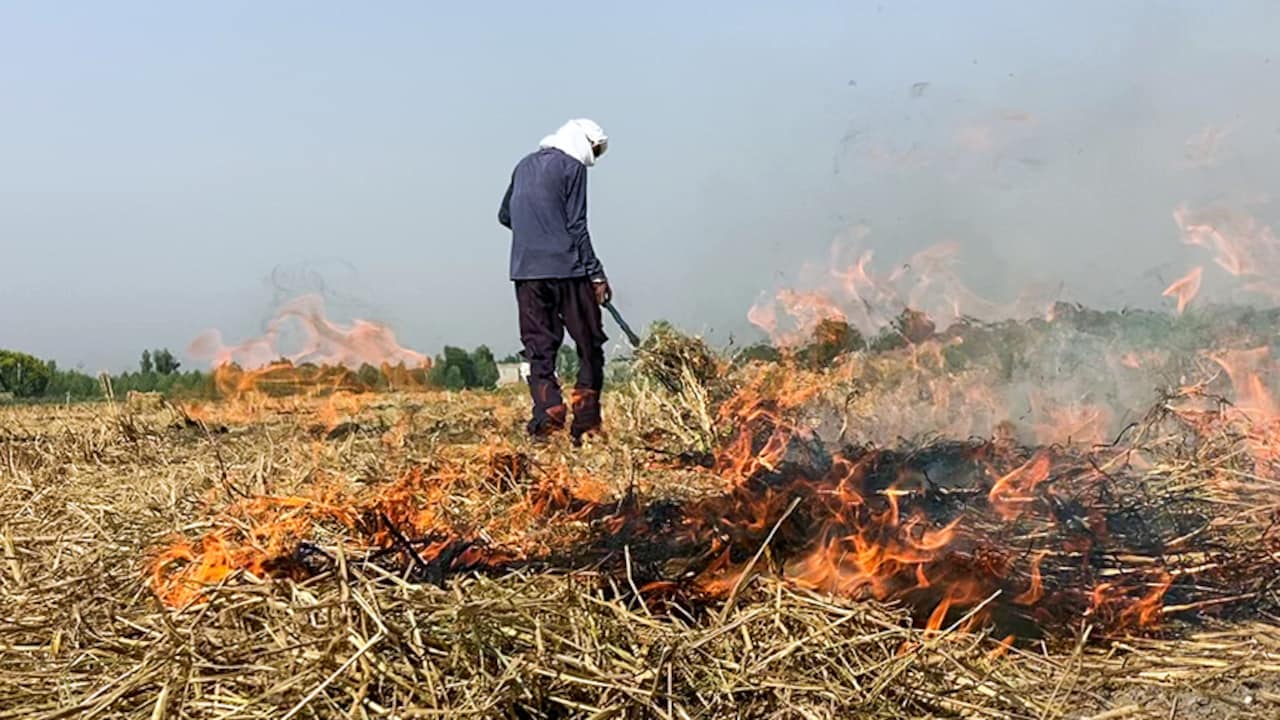
Crop residue or stubble-burning has been cited as a major source of air pollution
Highlights
- BJP-led Haryana highlights incentive-based strategy to prevent farm stubble burning
- Punjab questions focus on the border state over Haryana's farm fire role
- Haryana offers Rs 1,200 per acre, machinery and village monitoring to curb stubble fires
Chandigarh:
The political battle over Delhi's worsening air pollution has taken a fresh turn, with the BJP-led Haryana government responding to AAP's challenge over stubble burning by highlighting its incentive-based strategy to prevent farm fires.
The latest exchange follows Punjab Finance Minister Harpal Singh Cheema's sharp attack on the BJP, in which he questioned why Punjab was being repeatedly blamed for Delhi's pollution while farm fires in Haryana, also an agricultural state, were allegedly being ignored.
"Why only Punjab? Is nothing happening in Haryana?" Cheema asked, challenging the BJP to explain its focus on Punjab instead of addressing pollution in the national capital.
The Haryana government's response comes in the form of its crop-residue management measures, which the BJP is projecting as an alternative to the approach adopted by the Bhagwant Mann government in Punjab.
Rather than limiting its response to political allegations, Haryana is highlighting a package of financial incentives, machinery deployment, village-level monitoring and industrial utilisation of paddy straw.
Under its Parali Protsahan Yojana, the Haryana government is offering farmers an incentive of Rs 1,200 per acre for the effective utilisation of crop-residue management machinery. The state has also appointed 8,134 village-level nodal officers to monitor farm fires and coordinate with farmers. Its action plan includes deployment of thousands of balers, rakers and other crop-residue management machines; establishment of a dedicated Parali Protection Force at district and block levels; drone surveillance and intensified late-evening and night patrolling; financial incentives and machinery subsidies to encourage farmers to manage paddy straw and channelising collected paddy straw towards industries, biomass power plants and compressed biogas (CBG) units.
The Haryana government has also prescribed strict action in verified cases of stubble burning, including FIRs, challans, environmental compensation and red entries in farmers' land records.
The BJP is using these measures to counter AAP's criticism and argue that farmers need financial incentives, machinery and alternative markets for paddy straw rather than political statements.
The party's argument is that Haryana has created a mechanism involving both incentives and enforcement, whereas Punjab continues to witness farm fires despite repeated claims by the Mann government about reducing stubble burning.
According to Punjab Pollution Control Board data, the state recorded 3,144 farm-fire incidents between September 15 and November 6, 2026. Tarn Taran accounted for the highest number at 611, followed by Ferozepur with 410, Sangrur with 281, Bathinda with 262 and Amritsar with 231.
Punjab, however, has pointed to the substantial reduction in farm fires over the past two years. AAP leaders have highlighted the deployment of more than 21,000 crop-residue management machines and claimed that the state has spent over Rs 800 crore on machinery and stubble management.
The AAP's counterattack has centred on the argument that stubble burning cannot be treated as the sole explanation for Delhi's deteriorating air quality.
Punjab AAP media in-charge Baltej Pannu accused BJP leaders, particularly Delhi Environment Minister Manjinder Singh Sirsa, of making Punjab's farmers scapegoats instead of addressing the multiple sources of pollution in the national capital.
The party questioned why the Centre had not agreed to share the financial burden of stubble management despite Punjab's offer.
The confrontation intensified after Sirsa accused the Punjab government of deliberately allowing farm fires and alleged that police personnel and government officials were facilitating stubble burning. AAP rejected the allegation, claiming that the video cited by Sirsa showed officials attempting to extinguish a fire.
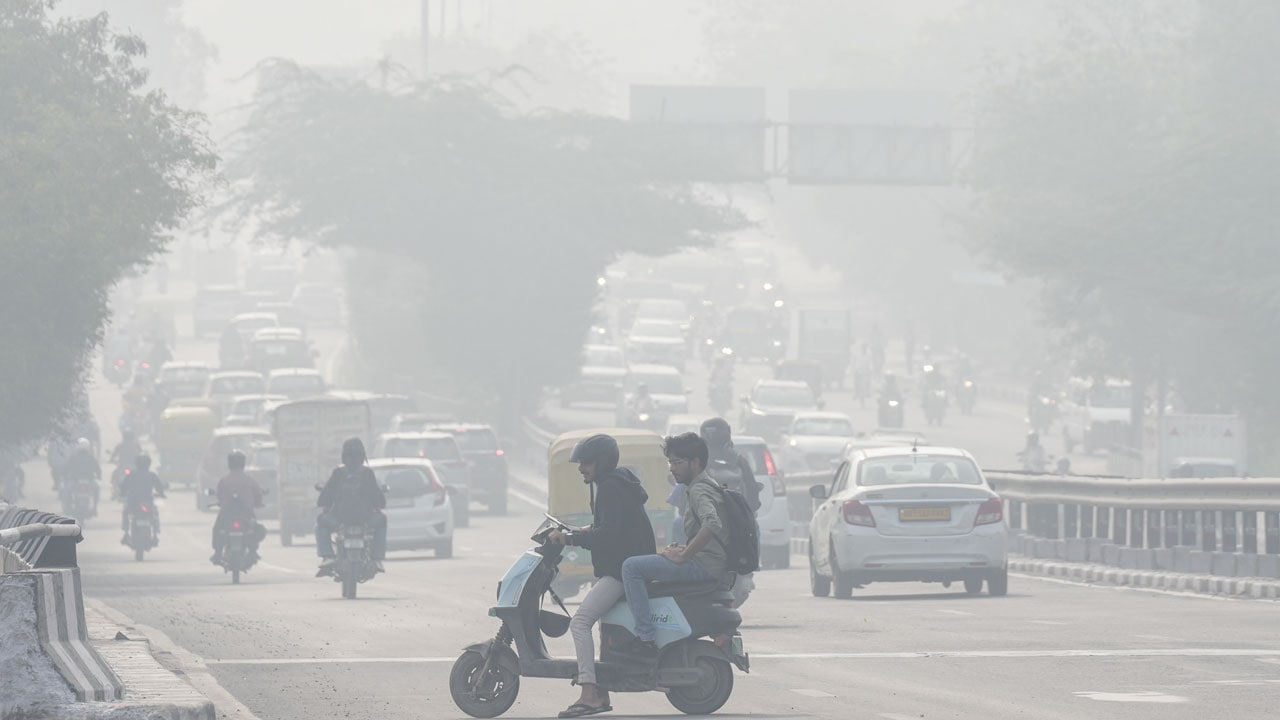
The political exchange comes as Delhi continues to struggle with poor air quality. The Centre told the Supreme Court that stubble burning accounted for around 14 per cent of Delhi's pollution on the day under consideration.
During the November 6 hearing, the Supreme Court also highlighted vehicular emissions as a major contributor and suggested announcing crop-stubble procurement prices in advance and strengthening residue collection at the village level.
With the 2027 Punjab assembly elections approaching, the confrontation carries political significance for the Mann government, which faces questions over its promise to curb stubble burning.
Published: November 08, 2026 09:11 IST
 Reported by Reet Kaur Sahni | Monday November 09, 2026 , New Delhi
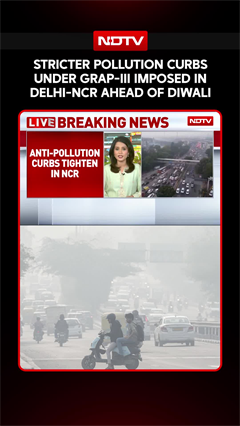
In the run-up to Diwali, the Commission for Air Quality Management (CAQM) enforced Stage 3 of the Graded Response Action Plan (GRAP) across Delhi-NCR.
- Written by Dr Navina Singh | Sunday November 08, 2026
Phthalates, found in certain plastics and personal care products, are potent endocrine disruptors, a classification that is well established and firmly supported by research.
- Written by Noor Ul Haq | Sunday November 08, 2026
Mumbai and Thane recorded severe air quality readings on Diwali night, with AQI at 278 and 298, respectively, as firecracker emissions added to the city's pollution burden.
- Sunday November 08, 2026
The air quality is forecast to turn 'severe' on Monday following Diwali celebrations, combined with vehicular emissions, as well as the peak stubble-burning season.
- Written by Dr Shibal Bhartiya | Sunday November 08, 2026
A little irritation on a smoggy day is common and usually manageable. If something feels more than uncomfortable, or if vision is affected, get it examined rather than waiting for the air to clear.


................................ Advertisement ................................
दीवाली की चौखट पर दिल्ली में सांसों का संकट: 30 साल की स्टडी ने हरियाली को लेकर क्या बताया?
Thursday November 05, 2026अध्ययन में हरियाली की मात्रा के साथ उसके फैलाव और आपसी जुड़ाव को भी महत्वपूर्ण पाया गया. जिन इलाकों में हरियाली ज्यादा बिखरी हुई थी, वहां सतही तापमान अधिक रहा. इसके विपरीत, बड़े और आपस में जुड़े हरित क्षेत्रों में तापमान कम पाया गया.
Opinion: Why Delhi's Smog Can't Be Fixed From SpaceDavid Fickling, Bloomberg
Monday October 19, 2026The clearest sign that Delhi is on a path to cleaner air would be a decline in the amount of paddy grown nearby, and therefore the acreage liable to be burned each year.
Don't Normalise Air Purifiers As Delhi Chokes | The Reason Why
Thursday December 11, 2025More than 90 cities in the world's top 100 polluting list are in India. With every passing year, the AQI is rising, reaching 'hazardous' levels.
Blog | Well Done, Delhi. You've Turned Lung Sacrifice Into A Badge Of HonourSaikat Kumar Bose
Monday November 10, 2025Till some years back, Delhiites would ask angry questions to those in power about the capitals annual tryst with toxic air. This has changed. Those in the driving seat dont see the need to answer now.
Opinion | Why Indians Have Just Given Up On Air Pollution CrisisTanushree Ganguly
Friday December 20, 2024While some may argue that people in Delhi are now more aware of air pollution than they were a decade back, my rebuttal would be that awareness does not mean that people are concerned.




