


- Home/
- Eye Irritation From Air Pollution: Symptoms And When To See A Doctor
Eye Irritation From Air Pollution: Symptoms And When To See A Doctor
Written by Dr Shibal Bhartiya | Updated: November 08, 2026 13:01 IST
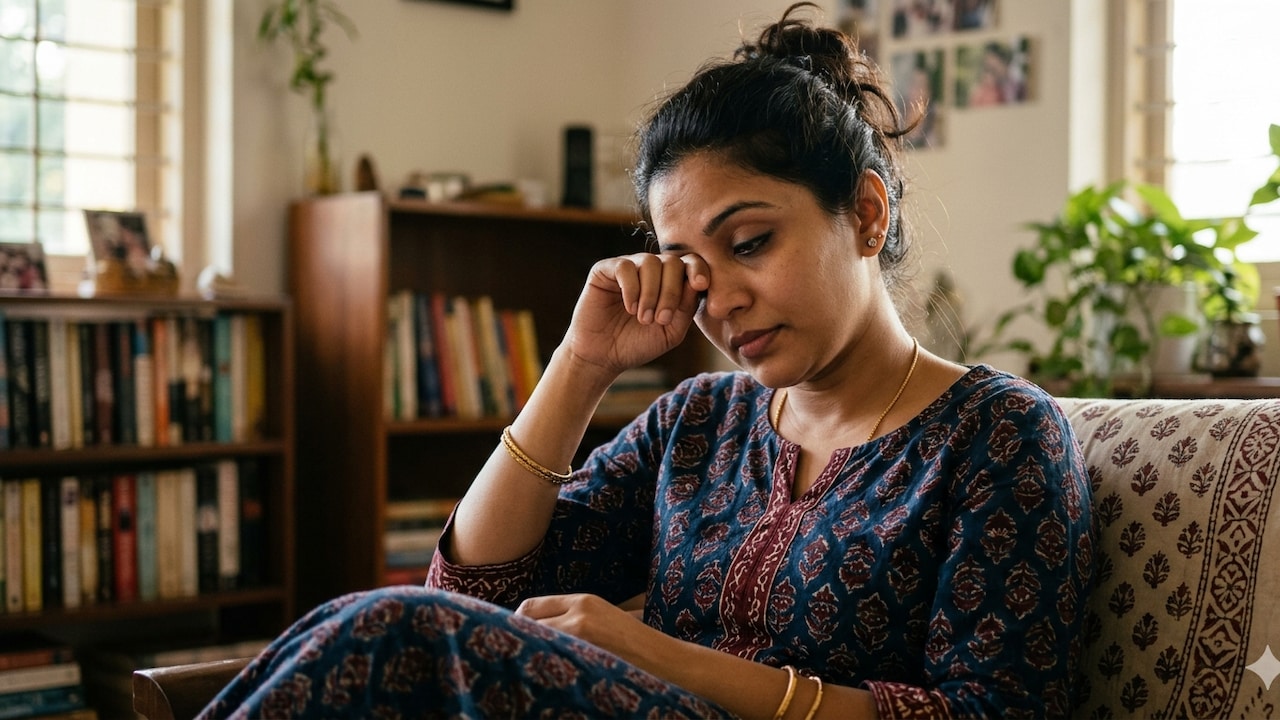
Your eyes are among the few organs in direct contact with the outside air
Highlights
- Eyes are irritated in winter due to pollution particles disrupting the tear film
- Symptoms include burning, redness, itching, watering, gritty feeling, and blurred vision
- Avoid rubbing eyes, use preservative-free drops, wear glasses, and keep indoor air clean
Every winter, as we battle the cold and smog, a familiar complaint follows. Eyes that burn, water and feel full of sand. Many people shrug it off as part of the season. Mostly it is harmless, but it is worth knowing when it isn't.
Why pollution bothers the eyes
Your eyes are among the few organs in direct contact with the outside air. The surface is protected by a thin film of tears, and that film is easily disturbed. Fine particles (PM2.5), smoke, nitrogen dioxide, ozone and dust settle on the eye and irritate the surface. They can also trigger an allergic response and make tears evaporate faster. The result is a dry, inflamed, uncomfortable eye.
Symptoms to expect
- Burning or stinging
- Redness
- Itching
- Watering, which seems odd but is often the eye's reaction to dryness
- A gritty feeling, as if something is stuck in the eye
- Mild swelling or heaviness of the eyelids
- Blurred vision that clears after blinking
These usually ease when you get away from the polluted air, and they tend to be worse in the morning and in the evening, when smog settles.
What you can do at home
1. Do not rub your eyes. It pushes particles across the surface and can scratch it.
2. Rinse your face and splash clean water over closed eyes after coming indoors. Do NOT splash water into the eyes, as it washes off the protective tear film.
3. Use preservative-free lubricating drops a few times a day. They wash out irritants and support the tear film.
4. Place a clean, cool compress over closed eyelids for a few minutes if they feel hot or itchy.
5. Wear glasses or wraparound sunglasses outdoors. They will not filter the air, but they cut down how much reaches your eyes.
6. Switch from contact lenses to spectacles on high-pollution days. Lenses trap particles against the eye.
7. Keep indoor air as clean as you can. Close windows during peak smog hours and use a purifier in the room where you spend the most time.
8. Take screen breaks. We blink far less when looking at screens, which makes dry eyes worse. So decrease screen time, or at least, take frequent breaks when working on screens.
READ | Diwali Lung Protection: Doctors Warn Delhi Residents As Pollution Rises
One caution: Please avoid pharmacy "redness-relief" drops and any steroid or antibiotic-steroid combination drop you have left over from an earlier illness. Steroid drops can raise eye pressure and damage the optic nerve, which is a particular risk for people with, or at risk of, glaucoma. They can also worsen certain infections. Some anti-allergy eyedrops can "whiten" your eyes temporarily, but the redness comes back as soon as you stop the eyedrops (called rebound redness). This is because these drops temporarily blanch the blood vessels. Some anti-allergy eyedrops can also increase the blood pressure in those who have a tendency for high BP.
When to see an eye doctor
Pollution irritation should settle within a day or two once you are away from the smoke. See an ophthalmologist promptly if you have:
- Eye pain that is more than a surface irritation
- Reduced or hazy vision that does not clear with blinking
- Marked sensitivity to light
- Thick, yellow or green discharge, or eyelids stuck together on waking
- Severe or one-sided redness
- Symptoms lasting more than two to three days despite the measures above
- Pain or redness while wearing contact lenses. Take the lenses out and get checked the same day, as lens-related infections can progress quickly.
- Seeing halos around lights, or a headache with eye pain and nausea, which can signal a sudden rise in eye pressure
- Children, older adults, contact lens users, and people with dry eye, allergies or glaucoma should have a lower threshold for getting checked.
READ | Pollution Or Seasonal Allergy? How To Identify What's Triggering Your Cough
The bottom line
A little irritation on a smoggy day is common and usually manageable. But the eye is not a part of the body to experiment on. If something feels more than uncomfortable, or if vision is affected, get it examined rather than waiting for the air to clear.
(Dr Shibal Bhartiya, Ophthalmologist, Glaucoma Surgeon, and Director of Ophthalmology at Marengo Asia Hospitals and Research Collaborator, Mayo Clinic, Florida)
\r\n
\r\n
Disclaimer: The opinions expressed within this article are the personal opinions of the author. NDTV is not responsible for the accuracy, completeness, suitability, or validity of any information on this article. All information is provided on an as-is basis. The information, facts or opinions appearing in the article do not reflect the views of NDTV and NDTV does not assume any responsibility or liability for the same.
Published: November 08, 2026 12:01 IST
also read
Can Pollution Affect Your Fertility Test Results? What The Evidence Actually Tells Us
Written by Dr Navina SinghPost-Diwali Cough: Is It Just Pollution Irritation Or Something More Serious?
Written by Dr Anusha C MEven Healthy People Are Falling Sick: Former AIIMS Director Warns Of Rising Health Risks As Delhi's Toxic Air Worsens Ahead Of Diwali
Written by Sneha Mordani
 Reported by Reet Kaur Sahni | Monday November 09, 2026 , New Delhi
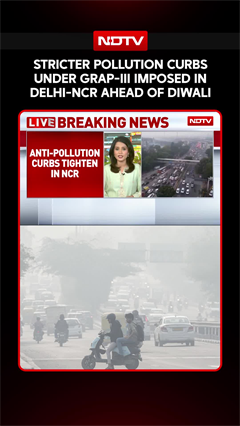
In the run-up to Diwali, the Commission for Air Quality Management (CAQM) enforced Stage 3 of the Graded Response Action Plan (GRAP) across Delhi-NCR.
- Written by Dr Navina Singh | Sunday November 08, 2026
Phthalates, found in certain plastics and personal care products, are potent endocrine disruptors, a classification that is well established and firmly supported by research.
- Written by Noor Ul Haq | Sunday November 08, 2026
Mumbai and Thane recorded severe air quality readings on Diwali night, with AQI at 278 and 298, respectively, as firecracker emissions added to the city's pollution burden.
- Sunday November 08, 2026
The air quality is forecast to turn 'severe' on Monday following Diwali celebrations, combined with vehicular emissions, as well as the peak stubble-burning season.
- Written by Dr Shibal Bhartiya | Sunday November 08, 2026
A little irritation on a smoggy day is common and usually manageable. If something feels more than uncomfortable, or if vision is affected, get it examined rather than waiting for the air to clear.


................................ Advertisement ................................
दीवाली की चौखट पर दिल्ली में सांसों का संकट: 30 साल की स्टडी ने हरियाली को लेकर क्या बताया?
Thursday November 05, 2026अध्ययन में हरियाली की मात्रा के साथ उसके फैलाव और आपसी जुड़ाव को भी महत्वपूर्ण पाया गया. जिन इलाकों में हरियाली ज्यादा बिखरी हुई थी, वहां सतही तापमान अधिक रहा. इसके विपरीत, बड़े और आपस में जुड़े हरित क्षेत्रों में तापमान कम पाया गया.
Opinion: Why Delhi's Smog Can't Be Fixed From SpaceDavid Fickling, Bloomberg
Monday October 19, 2026The clearest sign that Delhi is on a path to cleaner air would be a decline in the amount of paddy grown nearby, and therefore the acreage liable to be burned each year.
Don't Normalise Air Purifiers As Delhi Chokes | The Reason Why
Thursday December 11, 2025More than 90 cities in the world's top 100 polluting list are in India. With every passing year, the AQI is rising, reaching 'hazardous' levels.
Blog | Well Done, Delhi. You've Turned Lung Sacrifice Into A Badge Of HonourSaikat Kumar Bose
Monday November 10, 2025Till some years back, Delhiites would ask angry questions to those in power about the capitals annual tryst with toxic air. This has changed. Those in the driving seat dont see the need to answer now.
Opinion | Why Indians Have Just Given Up On Air Pollution CrisisTanushree Ganguly
Friday December 20, 2024While some may argue that people in Delhi are now more aware of air pollution than they were a decade back, my rebuttal would be that awareness does not mean that people are concerned.




