


- Home/
- Can Pollution Affect Your Fertility Test Results? What The Evidence Actually Tells Us
Can Pollution Affect Your Fertility Test Results? What The Evidence Actually Tells Us
Written by Dr Navina Singh | Updated: November 08, 2026 23:26 IST

Highlights
- Air pollution exposure links to changes in hormone levels and reproductive timing in women
- High PM2.5 exposure may delay menstruation and advance menopause in young Indian women
- Phthalates in plastics relate to altered ovarian reserve and egg retrieval in fertility patients
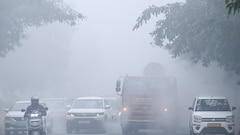
Every winter, as the AQI rises across north India, couples undergoing fertility evaluation often ask whether the air they breathe could be affecting their reports. Research increasingly links air pollution with changes in hormone levels, sperm quality and IVF outcomes. Fine particulate matter, particularly PM2.5, can reach deep into the lungs and contribute to inflammation and oxidative stress. Both processes are being investigated for their possible effects on reproductive function. However, determining whether pollution has influenced a particular fertility result is more complicated than identifying an abnormality in a report.
How Pollution May Affect Female Reproductive Health
Menstrual cycles and ovarian function depend on several hormones working together. Some environmental pollutants may interfere with these processes, and researchers have begun examining whether prolonged exposure is associated with changes in reproductive development and ageing.
A 2026 study published in Communications Medicine analysed National Family Health Survey data from 2019-2021 alongside air pollution and groundwater measurements. Among 179,972 women aged 15-24, exposure to annual PM2.5 concentrations above India's standard of 40 micrograms per cubic metre was associated with 24% higher odds of starting menstruation later than usual. Elevated exposure was also associated with a 23% higher hazard of earlier menopause, with stronger patterns in northern India.
The study examined reproductive timing rather than fertility test results. As the research was observational, it cannot be established that pollution directly caused these changes.
What Chemical Exposure May Mean for Ovarian Function
While the national study examined reproductive timing, other researchers have looked more closely at chemicals present in the environment surrounding developing eggs.
Phthalates, found in certain plastics and personal care products, are potent endocrine disruptors, a classification that is well established and firmly supported by research.
A 2024 study published in F&S Science examined follicular fluid collected from 245 Indian women undergoing egg retrieval for ICSI. Follicular fluid surrounds the developing egg and can provide information about its immediate environment.
Researchers reported associations between certain phthalate metabolites and measures of ovarian reserve and egg retrieval outcomes. Phthalates, being potent endocrine disruptors, are considered responsible for these changes in ovarian reserve and egg retrieval outcomes. The results were not consistent across all the chemicals examined. Importantly, the participants were already undergoing fertility treatment, so the findings cannot be used to conclude that everyday plastic exposure reduces fertility in otherwise healthy women.
What Research Shows About Sperm Quality
The possible effects of pollution are not limited to female reproductive health. Sperm takes approximately two to three months to develop, making exposure over time relevant when evaluating semen parameters.
A 2018 study published in Occupational & Environmental Medicine examined 6,475 men in Taiwan. Every 5 micrograms per cubic metre increase in the two-year average PM2.5 concentration was associated with a 1.29% decrease in normal sperm morphology, or the proportion of sperm with a normal shape.
The study also reported higher sperm concentration with greater exposure. This contrasting finding matters because sperm concentration and morphology measure different aspects of semen quality.
A man who spends long hours working around traffic emissions, for example, may have relevant exposure history. But if his semen analysis shows abnormal morphology, the doctor must also consider conditions such as varicocele, hormonal disorders and infections before deciding whether further investigation is needed.
Reducing Exposure During Fertility Planning
Avoiding air pollution completely may not be possible, particularly in large cities. However, exposure can be reduced through everyday precautions.
- Indoor air quality: Appropriately sized HEPA air purifiers can reduce fine particles indoors when filters are maintained properly.
- Outdoor activities: Checking AQI readings and limiting strenuous outdoor exercise during heavily polluted periods can help reduce exposure.
- Personal protection: A properly fitted N95 or N99 mask can reduce inhalation of fine particles when outdoor exposure is unavoidable.
These measures are useful for reducing particulate exposure, although their direct benefits for fertility outcomes have not been established.
What Should Couples Understand About Their Fertility Reports?
A fertility report provides information about reproductive health, but it cannot identify every factor that may have influenced the findings.
For example, an abnormal semen analysis may need to be repeated because sperm parameters can vary between samples. Similarly, an AMH result must be considered alongside age, ultrasound findings and reproductive history rather than interpreted on its own.
For individuals with prolonged exposure to traffic emissions, industrial dust or chemicals, that history is worth discussing during a consultation. It may help the specialist decide whether additional assessment is appropriate.
(Dr Navina Singh, Fertility Specialist, Birla Fertility & IVF, Mumbai)
\r\n
\r\n
Disclaimer: The opinions expressed within this article are the personal opinions of the author. NDTV is not responsible for the accuracy, completeness, suitability, or validity of any information on this article. All information is provided on an as-is basis. The information, facts or opinions appearing in the article do not reflect the views of NDTV and NDTV does not assume any responsibility or liability for the same.
Published: November 08, 2026 23:22 IST
also read
Eye Irritation From Air Pollution: Symptoms And When To See A Doctor
Written by Dr Shibal BhartiyaPost-Diwali Cough: Is It Just Pollution Irritation Or Something More Serious?
Written by Dr Anusha C MEven Healthy People Are Falling Sick: Former AIIMS Director Warns Of Rising Health Risks As Delhi's Toxic Air Worsens Ahead Of Diwali
Written by Sneha Mordani
 Reported by Reet Kaur Sahni | Monday November 09, 2026 , New Delhi
In the run-up to Diwali, the Commission for Air Quality Management (CAQM) enforced Stage 3 of the Graded Response Action Plan (GRAP) across Delhi-NCR.
- Written by Dr Navina Singh | Sunday November 08, 2026
Phthalates, found in certain plastics and personal care products, are potent endocrine disruptors, a classification that is well established and firmly supported by research.
- Written by Noor Ul Haq | Sunday November 08, 2026
Mumbai and Thane recorded severe air quality readings on Diwali night, with AQI at 278 and 298, respectively, as firecracker emissions added to the city's pollution burden.
- Sunday November 08, 2026
The air quality is forecast to turn 'severe' on Monday following Diwali celebrations, combined with vehicular emissions, as well as the peak stubble-burning season.
- Written by Dr Shibal Bhartiya | Sunday November 08, 2026
A little irritation on a smoggy day is common and usually manageable. If something feels more than uncomfortable, or if vision is affected, get it examined rather than waiting for the air to clear.




................................ Advertisement ................................
दीवाली की चौखट पर दिल्ली में सांसों का संकट: 30 साल की स्टडी ने हरियाली को लेकर क्या बताया?
Thursday November 05, 2026अध्ययन में हरियाली की मात्रा के साथ उसके फैलाव और आपसी जुड़ाव को भी महत्वपूर्ण पाया गया. जिन इलाकों में हरियाली ज्यादा बिखरी हुई थी, वहां सतही तापमान अधिक रहा. इसके विपरीत, बड़े और आपस में जुड़े हरित क्षेत्रों में तापमान कम पाया गया.
Opinion: Why Delhi's Smog Can't Be Fixed From SpaceDavid Fickling, Bloomberg
Monday October 19, 2026The clearest sign that Delhi is on a path to cleaner air would be a decline in the amount of paddy grown nearby, and therefore the acreage liable to be burned each year.
Don't Normalise Air Purifiers As Delhi Chokes | The Reason Why
Thursday December 11, 2025More than 90 cities in the world's top 100 polluting list are in India. With every passing year, the AQI is rising, reaching 'hazardous' levels.
Blog | Well Done, Delhi. You've Turned Lung Sacrifice Into A Badge Of HonourSaikat Kumar Bose
Monday November 10, 2025Till some years back, Delhiites would ask angry questions to those in power about the capitals annual tryst with toxic air. This has changed. Those in the driving seat dont see the need to answer now.
Opinion | Why Indians Have Just Given Up On Air Pollution CrisisTanushree Ganguly
Friday December 20, 2024While some may argue that people in Delhi are now more aware of air pollution than they were a decade back, my rebuttal would be that awareness does not mean that people are concerned.




