


- Home/
- Smog Covers Mumbai As Civic Body Struggles To Fight Air Pollution
Smog Covers Mumbai As Civic Body Struggles To Fight Air Pollution
| Updated: October 24, 2026 13:21 IST
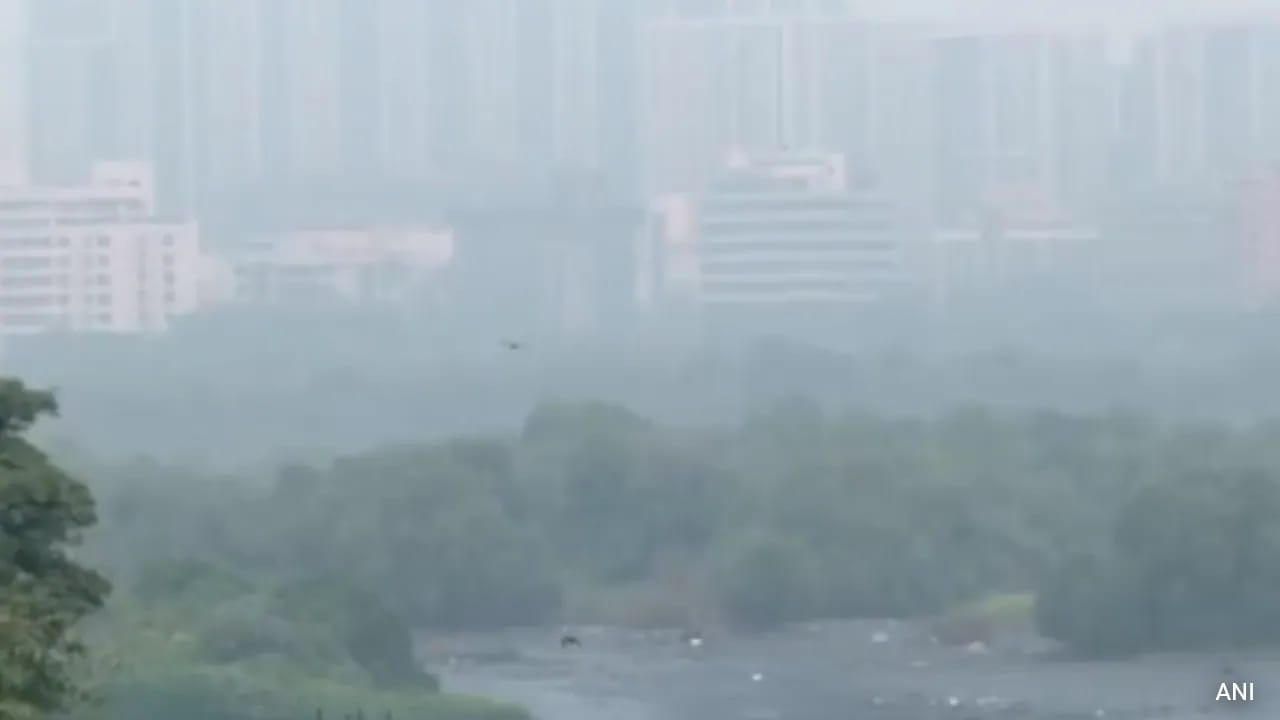
BMC has issued 28-point air-pollution mitigation guidelines for construction sites.
Highlights
- Smog and haze reduced visibility in Mumbai's Bandra Kurla Complex on Saturday morning
- Mumbai saw 231 days with good or satisfactory AQI in 2026, improving from previous years
- Mumbai civic body cut PM10 pollution by 48 percent since 2017-18 using pollution control measures
Mumbai:
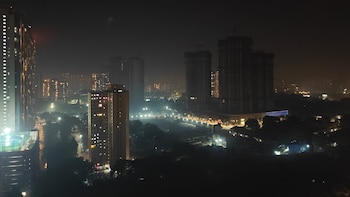
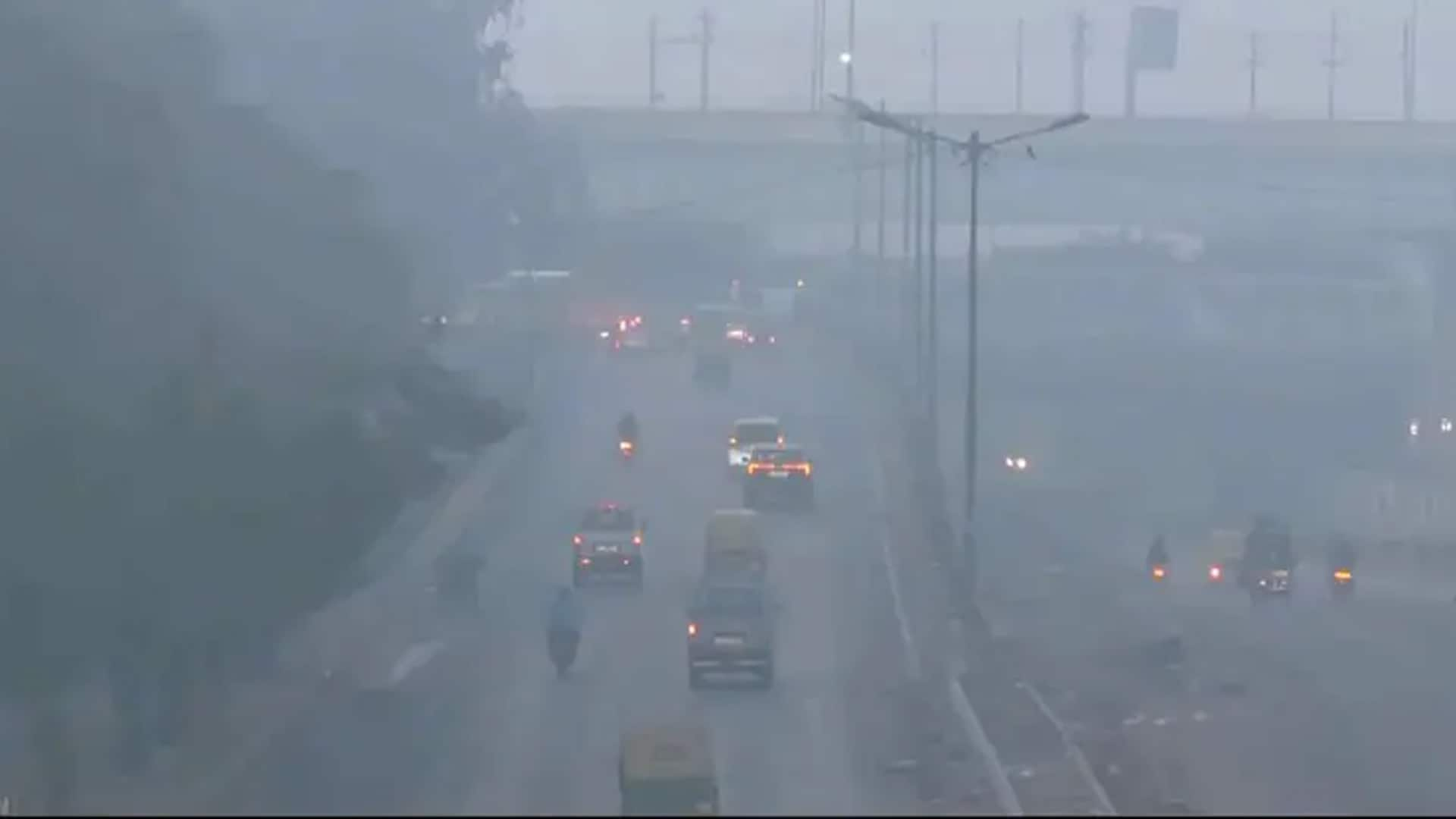
A layer of smog engulfed Mumbai's Bandra Kurla Complex (BKC) on Saturday morning, with hazy conditions visible across the area.
Visuals from the Bandra Kurla Complex showed reduced visibility amid hazy conditions.
As of October 22 this year, Mumbai recorded 231 days in the 'Good' and 'Satisfactory' Air Quality Index (AQI) categories, compared with 218 days in 2025, 216 days in 2024 and 185 days in 2023, the Brihanmumbai Municipal Corporation (BMC) said.
According to the civic body, data from the PRANA portal of the Union Ministry of Environment, Forest and Climate Change showed that Mumbai's PM10 concentration declined by approximately 48 per cent between 2017-18 and 2025-26.
The BMC said it has undertaken several measures to mitigate air pollution, including inspections at construction sites, road cleaning, monitoring of construction and demolition waste, and enforcement against activities contributing to pollution.
The civic body has issued 28-point air-pollution mitigation guidelines for construction sites. It has deployed 76 ward-level mitigation squads to conduct random and surprise inspections, with each squad required to inspect at least two construction sites daily and follow up on compliance at identified pollution hotspots.
Non-compliance with the guidelines can invite enforcement action, including show-cause notices, stop-work notices, and sealing of sites, supported by inspection reports, photographs, and videographs, the release stated.
The BMC also said sensor-based air-quality monitors are mandatory at construction sites. A total of 3,166 construction sites have installed these monitors and integrated them with a central dashboard through which the civic body tracks readings.
To control road dust, the BMC undertakes deep cleaning and routine sweeping, deploying 29 multipurpose vehicles. Developers and contractors are also required to clean adjoining roads based on the size of their construction sites.
The civic body is enforcing rules requiring construction and demolition waste vehicles to remain covered and have their wheels washed before entering public roads. Waste transportation and authorised disposal are tracked through the Mumbai Debris Control and Tracking System (MDCTS), which covers project proponents, developers and other planning authorities.
On emissions from bakeries, the BMC said they contribute approximately 3.5 per cent of Mumbai's particulate matter emissions. Of the city's 593 bakeries, 209 were already using cleaner fuels, while another 175 have converted. Sixty-nine are undergoing conversion, 87 remain non-compliant, and eight have closed, the release stated.
The BMC is also installing air-pollution control devices at 10 crematoria and maintaining surveillance at identified open-burning hotspots.
For the winter season, the civic body has issued its Winter Air Pollution Mitigation and Enforcement Action Plan 2026, covering construction-site compliance, road dust, open burning, pollution hotspots and vehicle checks.
The BMC said public awareness campaigns are also being conducted on the air and noise pollution caused by firecrackers, which are prohibited on public streets, roads and other public places, including footpaths and silence zones.
(Except for the headline, this story has not been edited by NDTV staff and is published from a syndicated feed.)
Published: October 24, 2026 13:14 IST
 Reported by Kumar Kunal | Monday November 09, 2026 , New Delhi
Sudden discontinuation of online data is not surprising for those who follow the website on Diwali evening regularly.
- Written by Vaishnavi Mishra | Monday November 09, 2026
The Commission for Air Quality Management had already invoked Stage III of the Graded Response Action Plan across Delhi-NCR on Friday.
- Reported by Reet Kaur Sahni | Monday November 09, 2026 , New Delhi
In the run-up to Diwali, the Commission for Air Quality Management (CAQM) enforced Stage 3 of the Graded Response Action Plan (GRAP) across Delhi-NCR.
- Written by Dr Navina Singh | Sunday November 08, 2026
Phthalates, found in certain plastics and personal care products, are potent endocrine disruptors, a classification that is well established and firmly supported by research.
- Written by Noor Ul Haq | Sunday November 08, 2026
Mumbai and Thane recorded severe air quality readings on Diwali night, with AQI at 278 and 298, respectively, as firecracker emissions added to the city's pollution burden.

................................ Advertisement ................................
दीवाली की चौखट पर दिल्ली में सांसों का संकट: 30 साल की स्टडी ने हरियाली को लेकर क्या बताया?
Thursday November 05, 2026अध्ययन में हरियाली की मात्रा के साथ उसके फैलाव और आपसी जुड़ाव को भी महत्वपूर्ण पाया गया. जिन इलाकों में हरियाली ज्यादा बिखरी हुई थी, वहां सतही तापमान अधिक रहा. इसके विपरीत, बड़े और आपस में जुड़े हरित क्षेत्रों में तापमान कम पाया गया.
Opinion: Why Delhi's Smog Can't Be Fixed From SpaceDavid Fickling, Bloomberg
Monday October 19, 2026The clearest sign that Delhi is on a path to cleaner air would be a decline in the amount of paddy grown nearby, and therefore the acreage liable to be burned each year.
Don't Normalise Air Purifiers As Delhi Chokes | The Reason Why
Thursday December 11, 2025More than 90 cities in the world's top 100 polluting list are in India. With every passing year, the AQI is rising, reaching 'hazardous' levels.
Blog | Well Done, Delhi. You've Turned Lung Sacrifice Into A Badge Of HonourSaikat Kumar Bose
Monday November 10, 2025Till some years back, Delhiites would ask angry questions to those in power about the capitals annual tryst with toxic air. This has changed. Those in the driving seat dont see the need to answer now.
Opinion | Why Indians Have Just Given Up On Air Pollution CrisisTanushree Ganguly
Friday December 20, 2024While some may argue that people in Delhi are now more aware of air pollution than they were a decade back, my rebuttal would be that awareness does not mean that people are concerned.




