- Home/
- World Bank Approves $305 Million For Haryana's Clean Air Project
World Bank Approves $305 Million For Haryana's Clean Air Project
Press Trust of India | Updated: December 11, 2025 23:27 IST

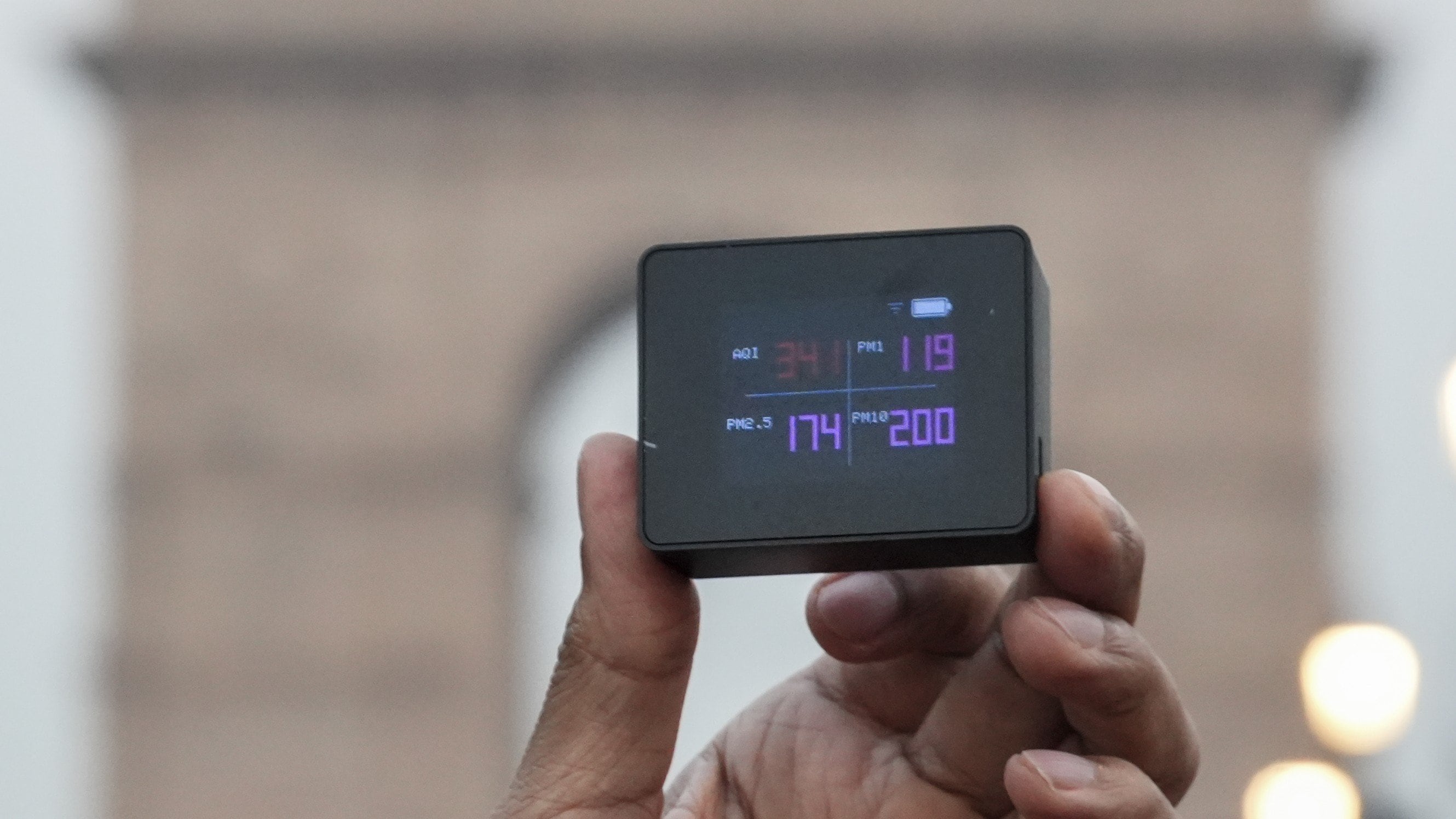
HCAPSD carries a total project cost of Rs 3,646 crore. (Representational)
Chandigarh:
The World Bank has approved a financial assistance package of USD 305 million for the Haryana Clean Air Project for Sustainable Development (HCAPSD), a flagship initiative aimed at transforming Haryana into a pollution-free state by 2030.
A spokesperson of the state government said the approval follows a high-level meeting held here in November last year between Haryana Chief Minister Nayab Singh Saini and World Bank representatives.
During this meeting, the World Bank committed to extending a loan of Rs 2,498 crore to support the rollout of the HCAPSD, which carries a total project cost of Rs 3,646 crore.
The spokesperson said that the Haryana government will contribute Rs 1,065 crore, with an additional Rs 83 crore allocated as a grant.
The HCAPSD is designed to bring measurable, statewide improvements in air quality through coordinated action across key sectors, "including transport, industry, agriculture, urban management, and scientific monitoring.
The project's implementation will be led by the dedicated Special Purpose Vehicle (SPV), ARJUN (AI for Resilient Jobs, Urban Air Quality & Next-Gen Skills Council), ensuring seamless integration in planning, execution, and real-time monitoring.
ARJUN is chaired by Rajesh Khullar, Chief Principal Secretary to the Haryana CM. Khullar has served as the executive director in the Board of Directors of the World Bank as a representative of India, Bhutan, Bangladesh and Sri Lanka from 2020 to 2023.
The project will support Haryana's action plan aimed at reducing air pollution through a combination of multisectoral interventions. It will invest in air quality and emission monitoring systems to strengthen the state's ability to better gauge the impact of various sources of pollution.
Out of the total programme cost of Rs 3,646 crore, Rs 1,688 crore has been earmarked for transport-sector interventions aimed at sharply reducing urban transport emissions and strengthening Haryana's clean mobility ecosystem.
Under this component, 500 electric buses will be deployed across Gurugram, Faridabad, Sonipat, and Jhajjar at an investment of Rs 1,513 crore.
Additional initiatives include the phase-out of high-polluting vehicles and support for the scrapping ecosystem, installation of 200 Electric Vehicle (EV) charging stations (Rs 20 crore), incentives for electric three-wheelers (Rs 100 crore), and fleet replacement incentives to shift old three-wheelers to EVs (Rs 45 crore).
These initiatives will be jointly implemented by Gurugram Metropolitan City Bus Limited, Haryana City Bus Service Limited, and the departments of transport and industries.
A further Rs 563 crore will be spent by the department of industries and commerce to drive cleaner industrial operations, real-time emission control, and improved compliance.
This includes Rs 100 crore in incentives for switching industrial boilers to Piped Natural Gas, Rs 330 crore for promoting or replacing high-emission diesel generator sets with low-emission alternatives, and Rs 33 crore to support the installation of Continuous Emission Monitoring Systems across key industrial units.
Besides, a sum of Rs 746 crore will be spent through the agriculture and panchayat departments for agriculture-sector interventions and advanced soil management.
(Except for the headline, this story has not been edited by NDTV staff and is published from a syndicated feed.)
Published: December 11, 2025 23:27 IST
also read
Opposition Claims Data Fraud As Delhi Chokes Post Diwali, BJP Blames '25 Years Of Inaction'
Edited by Debanish AchomDelhi AQI Above 1,000 And Below 500 At Same Time? Conflicting Data Explained
Edited by Debanish AchomWhy Delhi's Major Air Quality Stations Stopped Showing Data On Diwali Evening
Reported by Kumar Kunal
 Written by Varsha Vats | Monday November 09, 2026
Children (whose lungs are still developing), the elderly, pregnant individuals, and those with pre-existing heart or lung diseases are at the greatest risk for acute complications.
- Edited by Debanish Achom | Monday November 09, 2026 , New Delhi
The war of words comes as a thick layer of smoke covers Delhi-National Capital Region (NCR) after Diwali celebrations, reducing visibility and taking air pollution into the 'severe' category at several locations
- AFP | Monday November 09, 2026 , India
Toxic air in parts of India's capital New Delhi soared to more than 58 times the World Health Organization's recommended daily limit Monday.
- Edited by Debanish Achom | Monday November 09, 2026 , New Delhi
Real-time figures from the CPCB's Sameer mobile application and station-level monitoring indicated widespread pockets of extreme toxicity across the national capital
- Reported by Kumar Kunal | Monday November 09, 2026 , New Delhi
Sudden discontinuation of online data is not surprising for those who follow the website on Diwali evening regularly.


................................ Advertisement ................................


दीवाली की चौखट पर दिल्ली में सांसों का संकट: 30 साल की स्टडी ने हरियाली को लेकर क्या बताया?
Thursday November 05, 2026अध्ययन में हरियाली की मात्रा के साथ उसके फैलाव और आपसी जुड़ाव को भी महत्वपूर्ण पाया गया. जिन इलाकों में हरियाली ज्यादा बिखरी हुई थी, वहां सतही तापमान अधिक रहा. इसके विपरीत, बड़े और आपस में जुड़े हरित क्षेत्रों में तापमान कम पाया गया.
Opinion: Why Delhi's Smog Can't Be Fixed From SpaceDavid Fickling, Bloomberg
Monday October 19, 2026The clearest sign that Delhi is on a path to cleaner air would be a decline in the amount of paddy grown nearby, and therefore the acreage liable to be burned each year.
Don't Normalise Air Purifiers As Delhi Chokes | The Reason Why
Thursday December 11, 2025More than 90 cities in the world's top 100 polluting list are in India. With every passing year, the AQI is rising, reaching 'hazardous' levels.
Blog | Well Done, Delhi. You've Turned Lung Sacrifice Into A Badge Of HonourSaikat Kumar Bose
Monday November 10, 2025Till some years back, Delhiites would ask angry questions to those in power about the capitals annual tryst with toxic air. This has changed. Those in the driving seat dont see the need to answer now.
Opinion | Why Indians Have Just Given Up On Air Pollution CrisisTanushree Ganguly
Friday December 20, 2024While some may argue that people in Delhi are now more aware of air pollution than they were a decade back, my rebuttal would be that awareness does not mean that people are concerned.