


- Home/
- AIIMS-Delhi To Study Link Between Lung Cancer And Air Pollution
AIIMS-Delhi To Study Link Between Lung Cancer And Air Pollution
Press Trust of India | Updated: March 20, 2026 16:17 IST

Highlights
- AIIMS-Delhi is studying links between PM2.5 air pollution and lung cancer risk in India
- The AIRCARE study involves 1,615 lung cancer cases and 1,615 controls in the Delhi-NCR region
- The study uses cohort and case-control methods to assess pollution effects across demographics
The AIIMS-Delhi is studying links between exposure to air pollution, particularly fine particulate matter 2.5, and the risk of developing lung cancer. The AIRCARE study, which the institution claimed is the first of its kind, is being led by Dr Abhishek Shankar, Assistant Professor, Radiation Oncology, AIIMS. Dr Shankar said that as air pollution continues to be an increasingly significant public health concern, there is a need for research to inform policy and disease management. He said India is home to some of the most polluted cities in the world, and there is an urgent need to scientifically look at the effects of pollution on people's health.
"Lung cancer is one of the most common cancers among males in India, and there is a high number of non-smoking lung cancers among females and young adults," Dr Shankar stated.
Air pollution has emerged as a contributing factor to lung cancer, but more evidence is needed on this issue from India, he said.
"It is deeply concerning that lung cancer, once assumed to be a disease mostly associated with people who smoke tobacco, is now seeing a rapid increase in incidence amongst people who do not smoke," Dr Shankar said.
The AIRCARE study will study 1,615 lung cancer cases with 1,615 controls from family members across the Delhi-NCR.
The study is a complex undertaking involving both clinical and non-clinical components, Dr Shankar said.
One aspect of the study will be to employ both a cohort and case-control design to track the effects of chronic PM 2.5 exposure on lung cancer across demographics and socio-economic groups, he said.
Another aspect of the study is to search for a unique genetic signature in the Indian population being exposed to air pollution.
Simply put, the study will attempt to isolate an Indian population-specific genetic imprint to see whether a particular early genetic event in response to air pollution exposure develops into lung cancer later in life, Dr Shankar said.
With the data, the researchers will develop a risk-based screening model based on both clinical and molecular components specific to the Indian population and exposure levels.
It will also identify the susceptible population among the cohort who are more at risk of developing lung cancer, he said.
"Lung cancer continues to be the second most frequent cancer in males in India and the fourth most common type for both sexes. There is an urgent need to implement policy and management strategies to tackle this disease and mitigate further loss of life," Dr Shankar said.
(This story has not been edited by NDTV staff and is auto-generated from a syndicated feed.)
Published: March 20, 2026 15:51 IST
 Written by Varsha Vats | Monday November 09, 2026
Children (whose lungs are still developing), the elderly, pregnant individuals, and those with pre-existing heart or lung diseases are at the greatest risk for acute complications.
- Edited by Debanish Achom | Monday November 09, 2026 , New Delhi
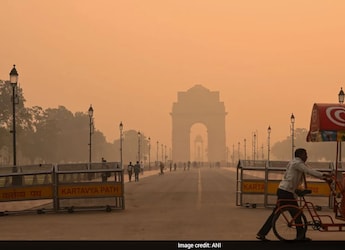
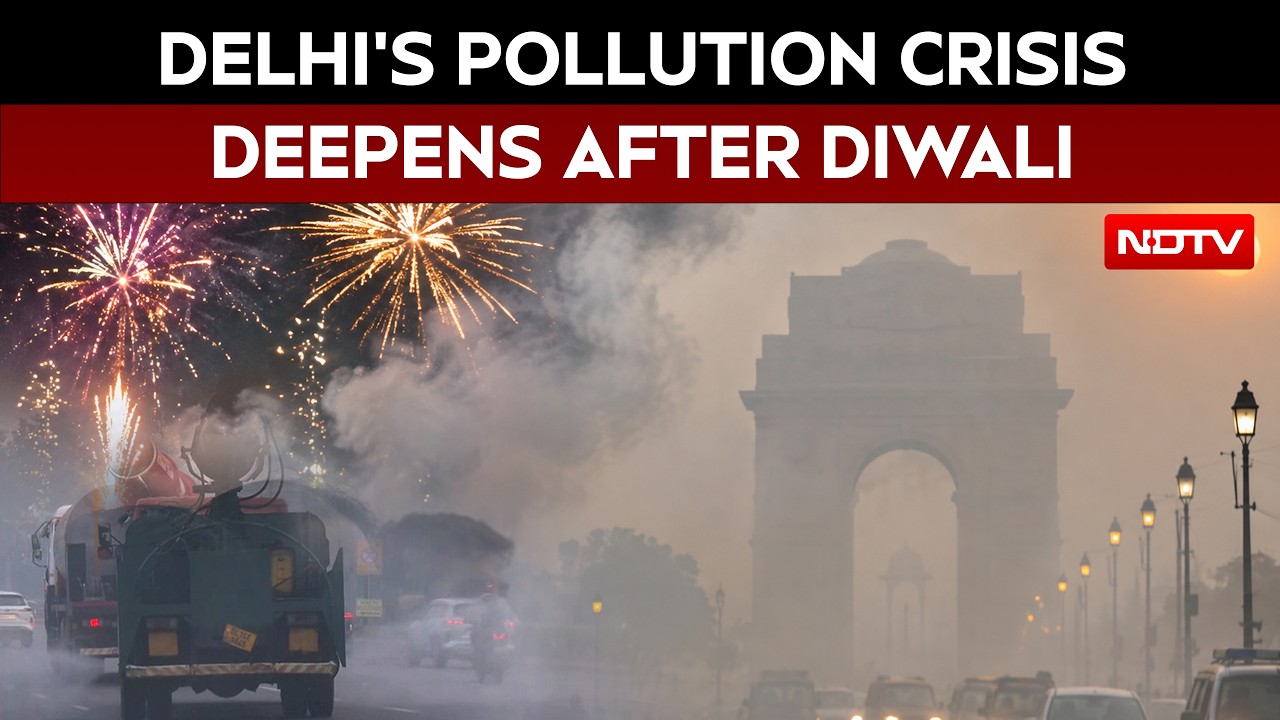
The war of words comes as a thick layer of smoke covers Delhi-National Capital Region (NCR) after Diwali celebrations, reducing visibility and taking air pollution into the 'severe' category at several locations
- AFP | Monday November 09, 2026 , India
Toxic air in parts of India's capital New Delhi soared to more than 58 times the World Health Organization's recommended daily limit Monday.
- Edited by Debanish Achom | Monday November 09, 2026 , New Delhi
Real-time figures from the CPCB's Sameer mobile application and station-level monitoring indicated widespread pockets of extreme toxicity across the national capital
- Reported by Kumar Kunal | Monday November 09, 2026 , New Delhi
Sudden discontinuation of online data is not surprising for those who follow the website on Diwali evening regularly.


................................ Advertisement ................................


दीवाली की चौखट पर दिल्ली में सांसों का संकट: 30 साल की स्टडी ने हरियाली को लेकर क्या बताया?
Thursday November 05, 2026अध्ययन में हरियाली की मात्रा के साथ उसके फैलाव और आपसी जुड़ाव को भी महत्वपूर्ण पाया गया. जिन इलाकों में हरियाली ज्यादा बिखरी हुई थी, वहां सतही तापमान अधिक रहा. इसके विपरीत, बड़े और आपस में जुड़े हरित क्षेत्रों में तापमान कम पाया गया.
Opinion: Why Delhi's Smog Can't Be Fixed From SpaceDavid Fickling, Bloomberg
Monday October 19, 2026The clearest sign that Delhi is on a path to cleaner air would be a decline in the amount of paddy grown nearby, and therefore the acreage liable to be burned each year.
Don't Normalise Air Purifiers As Delhi Chokes | The Reason Why
Thursday December 11, 2025More than 90 cities in the world's top 100 polluting list are in India. With every passing year, the AQI is rising, reaching 'hazardous' levels.
Blog | Well Done, Delhi. You've Turned Lung Sacrifice Into A Badge Of HonourSaikat Kumar Bose
Monday November 10, 2025Till some years back, Delhiites would ask angry questions to those in power about the capitals annual tryst with toxic air. This has changed. Those in the driving seat dont see the need to answer now.
Opinion | Why Indians Have Just Given Up On Air Pollution CrisisTanushree Ganguly
Friday December 20, 2024While some may argue that people in Delhi are now more aware of air pollution than they were a decade back, my rebuttal would be that awareness does not mean that people are concerned.




