


- Home/
- Are Air Purifiers Enough? Doctor Explains Ways To Tackle Indoor Pollution For Lung Safety
Are Air Purifiers Enough? Doctor Explains Ways To Tackle Indoor Pollution For Lung Safety
Written by Debosmita Ghosh | Updated: September 25, 2026 14:08 IST
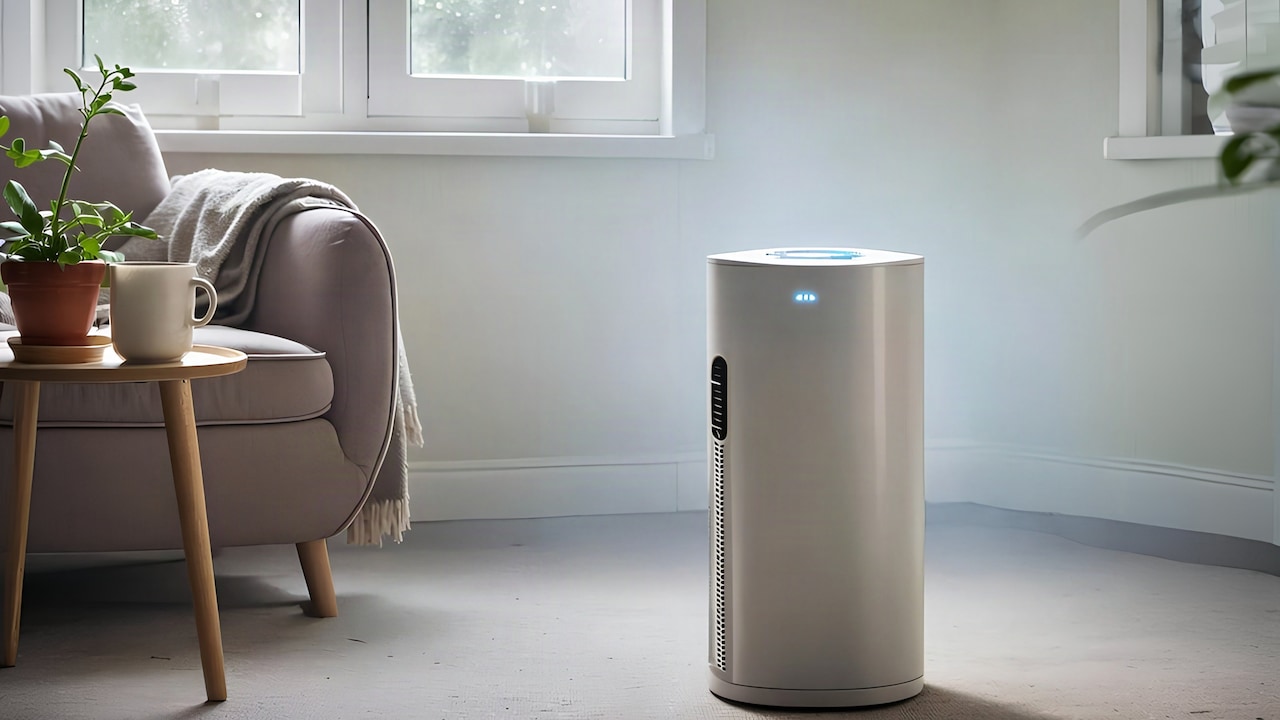
A good-quality purifier, particularly one with a HEPA filter, can remove many airborne particles
Highlights
- Indoor air pollution includes dust, smoke, pet dander, pollen, mould spores, and fine particles
- HEPA air purifiers can reduce airborne particles but do not eliminate gases or volatile compounds
- Indoor pollutants come from cooking, tobacco, incense, cleaning products, and poor ventilation
Indoor air pollution is often overlooked because the air inside our homes may appear clean. But dust, smoke, pet dander, pollen, mould spores and fine particles can remain suspended in the air and irritate the lungs. For people with asthma, allergies or chronic respiratory problems, children and older adults, prolonged exposure may be particularly concerning. The focus should not only be on outdoor pollution but also on the quality of the air we breathe indoors. An air purifier can help reduce some pollutants, but it cannot solve every indoor air-quality problem.
A good-quality purifier, particularly one with a HEPA filter, can remove many airborne particles, including fine particulate matter such as PM2.5. However, relying on a purifier alone may create a false sense of safety. Indoor pollutants can continue to enter the home or be produced inside it through cooking fumes, tobacco smoke, incense, mosquito coils, cleaning products, paints and poorly ventilated combustion appliances. Therefore, protecting the lungs requires a combination of measures rather than depending on a single device.
What Can An Air Purifier Remove?
Air purifiers are mainly designed to clean pollutants that are suspended in the air. A HEPA filter can trap very small particles and may help reduce indoor levels of particulate matter, dust, pollen and some other airborne particles. However, the performance of a purifier depends on several factors. Room size, clean air delivery rate (CADR), operating time and placement.
A purifier designed for a small bedroom may not be sufficient for a large living room. Similarly, using a purifier for only a short period may not provide the same benefit as running an appropriately sized device for longer.
Purifiers Cannot Remove Everything
One important limitation is that not all indoor pollutants are particles. Some pollutants are gases or volatile organic compounds (VOCs), which may require specialised filtration technologies such as activated carbon.
Speaking to NDTV, Dr Harish Verma, Director, Pulmonology, ShardaCare - Healthcity, said, "Air purifiers can be a useful tool for improving indoor air quality, but they should not be considered a complete solution for protecting lung health."
He explains that pollutants can continuously enter homes from several sources. Cooking fumes, tobacco smoke, incense, mosquito coils, cleaning products and paints can all contribute to indoor pollution. Poorly ventilated combustion appliances can also affect air quality.
Ventilation Still Matters
Fresh air circulation is another important part of indoor air-quality management. "During periods when outdoor air quality is good, opening windows and allowing fresh air to circulate can help reduce indoor pollutants. However, when outdoor pollution levels are high, ventilation should be planned carefully rather than keeping windows open continuously," said Dr Verma.
Ventilation should be planned according to outdoor air quality rather than treated as something that should always be maximised.
Remove Pollution At Its Source
Reducing pollutants before they enter the air is one of the most effective ways to improve indoor air quality.
- Avoid smoking indoors: Tobacco smoke can release numerous harmful pollutants into the indoor environment.
- Use kitchen exhaust fans: Cooking can produce smoke, particles and other pollutants, particularly when frying or using high heat.
- Limit incense and mosquito coils: Their burning can release particulate matter and other substances into the air.
- Control dampness and mould: Fix leaks and damp areas promptly because mould spores can irritate the airways.
- Keep surfaces clean: Regular cleaning can reduce accumulated dust and allergens.
- Use cleaning products carefully: Strong fumes can contribute to indoor irritation, particularly in poorly ventilated spaces.
Choose And Maintain The Purifier Properly
Buying an air purifier is only the first step. The device should be appropriate for the size of the room where it is being used. Checking its CADR can help determine whether it can circulate and clean enough air for that space.
Filter maintenance is equally important. Filters need to be cleaned or replaced according to the manufacturer's instructions. A clogged or poorly maintained filter may reduce the device's effectiveness.
It is also important to remember that using one purifier in one room does not automatically make the entire house clean. Pollution can move between rooms, particularly when doors are open and there are multiple indoor sources.
Watch For Respiratory Symptoms
People who spend significant time indoors should pay attention to symptoms such as persistent cough, wheezing, breathlessness, chest tightness or worsening asthma symptoms.
"An air purifier may support respiratory health, but it should never replace prescribed medication, medical evaluation or appropriate treatment," said Dr Verma.
Disclaimer: This content including advice provides generic information only. It is in no way a substitute for a qualified medical opinion. Always consult a specialist or your own doctor for more information. NDTV does not claim responsibility for this information.
Published: September 25, 2026 13:53 IST
also read
Beyond Cholesterol And Blood Pressure, New Environmental Risks To Heart Health Are Being Missed: Here's Why
Written by Dr Sabine KapasiNever Smoked? You Could Still Be Harming Your Lungs With These 7 Habits
Written by Dr Ankit Kumar SinhaExercising Outdoors? Here's How To Reduce Pollution Exposure
Written by Sambhav Kumar
 Written by Dr Sabine Kapasi | Tuesday September 29, 2026
Air pollution is often discussed as a cause of respiratory disease, but its effects extend to the heart and blood vessels.
- Edited by Debanish Achom | Monday September 28, 2026 , New Delhi
The steps include doubling parking charges, a complete ban on construction and demolition activity and work-from-home for government and private employees
- Written by Debosmita Ghosh | Friday September 25, 2026
Air purifiers are mainly designed to clean pollutants that are suspended in the air. A HEPA filter can trap very small particles and may help reduce indoor levels of particulate matter, dust, pollen and some other airborne particles. However, the performance of a purifier depends on several factors.
- Written by Dr Ankit Kumar Sinha | Friday September 25, 2026
To improve respiratory health, it is important to minimise exposure to polluted air, enhance indoor ventilation, adhere to workplace safety regulations, and promote physical activity.
- Tuesday September 22, 2026 , Mumbai
The court had on Monday taken suo motu (on its own) cognizance of the issue of severe noise and air pollution caused during processions.


................................ Advertisement ................................

Blog | Well Done, Delhi. You've Turned Lung Sacrifice Into A Badge Of HonourSaikat Kumar Bose
Monday November 10, 2025Till some years back, Delhiites would ask angry questions to those in power about the capitals annual tryst with toxic air. This has changed. Those in the driving seat dont see the need to answer now.
Opinion | Why Indians Have Just Given Up On Air Pollution CrisisTanushree Ganguly
Friday December 20, 2024While some may argue that people in Delhi are now more aware of air pollution than they were a decade back, my rebuttal would be that awareness does not mean that people are concerned.
Opinion | You Must Outrage Over Filthy Air More Than Once A YearJyoti Pande Lavakare
Tuesday December 10, 2024Delhi welcomed us with monsoon rains and mangos. We were home. Fast forward a couple of years, in the winter of 2012, I found myself in denial about something other parents, mostly expats, were calling toxic air.
Opinion | Delhi's Air Pollution Situation Is Like A Bad MarriageNishtha Gautam
Friday November 22, 2024On a good day, such as today, the AQI reading in Delhi is 407. We are jubilant at the sickly sunshine trickling through the slightly dissipated smog. At least its not 1600.
दिवाली... पराली... सियासी जुगाली!Ashwini kumar
Monday November 18, 2024दिल्ली-एनसीआर में प्रदूषण का समाधान तो आज तक मिला नहीं. हर साल चिंतित होकर हम-आप सांसों की तकलीफ के साथ-साथ दिल और ब्लड प्रेशर के मरीज भी क्यों बनें?


