


- Home/
- It's Not Just AQI: Why Tiny Particulate Matter Poses A Bigger Health Risk
It's Not Just AQI: Why Tiny Particulate Matter Poses A Bigger Health Risk
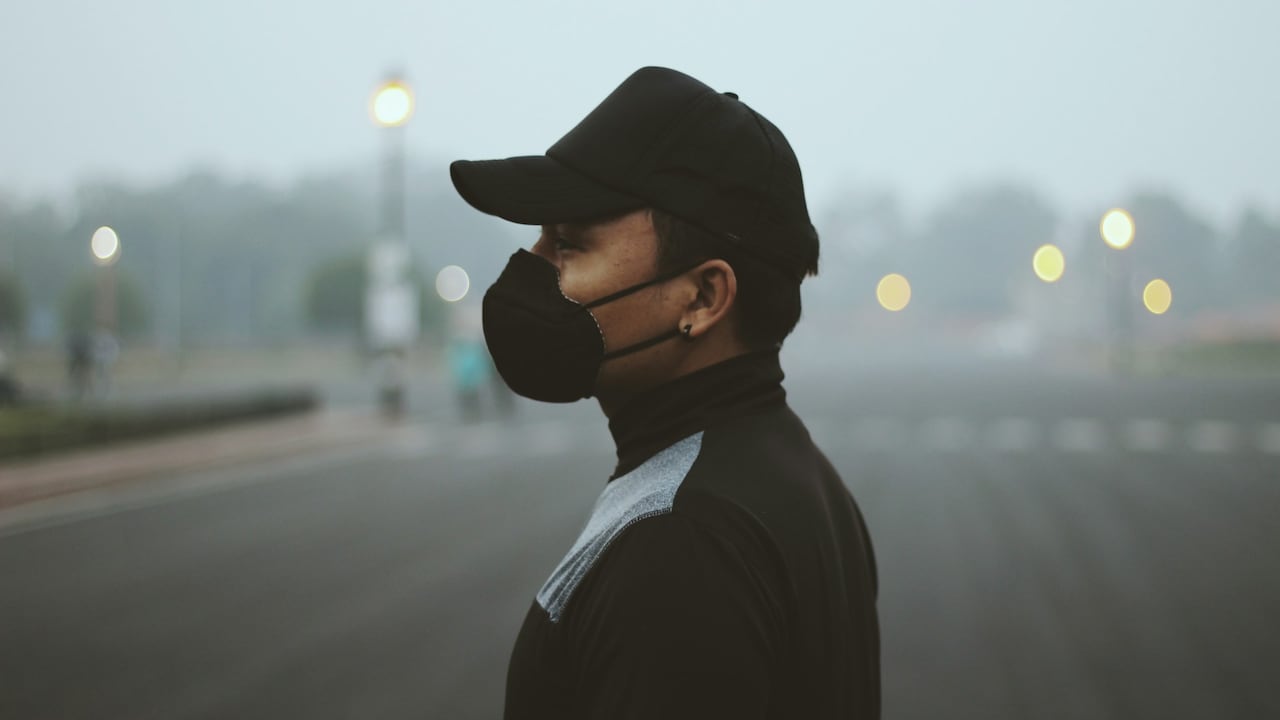
India should retain the AQI for public advisories
Highlights
- India is highly focused on the Air Quality Index (AQI) for daily pollution updates
- AQI is a composite number that can mask specific pollutant levels like PM2.5 and PM10
- PM2.5 and PM10 concentrations should be reported prominently for better health clarity
India has become obsessed with one number. Every morning, millions wake up and check the AQI. Is it 200? Has it crossed 300? Is it 400? Is the air severe today? Television channels flash the number, weather apps issue colour-coded warnings, and governments announce emergency measures when the index climbs. But here is the uncomfortable question, are we measuring air pollution correctly, or have we become so obsessed with the AQI that we are losing sight of what actually matters? It is time India rethinks its dependence on the Air Quality Index. In fact, it is time to move away from AQI as the primary measure of air pollution and put the spotlight where it belongs- on the actual concentrations of PM2.5 and PM10. The AQI is not a pollutant. It is a communication tool. It converts the concentrations of multiple pollutants into a single number to make air quality easier for the public to understand. It is useful, convenient and important for issuing health advisories. But convenience should not come at the cost of clarity.
A single AQI number may not reveal the full health risk
When you say Delhi's AQI is 400, what exactly are you telling people? What is driving that number? Is it PM2.5? Is it PM10? Are other pollutants contributing? And, most importantly, what does that number mean for the human body? A single composite index can conceal important differences in the pollution mix. Two days can have similar AQI readings but very different concentrations of individual pollutants. Yet the public is often left with one headline number. You need to stop reporting pollution as a score and start reporting it as exposure.
You'd be surprised to know that unlike India, which relies on a National Air Quality Index (AQI) ranging from 0 to 500 to communicate air pollution through six colour-coded categories, the World Health Organization does not prescribe a universal AQI scale. Instead, WHO provides health-based guidelines for individual pollutants, particularly PM2.5 and PM10, because their concentrations and long-term exposure have direct implications for human health.
PM2.5 deserves particular attention. These are fine particulate matter particles with a diameter of 2.5 micrometres or less. They are so small that they can travel deep into the lungs, with some components capable of entering the bloodstream. Long-term exposure is associated with respiratory disease, cardiovascular disease, stroke, lung cancer and other serious health consequences.
Why PM2.5 And PM10 Matter More Than AQI
PM10, meanwhile, includes particles with a diameter of 10 micrometres or less. These particles can enter the respiratory tract and affect the lungs. Both matter. Both need to be measured, monitored and communicated independently. Why should the public have to decode a composite number when the actual pollutant concentrations are available and far more meaningful for understanding exposure?
India needs to make PM2.5 and PM10 the headline numbers in every air-quality bulletin. Every weather app, television graphic, government dashboard and public advisory should prominently display their concentrations in micrograms per cubic metre, alongside the applicable health-based standards.
The distinction is important. The World Health Organization's 2021 guidelines recommend annual mean concentrations of 5 micrograms per cubic metre for PM2.5 and 15 micrograms per cubic metre for PM10. The 24-hour guideline levels are 15 micrograms per cubic metre and 45 micrograms per cubic metre, respectively. India's National Ambient Air Quality Standards are less stringent: 40 micrograms per cubic metre annually and 60 micrograms per cubic metre over 24 hours for PM2.5; 60 micrograms per cubic metre annually and 100 micrograms per cubic metre over 24 hours for PM10.
These are not interchangeable standards. But they expose an uncomfortable reality: air that meets India's permissible limits may still be far above the WHO's health-based recommendations. And this is where the conversation must change.
READ | Meeting WHO Air Quality Guidelines Could Save Over 9 Million Lives Annually, Finds Cambridge Study
A city cannot declare victory because its AQI has fallen from 400 to 200. A reduction is welcome, but it does not automatically mean the air is safe. You need to know whether PM2.5 concentrations have fallen, by how much, for how long, and whether people are still being exposed to unhealthy levels.
Is Pollution A Seasonal Crisis?
You also need to stop treating air pollution as a seasonal crisis. Delhi's pollution becomes a national conversation every winter, but particulate pollution is not a winter-only problem. It is a year-round public-health challenge. The health consequences do not disappear when the AQI improves or the headlines move on. There is another problem, the way you communicate pollution often creates a false sense of security. An AQI category may suggest that conditions have improved, but a person living beside a busy road, working at a construction site or travelling through traffic may experience very different exposure from someone living in a less polluted neighbourhood.
Monitoring must become more granular. You need more reliable monitoring stations, better coverage beyond major cities, transparent real-time PM2.5 and PM10 data, and stronger quality control of the measurements.
This is not an argument against the AQI as a public communication tool. It is an argument against allowing one number to dominate the entire air-pollution conversation. The AQI can remain as a secondary indicator to help people understand daily risk. But the actual pollutant concentrations must take centre stage.
It is perhaps for this reason that the Central Pollution Control Board (CPCB) caps India's official AQI at 500 because 500 is the upper limit of the National Air Quality Index's design, not because pollution cannot get worse beyond 500.
Under the 2015 National AQI methodology, 401-500 is classified as Severe. CPCB's position is that anything above 500 remains in the Severe category because the health-risk classification does not change. The index was designed to communicate health risk, rather than provide an unlimited numerical measurement of pollution
That also explains why discrepancies are seen the Government figures and what your app throws up.. But the moot question here is, should you now look beyond AQI and get the government to tell us and factor in numbers when it comes to particulate matter? Perhaps, yes. Because ultimately, our lungs do not breathe an AQI of 300 or 400. They breathe particulate matter, toxic gases and a complex mixture of pollutants. India needs to stop asking how bad the AQI is and start asking a far more important question: How much PM2.5 and PM10 are you breathing every single day?
India should retain the AQI for public advisories but must publish uncapped PM2.5 and PM10 concentrations alongside it. An index may have a ceiling. Pollution does not. This is particularly important because the actual particulate concentrations, not the AQI ceiling, tell us how much pollution people are being exposed to. You cannot manage what you do not adequately measure. And you cannot protect public health by reducing a complex environmental crisis to just one number.
\r\n
\r\n
Disclaimer: This content including advice provides generic information only. It is in no way a substitute for a qualified medical opinion. Always consult a specialist or your own doctor for more information. NDTV does not claim responsibility for this information.
Published: November 11, 2026 14:07 IST
also read
Heavy Chest In The Morning Amid High AQI: Why It Happens And How To Get Relief
Written by Sambhav KumarMeeting WHO Air Quality Guidelines Could Save Over 9 Million Lives Annually, Finds Cambridge Study
Written by Debosmita GhoshDoctor-Approved Daily Routine To Strengthen Your Lungs Amid Rising Pollution Levels
Written by Shreya Goswami
 Written by Niharika Raj | Wednesday November 11, 2026
A Pakistani air quality body has found no evidence linking Lahore's post-Diwali smog to fireworks in India, pointing instead to thousands of crop-residue fires in Pakistan's own Punjab.
- Written by Sambhav Kumar | Wednesday November 11, 2026
Morning chest heaviness should not automatically be attributed to air pollution. Persistent or worsening symptoms warrant medical evaluation, particularly if accompanied by coughing, wheezing or breathlessness.
- Edited by Sanstuti Nath | Wednesday November 11, 2026 , Islamabad
The Pakistan report said the available evidence did not support attributing Lahore's poor air quality after Diwali to fireworks across the border.
- Written by Sneha Mordani , Edited by Sambhav Kumar | Wednesday November 11, 2026
India should retain the AQI for public advisories but must publish uncapped PM2.5 and PM10 concentrations alongside it. An index may have a ceiling. Pollution does not.
- Reported by Vedika Sud Sachdeva, Edited by Aastha Ahuja | Wednesday November 11, 2026 , New Delhi
In an exclusive interview with NDTV, former WHO Chief Dr Soumya Swaminathan detailed how we are sacrificing the health of an entire generation by simply ignoring the irreversible damage caused by pollution.



................................ Advertisement ................................





Don't Normalise Air Purifiers As Delhi Chokes | The Reason Why
Thursday December 11, 2025More than 90 cities in the world's top 100 polluting list are in India. With every passing year, the AQI is rising, reaching 'hazardous' levels.
Blog | Well Done, Delhi. You've Turned Lung Sacrifice Into A Badge Of HonourSaikat Kumar Bose
Monday November 10, 2025Till some years back, Delhiites would ask angry questions to those in power about the capitals annual tryst with toxic air. This has changed. Those in the driving seat dont see the need to answer now.
Opinion | Why Indians Have Just Given Up On Air Pollution CrisisTanushree Ganguly
Friday December 20, 2024While some may argue that people in Delhi are now more aware of air pollution than they were a decade back, my rebuttal would be that awareness does not mean that people are concerned.
Opinion | You Must Outrage Over Filthy Air More Than Once A YearJyoti Pande Lavakare
Tuesday December 10, 2024Delhi welcomed us with monsoon rains and mangos. We were home. Fast forward a couple of years, in the winter of 2012, I found myself in denial about something other parents, mostly expats, were calling toxic air.
Opinion | Delhi's Air Pollution Situation Is Like A Bad MarriageNishtha Gautam
Friday November 22, 2024On a good day, such as today, the AQI reading in Delhi is 407. We are jubilant at the sickly sunshine trickling through the slightly dissipated smog. At least its not 1600.



