


- Home/
- Chennai Air Quality Turns 'Very Poor' As AQI Crosses 300 On Diwali
Chennai Air Quality Turns 'Very Poor' As AQI Crosses 300 On Diwali
Reported by J Sam Daniel Stalin | Updated: November 10, 2026 07:59 IST
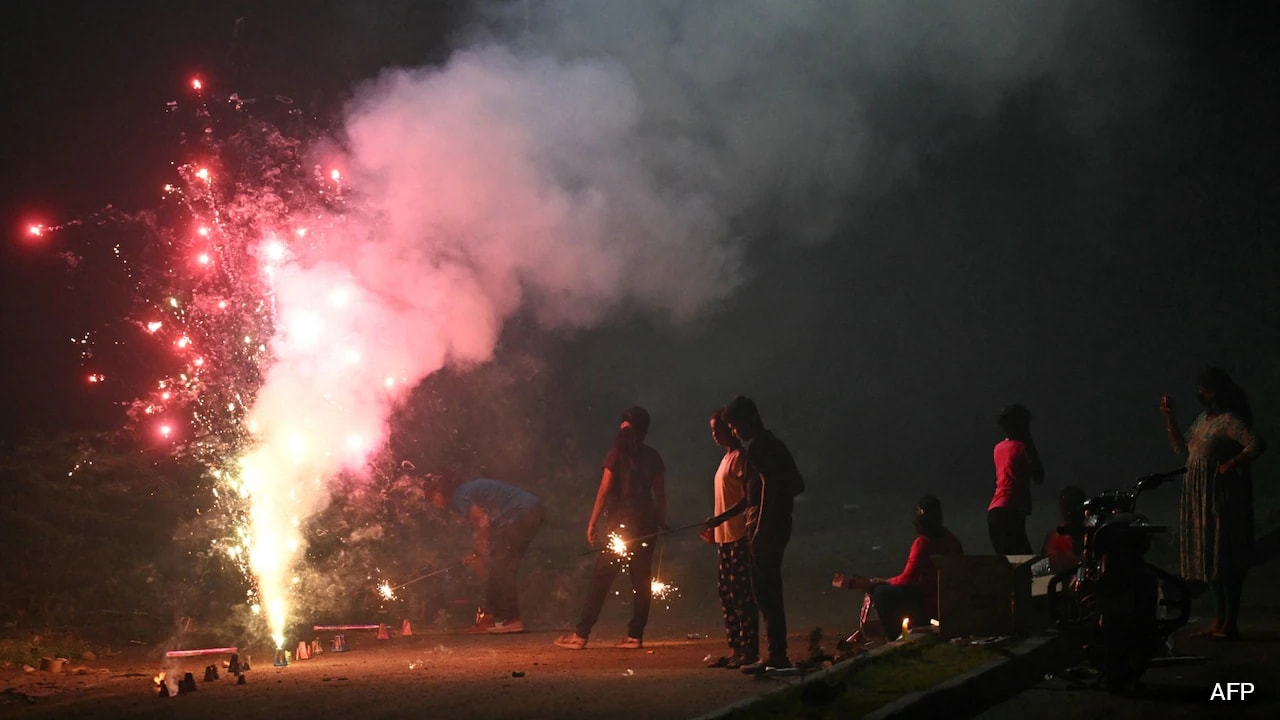
Air quality turned particularly alarming in Tamil Nadu's capital Chennai on Diwali day on Sunday.
Highlights
- Air quality in Chennai on Diwali reached Very Poor levels, with AQI up to 343 in Valasaravakkam
- Tamil Nadu’s average AQI rose to 168.97 in 2026, with 25 of 39 stations showing increased pollution
- Kancheepuram, Trichy, Tiruppur, and Thanjavur saw worsening air quality, while Nagapattinam improved
Air quality turned particularly alarming in capital Chennai on Diwali day on Sunday, pushing major commercial and residential hubs into the "Very Poor" category (AQI 301 - 400).
Valasaravakkam, a dense residential pocket in southwest Chennai, recorded the highest AQI in the city at 343, followed by Nungambakkam in central Chennai at 332, Sowcarpet - a sprawling, crowded commercial trading district in north-central Chennai - at 311, and T. Nagar, a major retail shopping hub in central-south Chennai, at 306, standing nearly seven times higher than the upper threshold of clean air.
Across the wider state of Tamil Nadu, the picture was mixed rather than uniformly alarming; while the state's average AQI ticked up to 168.97 in 2026 from 161.69 in 2025 and 143.46 in 2024 - with 25 out of 39 monitoring stations recording an increase - regional hubs presented a stark contrast between worsening pockets like Kancheepuram (250 AQI), Trichy (240 AQI), Tiruppur (223 AQI), and Thanjavur (210 AQI) and encouraging recoveries in places like Nagapattinam, where the AQI dropped dramatically to a satisfactory 71, alongside significant improvements in Cuddalore, Thoothukudi, and Krishnagiri districts.
This mounting environmental toll fuelled a fierce socio-political debate between economic livelihood and public health. In the run-up to Diwali, former BJP leader and We The Leaders founder K Annamalai had urged citizens to buy and burst crackers, emphasising that the industry directly employs 3 lakh people and indirectly supports another 5 lakh workers in Sivakasi.
Highlighting this economic angle, he stated, "When we buy firecrackers, we are helping someone put food on the table," and challenged the public with, "'I bought firecrackers for Diwali. Did you buy?'.
In stark contrast, the environmental action group Poovulagin Nanbargal condemned the blatant disregard for safety rules, warning that reports from the Pollution Control Board show an average increase in state-wide air pollution, that safety conditions were systematically flouted without needing reports to prove it, and that everyone must realize that bursting firecrackers is a "Mass Suicide Mission".
It's not just air pollution - noise levels too saw a disturbing spike across the state, with the arithmetic average Deepavali noise level rising from 75.70 dB(A) in 2025 to 76.73 dB(A) in 2026, led by capital Chennai's Valasaravakkam hitting a staggering high of 88.6 dB(A), despite extensive state awareness campaigns and strict regulatory time windows.
Despite the state government designating specific hours for bursting crackers - permitting celebrations only from 6 AM to 7 AM and 7 PM to 8 PM and launching extensive awareness campaigns, there was large-scale disregard for regulations on the ground amid poor enforcement, leading to firecrackers being fired unchecked throughout the day.
Published: November 10, 2026 07:59 IST
also read
Pakistan's Own Agency Busts Its 'Diwali Firework' Pollution Theory As AQI Crosses 600
Edited by Sanstuti NathAir Pollution Is As Big A Public Health Emergency As COVID: Former WHO Chief
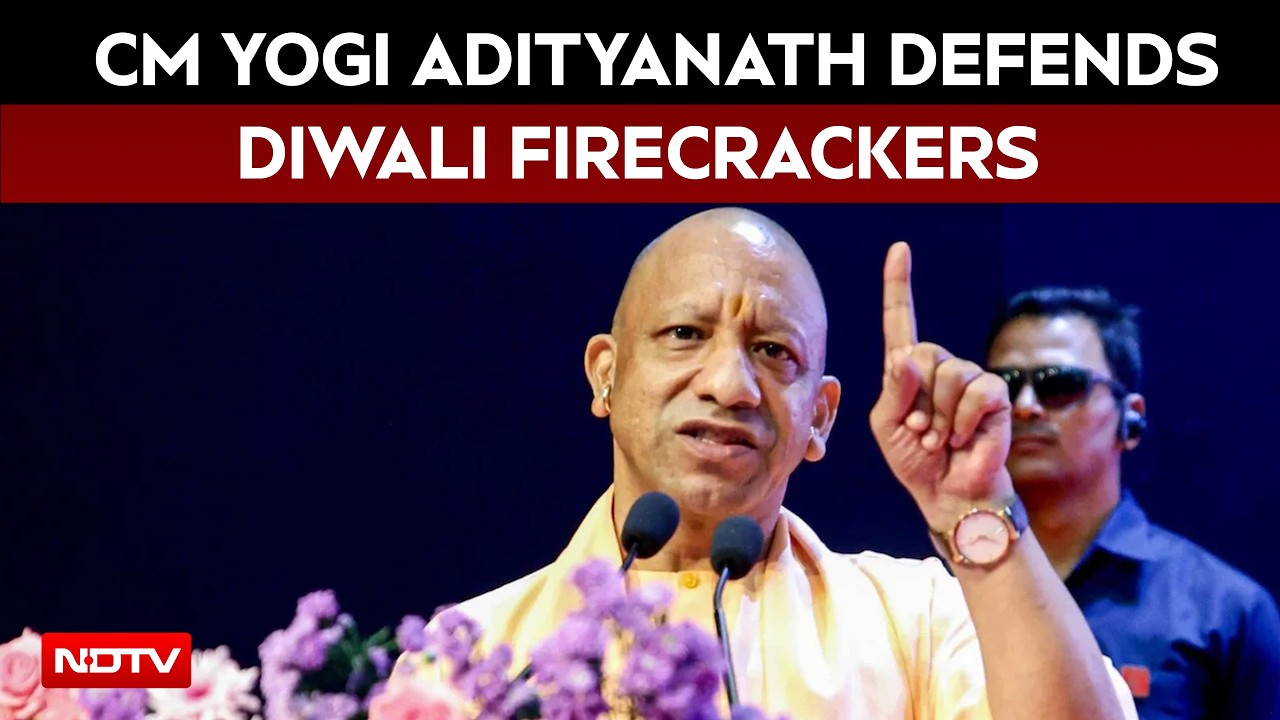
Reported by Vedika Sud Sachdeva, Edited by Aastha Ahuja'Pollution Subsides': Yogi Adityanath Defends Bursting Of Crackers On Diwali
Edited by Debanish Achom
 Delhi AQI: Is Toxic Air Making You Tired? Impact Of Air Pollution On Energy, Sleep And ConcentrationWritten by Debosmita Ghosh | Wednesday November 11, 2026
Fine particles such as PM2.5 can enter deep into the lungs and lead to inflammation and oxidative stress in the body. Prolonged exposure may also affect the cardiovascular system and overall physical health.
- Written by Niharika Raj | Wednesday November 11, 2026
A Pakistani air quality body has found no evidence linking Lahore's post-Diwali smog to fireworks in India, pointing instead to thousands of crop-residue fires in Pakistan's own Punjab.
- Written by Sambhav Kumar | Wednesday November 11, 2026
Morning chest heaviness should not automatically be attributed to air pollution. Persistent or worsening symptoms warrant medical evaluation, particularly if accompanied by coughing, wheezing or breathlessness.
- Edited by Sanstuti Nath | Wednesday November 11, 2026 , Islamabad
The Pakistan report said the available evidence did not support attributing Lahore's poor air quality after Diwali to fireworks across the border.
- Written by Sneha Mordani , Edited by Sambhav Kumar | Wednesday November 11, 2026
India should retain the AQI for public advisories but must publish uncapped PM2.5 and PM10 concentrations alongside it. An index may have a ceiling. Pollution does not.

................................ Advertisement ................................
Opinion | Delhi Has Every Pollution Control Policy - Except One That Works
Monday November 09, 2026Every November, Delhi performs the same ritual. We check the AQI before stepping outdoors, children are kept indoors, masks reappear, schools consider shutting, construction is restricted, and emergency meetings are convened. Politicians blame the weather, neighbouring states, farmers, or firecrackers. And then, as the season changes, the urgency d...
दीवाली की चौखट पर दिल्ली में सांसों का संकट: 30 साल की स्टडी ने हरियाली को लेकर क्या बताया?
Thursday November 05, 2026अध्ययन में हरियाली की मात्रा के साथ उसके फैलाव और आपसी जुड़ाव को भी महत्वपूर्ण पाया गया. जिन इलाकों में हरियाली ज्यादा बिखरी हुई थी, वहां सतही तापमान अधिक रहा. इसके विपरीत, बड़े और आपस में जुड़े हरित क्षेत्रों में तापमान कम पाया गया.
Opinion: Why Delhi's Smog Can't Be Fixed From SpaceDavid Fickling, Bloomberg
Monday October 19, 2026The clearest sign that Delhi is on a path to cleaner air would be a decline in the amount of paddy grown nearby, and therefore the acreage liable to be burned each year.
Don't Normalise Air Purifiers As Delhi Chokes | The Reason Why
Thursday December 11, 2025More than 90 cities in the world's top 100 polluting list are in India. With every passing year, the AQI is rising, reaching 'hazardous' levels.
Blog | Well Done, Delhi. You've Turned Lung Sacrifice Into A Badge Of HonourSaikat Kumar Bose
Monday November 10, 2025Till some years back, Delhiites would ask angry questions to those in power about the capitals annual tryst with toxic air. This has changed. Those in the driving seat dont see the need to answer now.



