


- Home/
- Delhi Air 'Very Poor', 'Severe' In Several Areas Day Before Diwali
Delhi Air 'Very Poor', 'Severe' In Several Areas Day Before Diwali
| Updated: November 07, 2026 09:44 IST
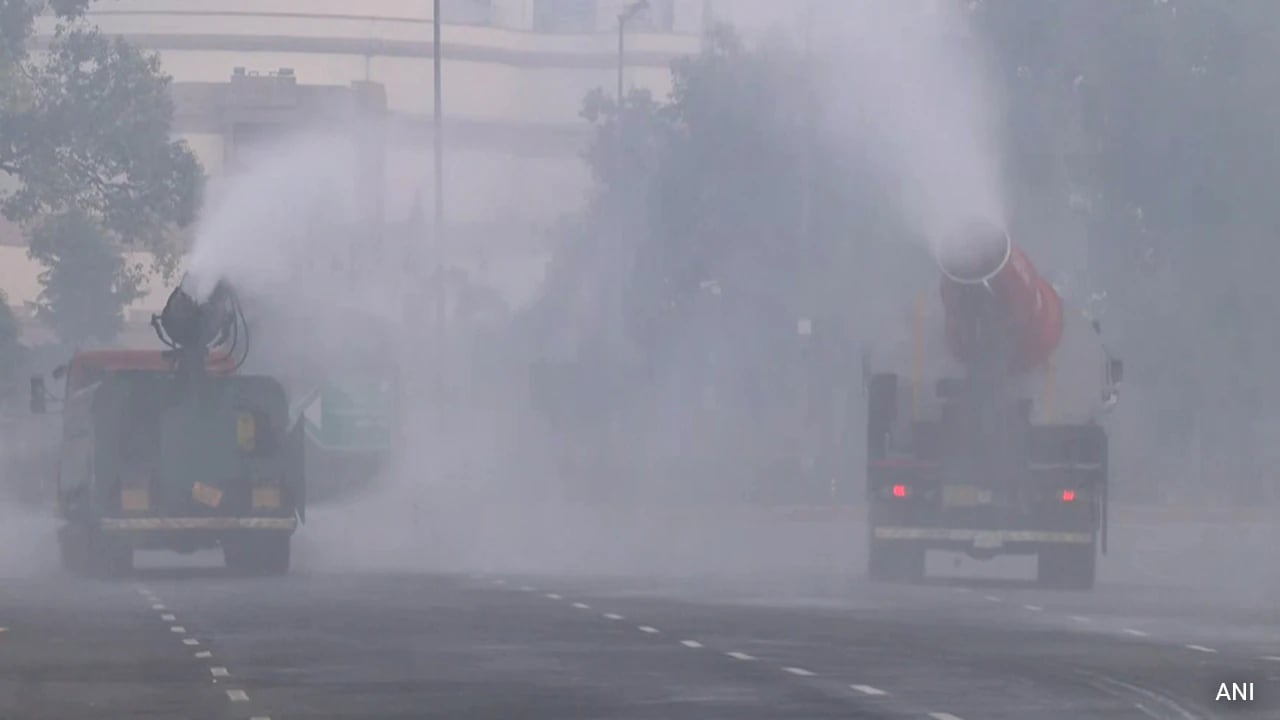
GRAP Stage III is invoked when AQI reaches 401 to 450, classified as 'severe'.
Highlights
- Delhi's overall Air Quality Index stood at 364, classified as very poor on Saturday morning
- Several locations, including IIT Delhi and Punjabi Bagh, recorded severe air pollution levels
- Stage III of the Graded Response Action Plan was activated to curb pollution before Diwali
New Delhi:
Delhi continued to grapple with hazardous air quality on Saturday morning, with the city's overall Air Quality Index (AQI) standing at 364 at 8 am, according to Central Pollution Control Board (CPCB) data.
This places the capital in the 'very poor' category (301-400), though several stations recorded 'severe' levels (401-500).
IIT Delhi logged 443, Punjabi Bagh recorded 433, and Narela stood at 409, all in the 'severe' band. Cantonment Area recorded 315, and Dhaula Kuan stood at 318, with Anand Vihar at 272 in the 'very poor' and 'poor' categories.
According to the India Meteorological Department, misty conditions prevailed at New Delhi-Safdarjung, where the temperature was 17 degrees C at 5:30 am.
This marks a slight improvement from Friday morning, when the citywide AQI stood at 389.
READ | "Hope You're Enjoying Weather": Supreme Court's Quip On Delhi Pollution
The readings come a day after the Sub-Committee on the Graded Response Action Plan (GRAP) of the Commission for Air Quality Management (CAQM) invoked Stage 3 across Delhi-NCR, two days ahead of Diwali, to prevent further deterioration.
According to the CPCB, an AQI between 301 and 400 falls under the 'very poor' category, while readings between 401 and 500 are classified as 'severe'.
With Stage-III measures now in force, the existing curbs will continue alongside additional measures, including stricter pollution-control steps, increased enforcement and directions to concerned agencies to prevent further deterioration in air quality.
The emergency action plan-which applies across Delhi and adjoining districts of Haryana, Uttar Pradesh, and Rajasthan-is invoked as a precautionary measure based on meteorological and pollution forecasts from the India Meteorological Department (IMD) and the Indian Institute of Tropical Meteorology (IITM), ensuring restrictions are placed before citywide Air Quality Index (AQI) levels breach the 'Severe' 401 mark.
GRAP is a four-stage emergency framework managed by the Commission for Air Quality Management (CAQM) in coordination with the Central Pollution Control Board (CPCB) and regional state governments, with restrictions becoming progressively stricter as air quality worsens.
Under Stage I, triggered when the AQI is between 201 and 300 and categorised as 'poor', the focus is on road dust control, enforcing pollution norms and banning open waste burning.
Stage II kicks in when AQI is between 301 and 400, or 'very poor', bringing enhanced dust control, higher parking fees and staggered office timings.
Stage III is invoked when AQI reaches 401 to 450, classified as 'severe', and entails strict vehicle bans, halting of construction and hybrid learning for primary schools.
Stage IV, for AQI above 450 categorised as 'severe plus', involves a ban on heavy goods vehicles and emergency traffic and industrial restrictions.
The activation of Stage III introduces high-impact measures targeted at curbing emissions and dust, operating concurrently with existing Stage I and Stage II mandates.
Strict bans are enforced on BS-III petrol and BS-IV diesel four-wheelers across Delhi and designated NCR districts. The revised framework also tightens restrictions on older light/medium goods vehicles and non-Delhi-registered diesel commercial vehicles entering the capital.
All non-essential, highly dust-generating construction, major excavations, earthwork, demolition, and road construction are suspended. Permitted essential projects must follow rigorous dust-mitigation protocols.
Heavy dust-generating operations, including stone crushers and mining activities, face immediate shutdown or operational restrictions.
School Operations: Guidelines allow education authorities to shift primary classes (up to Class 5) to a hybrid learning model, combining physical classroom and online instruction to reduce children's exposure to toxic air.
Authorities are augmenting public transportation frequency-adding extra Metro trips and deploying additional buses-to absorb commuter demand and discourage private vehicle use.
Stage III serves as a vital circuit-breaker designed to prevent air quality from escalating into the dangerous Stage 4 ('Severe+') territory. By targeting primary sources of particulate matter-specifically PM2.5, PM10, and nitrogen oxides-the restrictions reduce public health risks related to respiratory illnesses and cardiovascular stress, particularly among vulnerable populations like children and the elderly.
While GRAP operates as an emergency intervention, CAQM officials emphasise that these 48 coordinated action items across all four stages underscore the long-term necessity of regional coordination, cleaner transport adoption, and sustainable urban waste management.
(Except for the headline, this story has not been edited by NDTV staff and is published from a syndicated feed.)
Published: November 07, 2026 09:35 IST
also read
Pakistan's Own Agency Busts Its 'Diwali Firework' Pollution Theory As AQI Crosses 600
Edited by Sanstuti NathAir Pollution Is As Big A Public Health Emergency As COVID: Former WHO Chief
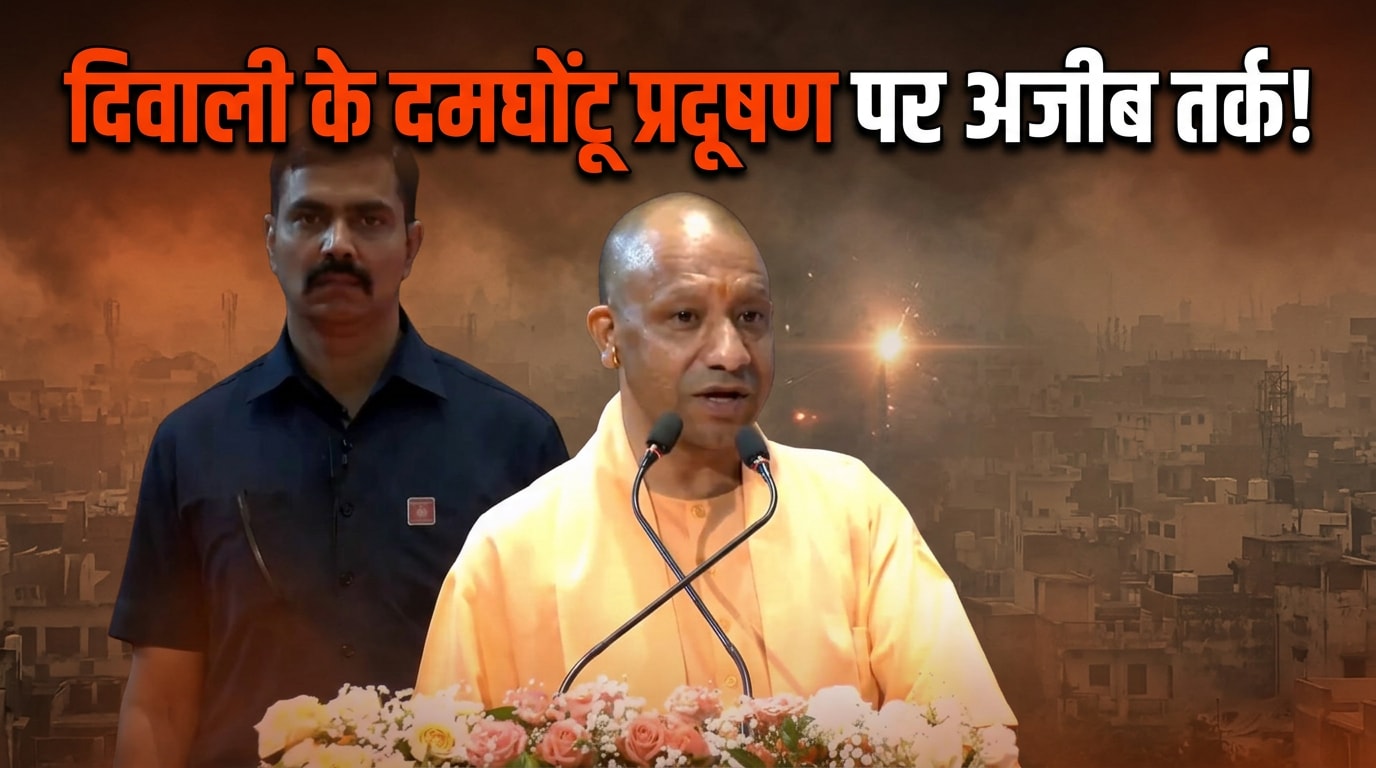
Reported by Vedika Sud Sachdeva, Edited by Aastha Ahuja'Pollution Subsides': Yogi Adityanath Defends Bursting Of Crackers On Diwali
Edited by Debanish Achom
 Delhi AQI: Is Toxic Air Making You Tired? Impact Of Air Pollution On Energy, Sleep And ConcentrationWritten by Debosmita Ghosh | Wednesday November 11, 2026
Fine particles such as PM2.5 can enter deep into the lungs and lead to inflammation and oxidative stress in the body. Prolonged exposure may also affect the cardiovascular system and overall physical health.
- Written by Niharika Raj | Wednesday November 11, 2026
A Pakistani air quality body has found no evidence linking Lahore's post-Diwali smog to fireworks in India, pointing instead to thousands of crop-residue fires in Pakistan's own Punjab.
- Written by Sambhav Kumar | Wednesday November 11, 2026
Morning chest heaviness should not automatically be attributed to air pollution. Persistent or worsening symptoms warrant medical evaluation, particularly if accompanied by coughing, wheezing or breathlessness.
- Edited by Sanstuti Nath | Wednesday November 11, 2026 , Islamabad
The Pakistan report said the available evidence did not support attributing Lahore's poor air quality after Diwali to fireworks across the border.
- Written by Sneha Mordani , Edited by Sambhav Kumar | Wednesday November 11, 2026
India should retain the AQI for public advisories but must publish uncapped PM2.5 and PM10 concentrations alongside it. An index may have a ceiling. Pollution does not.

................................ Advertisement ................................


Opinion | Delhi Has Every Pollution Control Policy - Except One That Works
Monday November 09, 2026Every November, Delhi performs the same ritual. We check the AQI before stepping outdoors, children are kept indoors, masks reappear, schools consider shutting, construction is restricted, and emergency meetings are convened. Politicians blame the weather, neighbouring states, farmers, or firecrackers. And then, as the season changes, the urgency d...
दीवाली की चौखट पर दिल्ली में सांसों का संकट: 30 साल की स्टडी ने हरियाली को लेकर क्या बताया?
Thursday November 05, 2026अध्ययन में हरियाली की मात्रा के साथ उसके फैलाव और आपसी जुड़ाव को भी महत्वपूर्ण पाया गया. जिन इलाकों में हरियाली ज्यादा बिखरी हुई थी, वहां सतही तापमान अधिक रहा. इसके विपरीत, बड़े और आपस में जुड़े हरित क्षेत्रों में तापमान कम पाया गया.
Opinion: Why Delhi's Smog Can't Be Fixed From SpaceDavid Fickling, Bloomberg
Monday October 19, 2026The clearest sign that Delhi is on a path to cleaner air would be a decline in the amount of paddy grown nearby, and therefore the acreage liable to be burned each year.
Don't Normalise Air Purifiers As Delhi Chokes | The Reason Why
Thursday December 11, 2025More than 90 cities in the world's top 100 polluting list are in India. With every passing year, the AQI is rising, reaching 'hazardous' levels.
Blog | Well Done, Delhi. You've Turned Lung Sacrifice Into A Badge Of HonourSaikat Kumar Bose
Monday November 10, 2025Till some years back, Delhiites would ask angry questions to those in power about the capitals annual tryst with toxic air. This has changed. Those in the driving seat dont see the need to answer now.



