Air pollution is known to be a cause of breathing problems. However, there's new evidence which suggests that it can also be a cause of heart disease, stroke, and eye problems, among others. Now, a new study says that the effects of polluted air may extend to mental health as well. A systematic review published in the Journal of Epidemiology & Community Health has found a link between exposure to certain air pollutants and a higher risk of suicide, suicide attempts and suicidal thoughts.
For the study, the researchers looked at evidence from studies conducted in different populations and examined several forms of environmental pollution. The strongest evidence in the review involved fine particulate matter, particularly PM2.5 and PM10, as well as nitrogen dioxide (NO2). Researchers found that both short-term and long-term exposure to some of these pollutants was associated with suicide-related outcomes.
Researchers from Queen's University Belfast reviewed scientific evidence examining whether environmental exposures could be associated with suicide and suicidal behaviour. They initially identified 287 studies for detailed assessment, of which 45 met the criteria for inclusion. Air pollution was the most extensively studied exposure, with 38 of the included studies examining it.
The researchers then pooled the findings from 29 studies. Their analysis found significant link between short-term exposure to PM2.5 and PM10 and suicide-related outcomes, including death by suicide, attempted suicide and suicidal thoughts. Long-term exposure to PM2.5 and nitrogen dioxide was also associated with these outcomes. Nitrogen dioxide is commonly produced by traffic and the burning of fossil fuels.
The review also found evidence which suggests links between suicide-related outcomes and other pollutants, including sulphur dioxide and ozone. Noise pollution was also associated with some suicide-related outcomes, although the evidence was less extensive.
"This meta-analysis shows statistically significant positive associations between short-term exposure to PM2.5 and PM10, long-term exposure to PM2.5 and NO2, and risk of death by suicide, attempted suicide and suicide ideation," the authors wrote.
According to a report in The Guardian, the researchers said, "These findings bring to attention the critical importance of recognising environmental exposures as modifiable risk factors within suicide prevention efforts."
"Integrating environmental health into mental health policy, through cross-sectoral collaboration, pollution reduction strategies, and targeted public health interventions, could play a vital role in reducing suicide risk and improving overall population mental wellbeing," they added.
Ben Mullins, professor at Curtin University's school of population health in Australia, who was not a part of the study, said the study has undertaken one of the first meta-analyses exploring the link between air pollution and suicide, according to report in PTI.
"It is well known that many air pollutants, specifically many metals, may cause wide-ranging neurological effects, including depression, anxiety, etc. Therefore, a link between air pollutant exposure and mental health disorders, including suicide, is not unexpected," Mullins said.
"However, the effect sizes in the included studies were relatively small, and the authors did not adequately address confounding factors or other explanatory variables," Mullins added.
Scientists are still trying to understand exactly how polluted air could influence mental health. One possible explanation involves inflammation and changes to the nervous system. Very small particles such as PM2.5 can enter deep into the lungs and, depending on their characteristics and exposure pathways, may contribute to systemic inflammation. Previous research has also linked air pollutants with neurological effects and changes that can affect brain function.
The researchers behind the review suggested that chronic inflammation and nerve damage could potentially influence mood and the body's ability to respond to stress. However, these are possible biological pathways rather than proof that air pollution directly causes suicidal behaviour.
Other environmental exposures may also affect mental wellbeing indirectly. For example, traffic and environmental noise can interfere with sleep, while light pollution can disrupt the body's circadian rhythm. Poor sleep and prolonged stress can, in turn, affect mood and psychological wellbeing.
The study highlights an association, not a direct cause-and-effect relationship. Understanding this distinction is important when discussing suicide and mental health.
Disclaimer: This content including advice provides generic information only. It is in no way a substitute for a qualified medical opinion. Always consult a specialist or your own doctor for more information. NDTV does not claim responsibility for this information.
Delhi AQI: Is Toxic Air Making You Tired? Impact Of Air Pollution On Energy, Sleep And Concentration
Written by Debosmita GhoshHeavy Chest In The Morning Amid High AQI: Why It Happens And How To Get Relief
Written by Sambhav KumarIt's Not Just AQI: Why Tiny Particulate Matter Poses A Bigger Health Risk
Written by Sneha Mordani, Edited by Sambhav KumarFine particles such as PM2.5 can enter deep into the lungs and lead to inflammation and oxidative stress in the body. Prolonged exposure may also affect the cardiovascular system and overall physical health.
A Pakistani air quality body has found no evidence linking Lahore's post-Diwali smog to fireworks in India, pointing instead to thousands of crop-residue fires in Pakistan's own Punjab.
Morning chest heaviness should not automatically be attributed to air pollution. Persistent or worsening symptoms warrant medical evaluation, particularly if accompanied by coughing, wheezing or breathlessness.
The Pakistan report said the available evidence did not support attributing Lahore's poor air quality after Diwali to fireworks across the border.
India should retain the AQI for public advisories but must publish uncapped PM2.5 and PM10 concentrations alongside it. An index may have a ceiling. Pollution does not.
................................ Advertisement ................................
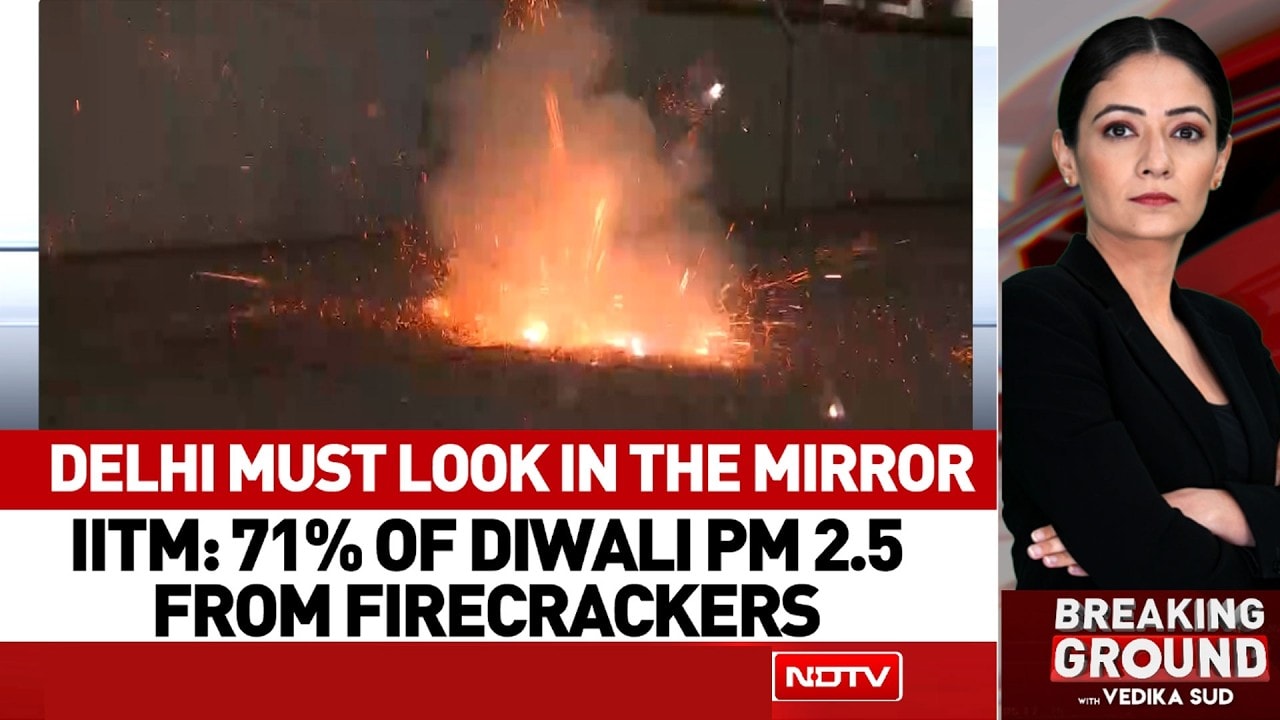
Opinion | Delhi Has Every Pollution Control Policy - Except One That Works
Monday November 09, 2026Every November, Delhi performs the same ritual. We check the AQI before stepping outdoors, children are kept indoors, masks reappear, schools consider shutting, construction is restricted, and emergency meetings are convened. Politicians blame the weather, neighbouring states, farmers, or firecrackers. And then, as the season changes, the urgency d...
दीवाली की चौखट पर दिल्ली में सांसों का संकट: 30 साल की स्टडी ने हरियाली को लेकर क्या बताया?
Thursday November 05, 2026अध्ययन में हरियाली की मात्रा के साथ उसके फैलाव और आपसी जुड़ाव को भी महत्वपूर्ण पाया गया. जिन इलाकों में हरियाली ज्यादा बिखरी हुई थी, वहां सतही तापमान अधिक रहा. इसके विपरीत, बड़े और आपस में जुड़े हरित क्षेत्रों में तापमान कम पाया गया.
Opinion: Why Delhi's Smog Can't Be Fixed From SpaceDavid Fickling, Bloomberg
Monday October 19, 2026The clearest sign that Delhi is on a path to cleaner air would be a decline in the amount of paddy grown nearby, and therefore the acreage liable to be burned each year.
Don't Normalise Air Purifiers As Delhi Chokes | The Reason Why
Thursday December 11, 2025More than 90 cities in the world's top 100 polluting list are in India. With every passing year, the AQI is rising, reaching 'hazardous' levels.
Blog | Well Done, Delhi. You've Turned Lung Sacrifice Into A Badge Of HonourSaikat Kumar Bose
Monday November 10, 2025Till some years back, Delhiites would ask angry questions to those in power about the capitals annual tryst with toxic air. This has changed. Those in the driving seat dont see the need to answer now.