


- Home/
- No PUCC, No Fuel: Why Vehicle Emissions Matter For Your Health
No PUCC, No Fuel: Why Vehicle Emissions Matter For Your Health
Written by Sambhav Kumar | Updated: October 11, 2026 15:45 IST
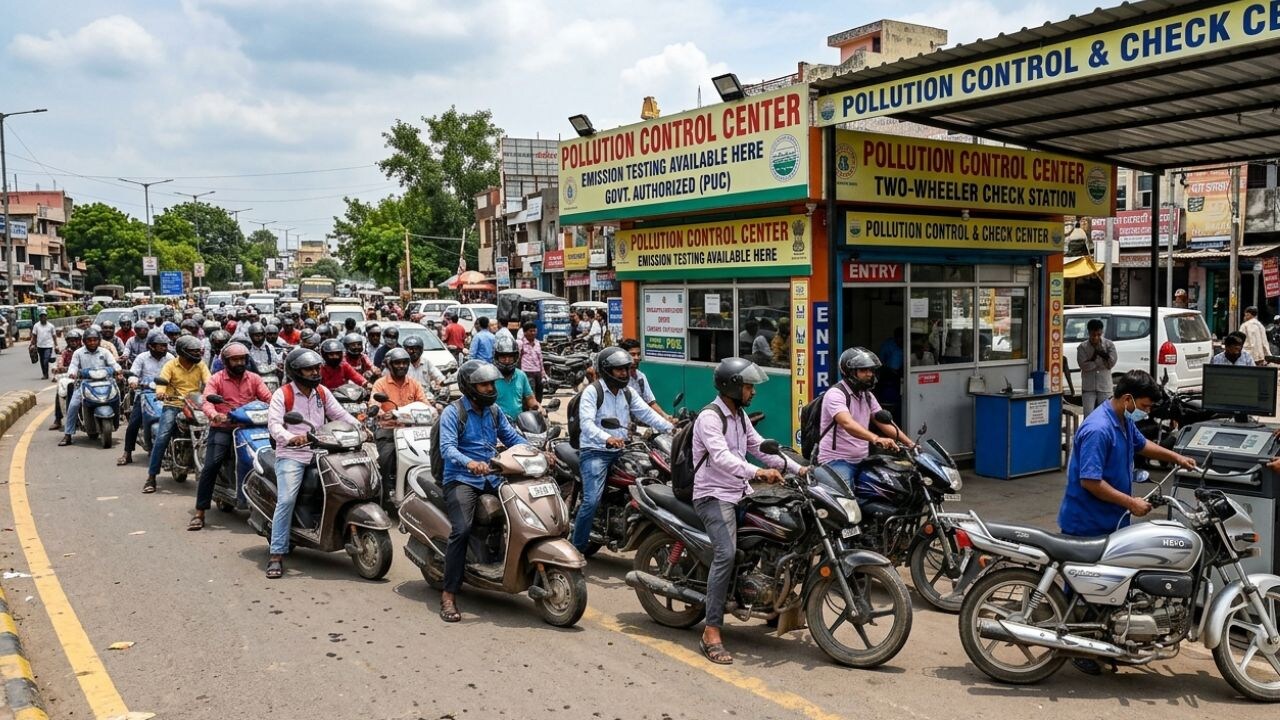
Vehicle exhaust contains pollutants
Highlights
- No PUCC, No Fuel rule highlights vehicle emission's impact on urban air quality
- Vehicle exhaust contains harmful pollutants like PM2.5 affecting respiratory health
- Long-term exposure to traffic pollution raises risks of heart and lung diseases
The "No PUCC, No Fuel" rule has brought renewed attention to something that is often overlooked in everyday life: the quality of the air we breathe while travelling, walking on busy roads or living near traffic-heavy areas. A Pollution Under Control Certificate (PUCC) is intended to ensure that vehicles meet prescribed emission standards, but its importance goes beyond regulatory compliance. Vehicle exhaust is a significant source of air pollution in urban areas and can expose people to a combination of harmful gases and fine particles. Repeated exposure, particularly in cities with heavy traffic and poor air quality, can affect the lungs, heart and overall health. According to Dr Abhijeet Singh, Associate Director and Unit Head, Pulmonology, ShardaCare - Healthcity, regular exposure to polluted air can place considerable stress on the respiratory system.
"When we breathe polluted air regularly, the respiratory system is exposed to repeated irritation and inflammation. This can worsen existing conditions such as asthma, chronic bronchitis and chronic obstructive pulmonary disease, while also increasing the likelihood of respiratory symptoms in otherwise healthy individuals," says Dr Singh.
What makes vehicle emissions harmful?
Vehicle exhaust contains pollutants such as particulate matter, nitrogen oxides, carbon monoxide and other combustion-related compounds. Among these, fine particulate matter, particularly PM2.5, is a major concern because the particles are small enough to travel deep into the respiratory tract.
Repeated exposure can irritate the airways and contribute to inflammation. For people who already have respiratory conditions, this can potentially aggravate symptoms. The effects may not always be immediately obvious. While a person may not experience significant symptoms after a short period of exposure, spending several hours in traffic every day can result in repeated exposure over months and years. Coughing, wheezing and breathlessness can be warning signs
One of the more immediate effects of exposure to traffic-related pollution can be irritation of the eyes, nose and throat. Some people may experience coughing, throat irritation, wheezing, breathlessness or chest discomfort, particularly when pollution levels are high. People with asthma may notice worsening symptoms or require their prescribed medication more frequently during periods of poor air quality. Children are particularly vulnerable because their lungs are still developing. Older adults and people with existing respiratory or cardiovascular conditions may also be more susceptible to the effects of air pollution.
Vehicle pollution can affect the heart too
The health impact of air pollution is not limited to the lungs. Fine particles can trigger inflammation and oxidative stress in the body and may affect blood vessels and cardiovascular function. Long-term exposure to air pollution has been associated with an increased risk of cardiovascular problems, including heart attacks and strokes. For people already living with conditions such as hypertension, diabetes, high cholesterol or established heart disease, persistent exposure to polluted air can add another potential burden to cardiovascular health. This is why vehicle emissions should be viewed not merely as an environmental issue, but as a public health concern.
You do not have to drive to be exposed
Traffic-related pollution can affect people who do not drive as well. Pedestrians, traffic police personnel, street vendors, delivery workers, cyclists and people who spend several hours outdoors near congested roads can experience prolonged exposure to vehicle emissions.
Even commuters travelling inside cars are not necessarily completely protected. Pollutants can enter the vehicle cabin, particularly when windows are open or the ventilation system draws in outside air. During traffic jams, commuters may also be surrounded by exhaust emissions from several vehicles at close range.
- Why vehicle maintenance matters
- Maintaining a vehicle properly can play an important role in controlling emissions.
A poorly maintained vehicle or one with a malfunctioning emission-control system may release higher levels of pollutants. Regular servicing, timely replacement of worn components and avoiding unnecessary idling can help reduce emissions. The PUCC system provides an additional mechanism to check whether a vehicle's emissions are within applicable limits. A PUCC certificate alone cannot eliminate air pollution. However, ensuring that vehicles comply with prescribed emission standards is one practical way of controlling pollution at its source.
Exposure depends on how long you spend in traffic
The health impact of traffic pollution can depend on the duration and intensity of exposure. A brief, occasional exposure is different from spending several hours every day in heavy traffic. People who regularly commute through congested roads or work outdoors in traffic-heavy areas may have substantially more repeated exposure. The problem becomes even more relevant in densely populated cities, where vehicle emissions combine with other sources of pollution, including construction dust, road dust, industrial emissions and seasonal burning.
How can you reduce your exposure?
Individuals can take some practical measures to reduce their exposure to traffic-related pollution. On days when outdoor pollution is particularly high, people with respiratory or cardiovascular conditions should consider limiting prolonged outdoor activity, especially near congested roads. Commuters can also:
- Choose less congested routes when practical.
- Keep vehicle windows closed when appropriate during periods of heavy outdoor pollution.
- Ensure that the vehicle's ventilation and filtration systems are properly maintained.
- Avoid spending unnecessary time near idling vehicles.
- Pedestrians and cyclists can opt for less traffic-heavy routes where cleaner alternatives are available.
However, individual precautions should complement, rather than replace, broader measures to reduce pollution from vehicles and other sources.
Reducing unnecessary emissions matters
Individual behaviour can also contribute to cleaner air. Avoiding unnecessary vehicle use, carpooling, using public transport, walking or cycling where feasible, and switching off engines during prolonged stops can help reduce emissions. Cleaner and electric vehicles can also reduce tailpipe emissions, although the overall environmental impact of transportation depends on several factors, including how energy is generated and how vehicles are manufactured and used.
'No PUCC, No Fuel' is ultimately a public health message
The "No PUCC, No Fuel" approach represents more than a documentation requirement. It highlights the connection between vehicle maintenance, emission control and public health. Cleaner vehicles mean fewer pollutants being released into an already stressed urban environment. While no single measure can solve the problem of air pollution, ensuring that vehicles meet emission standards is an important step towards reducing exposure. For individuals, the message is simple: vehicle emissions are not merely an environmental concern; they are a health concern.
The next time a PUCC certificate is renewed, it is worth remembering that an emission check is about more than keeping a vehicle compliant. It is part of a broader effort to improve the air we breathe, whether we are behind the wheel, walking to work, waiting at a traffic signal or simply living in the same city. Protecting lung and heart health requires action at both the individual and policy levels. Keeping high-emitting vehicles under check is one important part of that effort.
\r\n
\r\n
Disclaimer: This content including advice provides generic information only. It is in no way a substitute for a qualified medical opinion. Always consult a specialist or your own doctor for more information. NDTV does not claim responsibility for this information.
Published: October 11, 2026 15:32 IST
also read
Delhi AQI: Is Toxic Air Making You Tired? Impact Of Air Pollution On Energy, Sleep And Concentration
Written by Debosmita GhoshHeavy Chest In The Morning Amid High AQI: Why It Happens And How To Get Relief
Written by Sambhav KumarIt's Not Just AQI: Why Tiny Particulate Matter Poses A Bigger Health Risk
Written by Sneha Mordani, Edited by Sambhav Kumar
 Delhi AQI: Is Toxic Air Making You Tired? Impact Of Air Pollution On Energy, Sleep And ConcentrationWritten by Debosmita Ghosh | Wednesday November 11, 2026
Fine particles such as PM2.5 can enter deep into the lungs and lead to inflammation and oxidative stress in the body. Prolonged exposure may also affect the cardiovascular system and overall physical health.
- Written by Niharika Raj | Wednesday November 11, 2026
A Pakistani air quality body has found no evidence linking Lahore's post-Diwali smog to fireworks in India, pointing instead to thousands of crop-residue fires in Pakistan's own Punjab.
- Written by Sambhav Kumar | Wednesday November 11, 2026
Morning chest heaviness should not automatically be attributed to air pollution. Persistent or worsening symptoms warrant medical evaluation, particularly if accompanied by coughing, wheezing or breathlessness.
- Edited by Sanstuti Nath | Wednesday November 11, 2026 , Islamabad
The Pakistan report said the available evidence did not support attributing Lahore's poor air quality after Diwali to fireworks across the border.
- Written by Sneha Mordani , Edited by Sambhav Kumar | Wednesday November 11, 2026
India should retain the AQI for public advisories but must publish uncapped PM2.5 and PM10 concentrations alongside it. An index may have a ceiling. Pollution does not.


................................ Advertisement ................................
Opinion | Delhi Has Every Pollution Control Policy - Except One That Works
Monday November 09, 2026Every November, Delhi performs the same ritual. We check the AQI before stepping outdoors, children are kept indoors, masks reappear, schools consider shutting, construction is restricted, and emergency meetings are convened. Politicians blame the weather, neighbouring states, farmers, or firecrackers. And then, as the season changes, the urgency d...
दीवाली की चौखट पर दिल्ली में सांसों का संकट: 30 साल की स्टडी ने हरियाली को लेकर क्या बताया?
Thursday November 05, 2026अध्ययन में हरियाली की मात्रा के साथ उसके फैलाव और आपसी जुड़ाव को भी महत्वपूर्ण पाया गया. जिन इलाकों में हरियाली ज्यादा बिखरी हुई थी, वहां सतही तापमान अधिक रहा. इसके विपरीत, बड़े और आपस में जुड़े हरित क्षेत्रों में तापमान कम पाया गया.
Opinion: Why Delhi's Smog Can't Be Fixed From SpaceDavid Fickling, Bloomberg
Monday October 19, 2026The clearest sign that Delhi is on a path to cleaner air would be a decline in the amount of paddy grown nearby, and therefore the acreage liable to be burned each year.
Don't Normalise Air Purifiers As Delhi Chokes | The Reason Why
Thursday December 11, 2025More than 90 cities in the world's top 100 polluting list are in India. With every passing year, the AQI is rising, reaching 'hazardous' levels.
Blog | Well Done, Delhi. You've Turned Lung Sacrifice Into A Badge Of HonourSaikat Kumar Bose
Monday November 10, 2025Till some years back, Delhiites would ask angry questions to those in power about the capitals annual tryst with toxic air. This has changed. Those in the driving seat dont see the need to answer now.



