


- Home/
- One Third Of World Population Exposed To High Ozone Pollution: Report
One Third Of World Population Exposed To High Ozone Pollution: Report
| Updated: September 30, 2026 09:28 IST
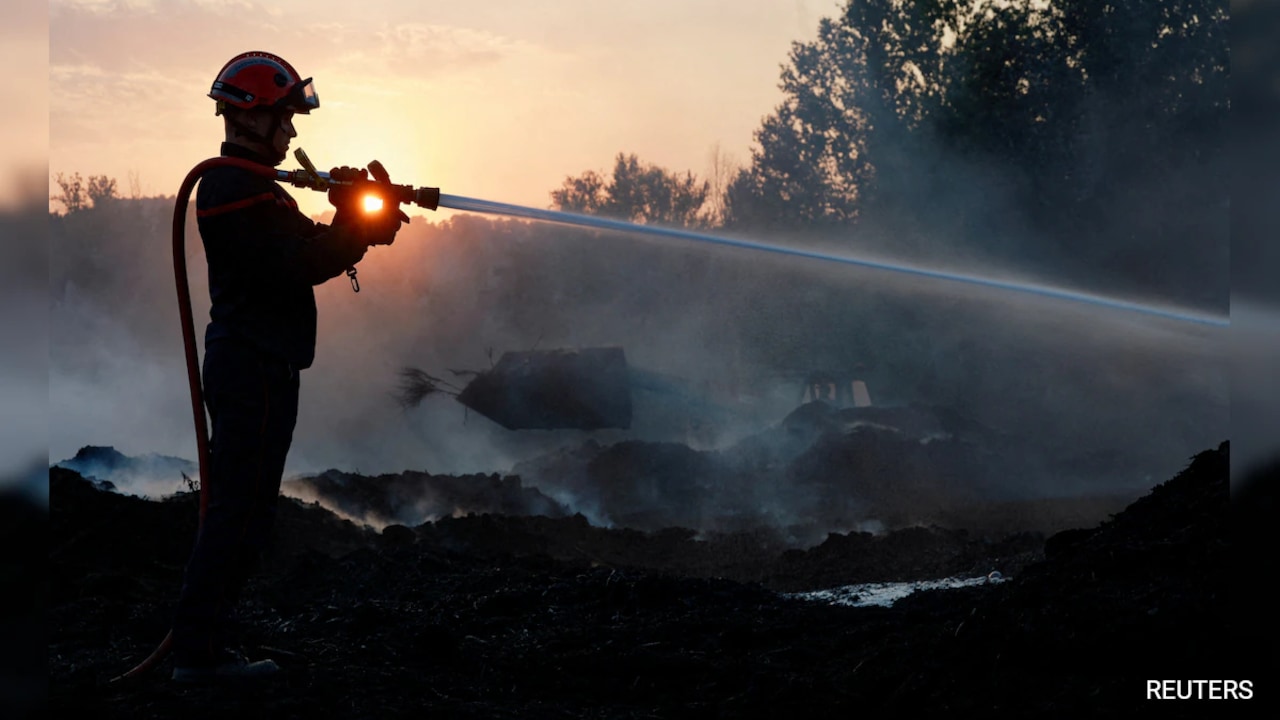
This year's ozone pollution was driven in part by record-breaking heatwaves and wildfires.
France:
Heatwaves and wildfires combined with human-caused emissions this year combined to expose one third of the world's population to extremely high levels of ozone pollution, a European Union report said on Wednesday.
In a new analysis covering the first eight months of 2026, the European Union's Copernicus Climate Atmosphere Monitoring Service (CAMS) highlighted the close relationship between climate change and air pollution.
When heat and sunlight react with airborne emissions from wildfires, vehicles and industry, they create ground-level ozone pollution, which can damage lung tissue, cause breathing problems, trigger asthma attacks and lead to other health issues.
Despite progress in cutting the most harmful air pollutants in recent decades, ozone has proved more difficult to tackle as climate change fuels the conditions that favour its formation.
This year's ozone pollution was driven in part by record-breaking heatwaves and wildfires that seared Europe and North America and sent smoke well beyond their borders.
Indonesia has experienced major wildfires, while the warming El Nino weather pattern, which started in June and is due to peak later this year, could drive more fires in southeast Asia, according to the analysis.
"Air pollution does not stop at borders. It can travel thousands of kilometres, crossing continents and oceans and affecting air quality far from its source," CAMS director Laurence Rouil said in the Atmosphere Watch report.
'Extremely poor' air
CAMS uses satellite data and computer models to track air pollution and wildfires.
The report found that 34 percent of the global population was exposed to "extremely poor" air quality between January 1 and September 15, meaning concentrations of ozone were well above the World Health Organization's exposure guidance.
The WHO's guideline sets 100 micrograms of ozone per cubic metre as the maximum recommended level of exposure, averaged over eight hours.
Another 17 percent of the world breathed "very poor" air, while five percent was exposed to "good" levels of ozone.
Asia has the highest rate of exposure to ozone pollution, with 53 percent of its population breathing "extremely poor" air. Another 22 percent was exposed to "very poor" ozone.
The continent's widespread emissions are driven by industrialisation, economic development and transport, as well as wildfires and the burning of agricultural residue.
New Delhi, Dhaka, Chinese megalopolis Chongqing and Pakistan's Lahore were among cities whose ozone levels were "extremely poor".
Two thirds of the population in North America and 45 percent in Europe were exposed to "poor" or "very poor" air quality.
EU regulation has been effective in reducing emissions from air pollutants, except for ozone, the report said.
Ozone pollution is linked to 60,000 premature deaths per year in Europe, Ian Marnane, an official at the European Environment Agency, told a media briefing.
Ozone levels in North America also remained "relatively unchanged" despite ambitious emissions reduction policies, the report said.
Smoke from forest fires, crop burning and cooking are significant contributors to Africa's air pollution while Saharan dust travels as far as Europe.
Eight percent of Africa's population endured "extremely poor" air quality this year. It was "very poor" or "poor" for 19 percent of the continent.
Ozone levels were very high in the Brazilian city of Sao Paulo and extremely elevated in Rio de Janeiro but the air quality was "good" or "fair" for 81 percent of South America's population.
One bright spot was Oceania, including Australia and New Zealand, where 66 percent of the population enjoyed "good" ozone levels and 34 percent lived under "fair" conditions.
(Except for the headline, this story has not been edited by NDTV staff and is published from a syndicated feed.)
Published: September 30, 2026 07:30 IST
 Written by Shreya Goswami | Thursday October 01, 2026
October's changing temperatures, dry air, dust and rising pollution can leave Delhi-NCR residents with a scratchy throat, cough or hoarseness.
- Written by Dr Shivanshu Raj Goyal | Thursday October 01, 2026
Since most people spend a lot of time indoors, the air quality indoors becomes essential in relation to respiratory health. Considering different environments, air inside can contain dirt, allergens and several pollutants from multiple sources.
- Wednesday September 30, 2026 , France
In a new analysis covering the first eight months of 2026, the European Union's Copernicus Climate Atmosphere Monitoring Service (CAMS) highlighted the close relationship between climate change and air pollution.
- Reported by Reet Kaur Sahni | Tuesday September 29, 2026
Starting November 1, petrol and diesel vehicles registered outside Delhi and not meeting BS-VI standards will be banned from entering the city, though CNG and electric vehicles are exempt.
- Written by Dr Sabine Kapasi | Tuesday September 29, 2026
Air pollution is often discussed as a cause of respiratory disease, but its effects extend to the heart and blood vessels.



................................ Advertisement ................................



Blog | Well Done, Delhi. You've Turned Lung Sacrifice Into A Badge Of HonourSaikat Kumar Bose
Monday November 10, 2025Till some years back, Delhiites would ask angry questions to those in power about the capitals annual tryst with toxic air. This has changed. Those in the driving seat dont see the need to answer now.
Opinion | Why Indians Have Just Given Up On Air Pollution CrisisTanushree Ganguly
Friday December 20, 2024While some may argue that people in Delhi are now more aware of air pollution than they were a decade back, my rebuttal would be that awareness does not mean that people are concerned.
Opinion | You Must Outrage Over Filthy Air More Than Once A YearJyoti Pande Lavakare
Tuesday December 10, 2024Delhi welcomed us with monsoon rains and mangos. We were home. Fast forward a couple of years, in the winter of 2012, I found myself in denial about something other parents, mostly expats, were calling toxic air.
Opinion | Delhi's Air Pollution Situation Is Like A Bad MarriageNishtha Gautam
Friday November 22, 2024On a good day, such as today, the AQI reading in Delhi is 407. We are jubilant at the sickly sunshine trickling through the slightly dissipated smog. At least its not 1600.
दिवाली... पराली... सियासी जुगाली!Ashwini kumar
Monday November 18, 2024दिल्ली-एनसीआर में प्रदूषण का समाधान तो आज तक मिला नहीं. हर साल चिंतित होकर हम-आप सांसों की तकलीफ के साथ-साथ दिल और ब्लड प्रेशर के मरीज भी क्यों बनें?


