


- Home/
- People With Obstructive Sleep Apnea Have 71% Higher Risk Of Heart Attacks, Stroke And Death: Study
People With Obstructive Sleep Apnea Have 71% Higher Risk Of Heart Attacks, Stroke And Death: Study
| Updated: April 03, 2026 14:35 IST

Highlights
- Adults with obstructive sleep apnea have a 71% higher risk of cardiovascular events or death
- OSA leads to upper airway obstruction, reducing sleep quality and increasing heart risk
- 40-70% of people with OSA are obese, with obesity linked to more severe OSA symptoms
New Delhi:
New Delhi, April 3 (IANS) Scientists have found that those living with obstructive sleep apnea (OSA) have a 71 per cent higher risk of cardiovascular events (CVEs) or death from any cause (all-cause mortality) compared with those not living with OSA.
New research, to be presented at the European Congress on Obesity (ECO 2026, Istanbul, Turkey, May 12-15), is a collaboration between Imperial College Health Partners; Imperial College Healthcare NHS Trust, London, UK; and Eli Lilly and Company (Lilly).
“In adults, obstructive sleep apnea is linked to higher risk of cardiovascular events or all-cause mortality, especially among those with obesity, even after adjusting for confounders,” said study co-author Heather Fitzke of Imperial College Health Partners, London.
OSA is characterised by recurrent upper airway obstruction during sleep and is associated with reduced quality of sleep and life and increased cardiovascular risk.
The prevalence of obesity and overweight among people with OSA is between 40-70 per cent, and people living with obesity are more likely to experience more severe OSA than those without the condition.
In this new study, the primary objective was to assess the increased risk of the combined endpoint of CVEs or death among adults with a diagnosis of OSA compared to adults without OSA.
The study used electronic health records from 2.9 million residents.
In the analysis, 20,300 people diagnosed with OSA were matched with 97,412 comparators; 57.2 per cent (11,613) of those participants with OSA were living with obesity compared to 56.7 per cent (55,264) of the matched participants without OSA.
The authors found the risk of CVEs or all-cause mortality among people with OSA was 71 per cent higher than in the matched controls without OSA.
These findings underscore the need for effective obesity management and highlight the importance of early screening and timely diagnosis. To our knowledge, this is the largest matched case-control study of obstructive sleep apnea outside the US to date, Fitzke added.
(Except for the headline, this story has not been edited by NDTV staff and is published from a syndicated feed.)
Published: April 03, 2026 13:36 IST
 Written by Varsha Vats | Monday November 09, 2026
Children (whose lungs are still developing), the elderly, pregnant individuals, and those with pre-existing heart or lung diseases are at the greatest risk for acute complications.
- Edited by Debanish Achom | Monday November 09, 2026 , New Delhi
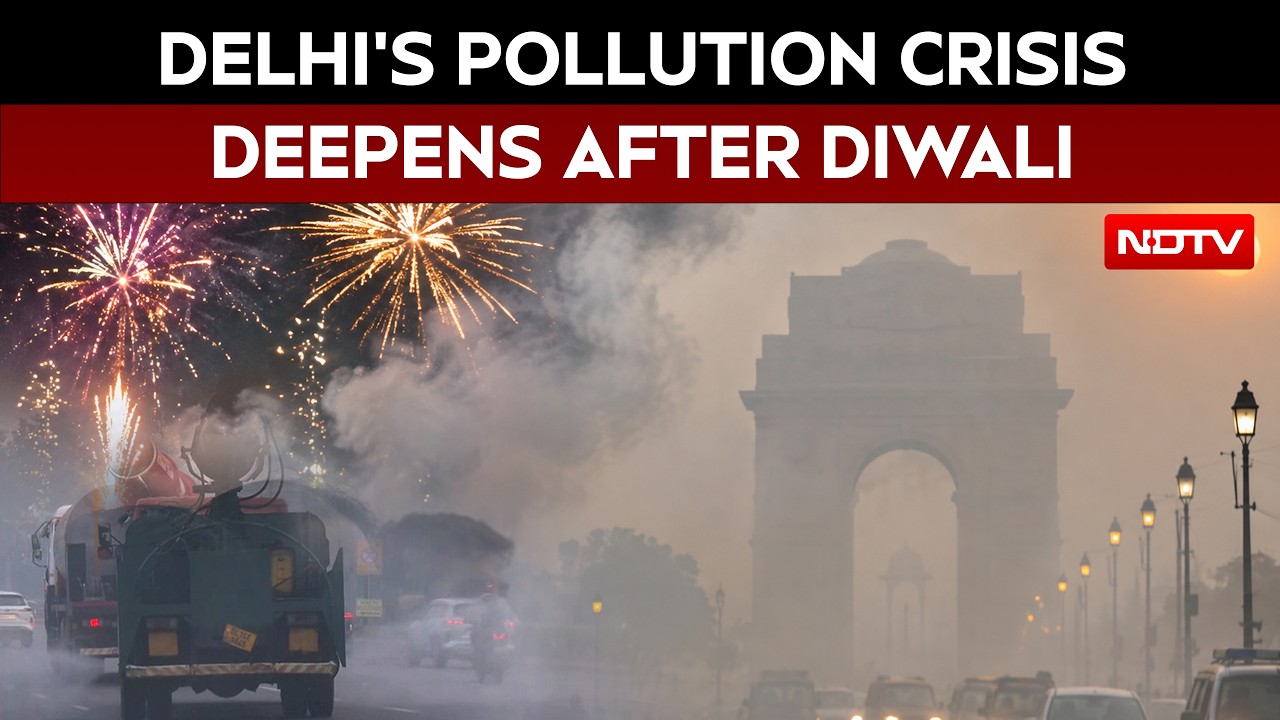
The war of words comes as a thick layer of smoke covers Delhi-National Capital Region (NCR) after Diwali celebrations, reducing visibility and taking air pollution into the 'severe' category at several locations
- AFP | Monday November 09, 2026 , India
Toxic air in parts of India's capital New Delhi soared to more than 58 times the World Health Organization's recommended daily limit Monday.
- Edited by Debanish Achom | Monday November 09, 2026 , New Delhi
Real-time figures from the CPCB's Sameer mobile application and station-level monitoring indicated widespread pockets of extreme toxicity across the national capital
- Reported by Kumar Kunal | Monday November 09, 2026 , New Delhi
Sudden discontinuation of online data is not surprising for those who follow the website on Diwali evening regularly.


................................ Advertisement ................................


दीवाली की चौखट पर दिल्ली में सांसों का संकट: 30 साल की स्टडी ने हरियाली को लेकर क्या बताया?
Thursday November 05, 2026अध्ययन में हरियाली की मात्रा के साथ उसके फैलाव और आपसी जुड़ाव को भी महत्वपूर्ण पाया गया. जिन इलाकों में हरियाली ज्यादा बिखरी हुई थी, वहां सतही तापमान अधिक रहा. इसके विपरीत, बड़े और आपस में जुड़े हरित क्षेत्रों में तापमान कम पाया गया.
Opinion: Why Delhi's Smog Can't Be Fixed From SpaceDavid Fickling, Bloomberg
Monday October 19, 2026The clearest sign that Delhi is on a path to cleaner air would be a decline in the amount of paddy grown nearby, and therefore the acreage liable to be burned each year.
Don't Normalise Air Purifiers As Delhi Chokes | The Reason Why
Thursday December 11, 2025More than 90 cities in the world's top 100 polluting list are in India. With every passing year, the AQI is rising, reaching 'hazardous' levels.
Blog | Well Done, Delhi. You've Turned Lung Sacrifice Into A Badge Of HonourSaikat Kumar Bose
Monday November 10, 2025Till some years back, Delhiites would ask angry questions to those in power about the capitals annual tryst with toxic air. This has changed. Those in the driving seat dont see the need to answer now.
Opinion | Why Indians Have Just Given Up On Air Pollution CrisisTanushree Ganguly
Friday December 20, 2024While some may argue that people in Delhi are now more aware of air pollution than they were a decade back, my rebuttal would be that awareness does not mean that people are concerned.




