


- Home/
- Why Delhi Looked Less Hazy This Diwali Despite Worse Air Quality
Why Delhi Looked Less Hazy This Diwali Despite Worse Air Quality
Reported by Ankita Tiwari | Updated: November 11, 2026 23:04 IST
On November 8, the day of Diwali, Delhi recorded an AQI of 376
Highlights
- Delhi's pre-Diwali PM2.5 levels were nearly double compared to 2025, reaching 236 ug/m3
- On Diwali, Delhi's AQI hit 376, higher than last year's 345, with PM2.5 at 257 ug/m3
- Farm fires contributed up to 16.2% of pollution but dropped to 8% by November 6
New Delhi: 
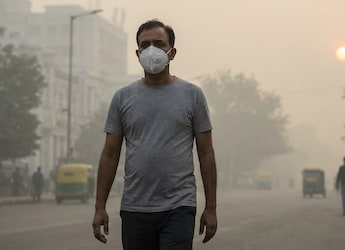
Every year, post-Diwali, Delhi gets shrouded by thick layers of smog. This year was no different, with the city's air quality index (AQI) being higher than last year.
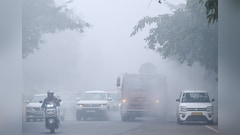
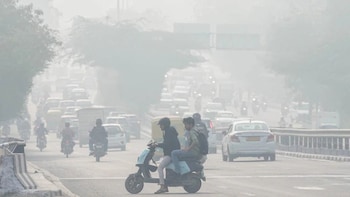
Yet, unlike previous years, visibility in the national capital and surrounding areas did not appear to be as bad. So, where did the pollution go?
Delhi's Air Was Already Worse Before Diwali
According to a Centre for Science and Environment (CSE) report, the average PM2.5 concentration during the week before Diwali stood at 236 micrograms per cubic metre, almost double the 120 ug/m3 recorded in 2025. It was also the highest pre-Diwali average in three years.
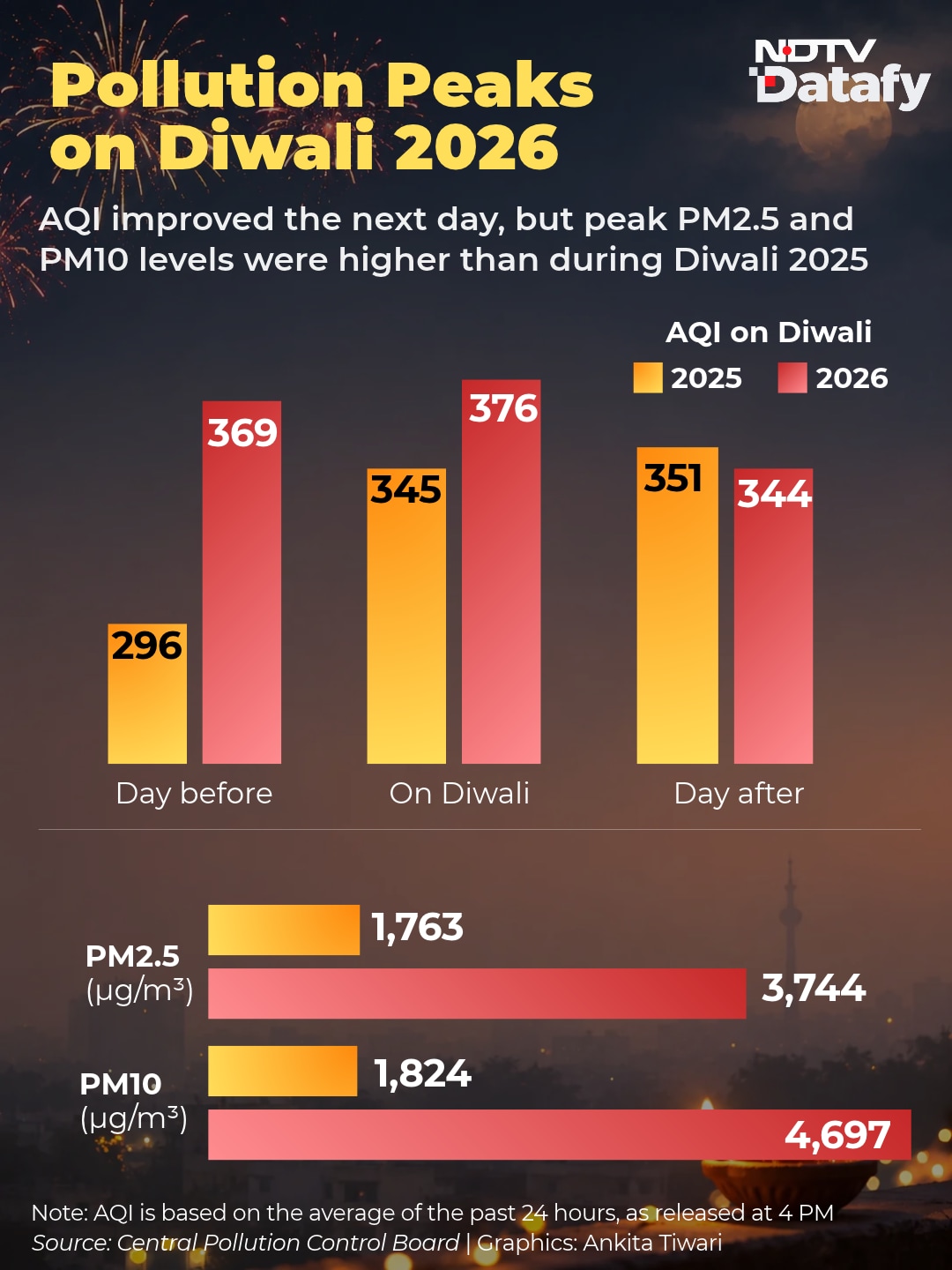
On November 8, the day of Diwali, Delhi recorded an AQI of 376, compared with 345 on October 20 last year. PM2.5 levels also increased from 237 ug/m3 in 2025 to 257 ug/m3 this year. The AQI had already reached 369 a day before Diwali, while it was 344 the day after the festival.
Stubble Burning Not The Only Reason
Farm fires added to the pollution burden. According to CSE's analysis, their contribution to Delhi's PM2.5 reached a seasonal high of 16.2 per cent on November 4. However, it fell to around 8 per cent by November 6, even as the AQI remained at 382.
CSE's analysis of IITM data for November 1 to 8 found that pollution transported from neighbouring NCR districts accounted for 54.43 per cent of Delhi's PM2.5, while local sources contributed 33.06 per cent and stubble burning accounted for 14.29 per cent. Among local sources, vehicles were the biggest contributor, accounting for 52 per cent.
Winds Helped Disperse Smoke
One important factor behind the relatively clearer skies after Diwali this year was the change in wind speed and direction.
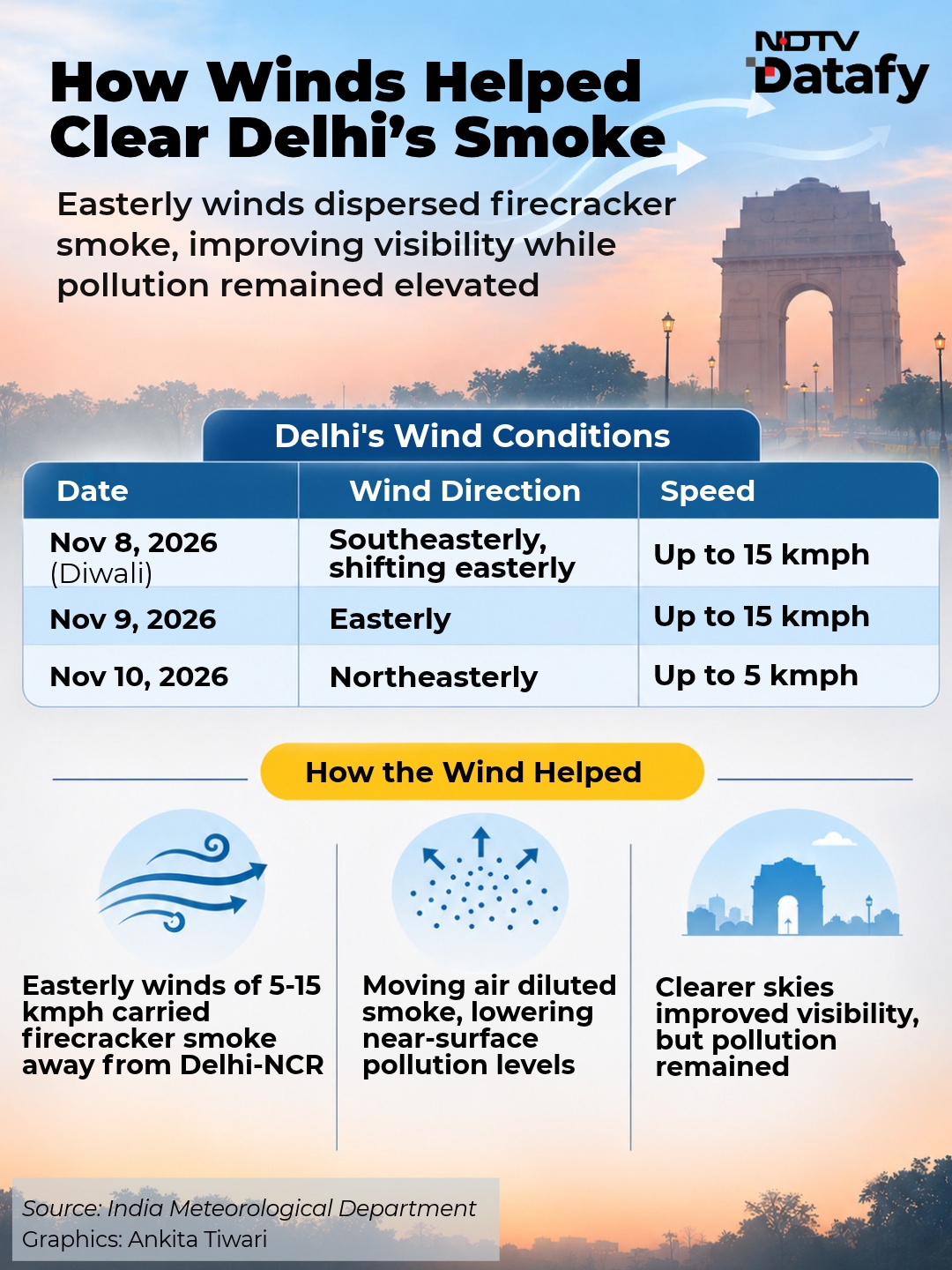
According to the India Meteorological Department, winds shifted from southeasterly to easterly on November 8, reaching speeds of up to 15 kilometres per hour during the afternoon and around 10 kmph during the evening and night. The easterly flow continued on November 9, with speeds reaching up to 15 kmph in the afternoon.
#Datafy | Delhi's Pollution Was Worse This Diwali. Why Did The City Look Less Smoggy? https://t.co/YayfRyhrwn
— NDTV (@ndtv) November 11, 2026
Stronger winds carry polluted air away from an area and mix it with a larger volume of surrounding air, reducing the concentration of particles near the ground and improving visibility.
In Delhi's case, the sustained easterly winds helped move accumulated firecracker smoke away from the immediate region. However, this does not mean the pollutants were eliminated. They were dispersed and transported elsewhere.
How Was This Different From Last Year?
During Diwali 2025, there were weaker winds of below 6 kmph during the evening and night. Such low wind speeds offer less scope for pollutant dispersion, allowing smoke to remain concentrated near the surface.
This pattern was not seen in the previous year, when Delhi's AQI continued to rise even on the day after Diwali. In 2026, however, the AQI dropped by 32 points, from 376 on Diwali to 344 the following day, before improving further to 299 on November 10.
Published: November 11, 2026 23:04 IST
also read
Delhi Air Quality Drops Back To 'Very Poor' Category, AQI At 313
Press Trust Of IndiaEven Before Diwali, Delhi-NCR Had Worse Pollution Levels Than Last Year: Study
Reported by Himanshu Shekhar Mishra, Edited by Anindita SanyalNoida, Greater Noida Schools Switch To Hybrid Mode For Classes Up To 5 Amid Pollution
Edited by Aakanksha Singh
- Reported by Ankita Tiwari | Wednesday November 11, 2026 , New Delhi
According to a Centre for Science and Environment (CSE) report, the average PM2.5 concentration during the week before Diwali stood at 236 micrograms per cubic metre, almost double the 120 ug/m3 recorded in 2025. It was also the highest pre-Diwali average in three years.
- Wednesday November 11, 2026 , New Delhi
The transport sector is expected to be the largest contributor to pollution on Wednesday, while the impact of stubble burning is anticipated to increase on Thursday, potentially worsening air quality further over the next few days, according to Indian Institute of Tropical Meteorology models.
- Reported by Himanshu Shekhar Mishra, Edited by Anindita Sanyal | Wednesday November 11, 2026 , New Delhi
Air pollution in Delhi-NCR has worsened during the onset of winter (from October to mid-November) this year. This has been revealed in a new analysis by the Centre for Science and Environment or CSE, an organisation that monitors environmental issues.
- Written by Vishesh Nagar | Wednesday November 11, 2026
All 10 cities in the ranking fall under the 'Hazardous' category, with Bathinda recording the highest AQI, followed by Rewari and Faridkot.
- Written by Debosmita Ghosh | Wednesday November 11, 2026
Recent AQI data has also shown how pollution can change between night, early morning and daytime hours. In Delhi, pollution increased after sunset and in the early hours following Diwali, while levels fell later in the morning.

................................ Advertisement ................................
Opinion | Delhi Has Every Pollution Control Policy - Except One That Works
Monday November 09, 2026Every November, Delhi performs the same ritual. We check the AQI before stepping outdoors, children are kept indoors, masks reappear, schools consider shutting, construction is restricted, and emergency meetings are convened. Politicians blame the weather, neighbouring states, farmers, or firecrackers. And then, as the season changes, the urgency d...
दीवाली की चौखट पर दिल्ली में सांसों का संकट: 30 साल की स्टडी ने हरियाली को लेकर क्या बताया?
Thursday November 05, 2026अध्ययन में हरियाली की मात्रा के साथ उसके फैलाव और आपसी जुड़ाव को भी महत्वपूर्ण पाया गया. जिन इलाकों में हरियाली ज्यादा बिखरी हुई थी, वहां सतही तापमान अधिक रहा. इसके विपरीत, बड़े और आपस में जुड़े हरित क्षेत्रों में तापमान कम पाया गया.
Opinion: Why Delhi's Smog Can't Be Fixed From SpaceDavid Fickling, Bloomberg
Monday October 19, 2026The clearest sign that Delhi is on a path to cleaner air would be a decline in the amount of paddy grown nearby, and therefore the acreage liable to be burned each year.
Don't Normalise Air Purifiers As Delhi Chokes | The Reason Why
Thursday December 11, 2025More than 90 cities in the world's top 100 polluting list are in India. With every passing year, the AQI is rising, reaching 'hazardous' levels.
Blog | Well Done, Delhi. You've Turned Lung Sacrifice Into A Badge Of HonourSaikat Kumar Bose
Monday November 10, 2025Till some years back, Delhiites would ask angry questions to those in power about the capitals annual tryst with toxic air. This has changed. Those in the driving seat dont see the need to answer now.



