


- Home/
- Your Baby's Lungs Are At Risk From Air You Can't Even See, Study Warns
Your Baby's Lungs Are At Risk From Air You Can't Even See, Study Warns
Edited by Nikhil Pandey | Updated: November 10, 2026 08:11 IST

The study is based on data from 846 mother-child pairs.
Highlights
- Children exposed to slightly higher air pollution in early life show poorer lung function into adolescence
- Study tracked several hundred Danish children from pregnancy to age 18 with air quality and lung tests
- Small rises in PM2.5 and nitrogen dioxide linked to measurable reductions in lung capacity at age six
A new study found that even small differences in air pollution during pregnancy and early childhood can damage children's lungs for years. Researchers from the University of Copenhagen, the Danish Pediatric Asthma Centre, and Herlev and Gentofte Hospital found that children exposed to slightly higher pollution levels had poorer lung function as they grew into teenagers. Air pollution is already linked to asthma, COPD, low birth weight, cancer, heart disease and early death.
"We found that children who were exposed to higher concentrations of air pollution during their mothers' pregnancy and their first years of life had an increased risk of lower lung function when we measured it at age six," says the study's lead author, Marie Pedersen, Associate Professor at the Department of Public Health, University of Copenhagen.
"And the children do not appear to outgrow this difference. Higher concentrations of air pollution were also associated with slightly impaired development of lung function throughout childhood and into adolescence."
A public health concern
The study is based on detailed data from several hundred pregnant women and their children, collected from pregnancy until the children reached 18 years of age through the Danish Pediatric Asthma Centre. Researchers combined detailed calculations of air quality at participants' home addresses with repeated measurements of the children's lung function throughout childhood and adolescence.
The study focused on tiny airborne particles known as fine particulate matter (PM2.5) and the gas nitrogen dioxide, pollutants that originate from combustion processes such as traffic, industry, wood-burning stoves, and agriculture.
The researchers found that even relatively small differences in air pollution levels around the children's homes were associated with small but measurable differences in lung function.
For example, exposure during pregnancy to just 2 micrograms more fine particulate matter per cubic metre of air was associated with almost 2 per cent lower lung capacity in the six-year-old children.
"For an individual child, such a difference is not noticeable. However, even small average shifts can have a major impact when viewed across an entire population. Since we also found that children exposed to higher levels of air pollution appeared to develop lung function more slowly throughout childhood, there is a risk that this represents a public health issue," says Marie Pedersen.
"This study adds to the growing body of evidence suggesting that exposure to air pollution, even at relatively low concentrations, is associated with adverse health effects, including respiratory diseases such as asthma and COPD."
According to Marie Pedersen, the findings suggest that there may still be health benefits to be gained by further reducing air pollution.
Although air pollution levels in Denmark have declined substantially over recent decades, they remain above the World Health Organization's recommended level of 5 micrograms of fine particulate matter per cubic metre of air. In the study, the annual average concentration was 9.6 micrograms per cubic metre.
At the same time, approximately 75 per cent of particulate pollution in Denmark originates from sources outside the country.
"Air pollution is one of the environmental factors where we know many of the sources and can take action. We have already improved air quality in many places, but our results support that further reductions could potentially benefit children's health. Strengthening efforts to improve air quality at the European level would be advantageous," says Marie Pedersen in a release by the University of Copenhagen.
She adds, "Air quality, health and climate change are closely interconnected, so many measures aimed at improving air quality can also help reduce greenhouse gas emissions."
At the same time, she emphasises that the study should not be interpreted as a reason to keep children indoors.
"Children should continue to cycle, play and stay physically active. The message is not that families should be worried in their daily lives, but rather that society must continue working towards cleaner air."
Published: November 10, 2026 08:03 IST
also read
Pakistan's Own Agency Busts Its 'Diwali Firework' Pollution Theory As AQI Crosses 600
Edited by Sanstuti NathAir Pollution Is As Big A Public Health Emergency As COVID: Former WHO Chief
Reported by Vedika Sud Sachdeva, Edited by Aastha Ahuja'Pollution Subsides': Yogi Adityanath Defends Bursting Of Crackers On Diwali
Edited by Debanish Achom
 Written by Niharika Raj | Wednesday November 11, 2026
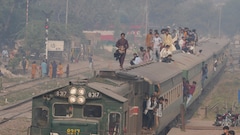
A Pakistani air quality body has found no evidence linking Lahore's post-Diwali smog to fireworks in India, pointing instead to thousands of crop-residue fires in Pakistan's own Punjab.
- Written by Sambhav Kumar | Wednesday November 11, 2026
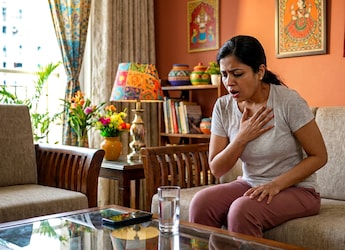
Morning chest heaviness should not automatically be attributed to air pollution. Persistent or worsening symptoms warrant medical evaluation, particularly if accompanied by coughing, wheezing or breathlessness.
- Edited by Sanstuti Nath | Wednesday November 11, 2026 , Islamabad
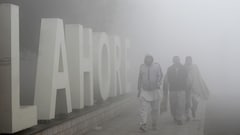
The Pakistan report said the available evidence did not support attributing Lahore's poor air quality after Diwali to fireworks across the border.
- Written by Sneha Mordani , Edited by Sambhav Kumar | Wednesday November 11, 2026
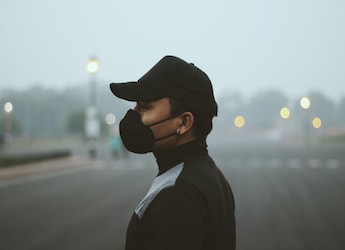
India should retain the AQI for public advisories but must publish uncapped PM2.5 and PM10 concentrations alongside it. An index may have a ceiling. Pollution does not.
- Reported by Vedika Sud Sachdeva, Edited by Aastha Ahuja | Wednesday November 11, 2026 , New Delhi
In an exclusive interview with NDTV, former WHO Chief Dr Soumya Swaminathan detailed how we are sacrificing the health of an entire generation by simply ignoring the irreversible damage caused by pollution.

................................ Advertisement ................................






Opinion | Delhi Has Every Pollution Control Policy - Except One That Works
Monday November 09, 2026Every November, Delhi performs the same ritual. We check the AQI before stepping outdoors, children are kept indoors, masks reappear, schools consider shutting, construction is restricted, and emergency meetings are convened. Politicians blame the weather, neighbouring states, farmers, or firecrackers. And then, as the season changes, the urgency d...
दीवाली की चौखट पर दिल्ली में सांसों का संकट: 30 साल की स्टडी ने हरियाली को लेकर क्या बताया?
Thursday November 05, 2026अध्ययन में हरियाली की मात्रा के साथ उसके फैलाव और आपसी जुड़ाव को भी महत्वपूर्ण पाया गया. जिन इलाकों में हरियाली ज्यादा बिखरी हुई थी, वहां सतही तापमान अधिक रहा. इसके विपरीत, बड़े और आपस में जुड़े हरित क्षेत्रों में तापमान कम पाया गया.
Opinion: Why Delhi's Smog Can't Be Fixed From SpaceDavid Fickling, Bloomberg
Monday October 19, 2026The clearest sign that Delhi is on a path to cleaner air would be a decline in the amount of paddy grown nearby, and therefore the acreage liable to be burned each year.
Don't Normalise Air Purifiers As Delhi Chokes | The Reason Why
Thursday December 11, 2025More than 90 cities in the world's top 100 polluting list are in India. With every passing year, the AQI is rising, reaching 'hazardous' levels.
Blog | Well Done, Delhi. You've Turned Lung Sacrifice Into A Badge Of HonourSaikat Kumar Bose
Monday November 10, 2025Till some years back, Delhiites would ask angry questions to those in power about the capitals annual tryst with toxic air. This has changed. Those in the driving seat dont see the need to answer now.



