


- Home/
- LeapForWord: Breaking Barriers For Regional Language Schools In India
LeapForWord: Breaking Barriers For Regional Language Schools In India
Team NDTV | Updated: February 02, 2026 16:11 IST
New Delhi:
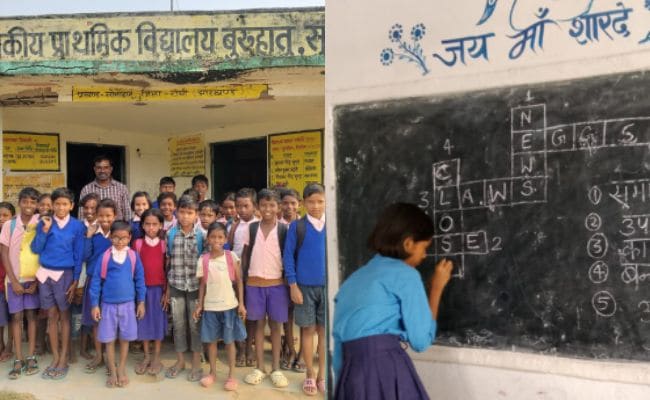
LeapForWord, a non-profit based in Mumbai, aims to solve the problem of English illiteracy in regional language schools across the country. Founded by Pranil Naik, the movement combines innovation, technology, and grassroots action to make sure that every child, regardless of their background, gets equal access to English learning. It is breaking the barriers of language by unlocking new opportunities and empowering a large number of children from regional-language schools to dream bigger in life.
LeapForWord: Vision And Purpose
In India, millions of children attend government schools in regional languages. For most of them, English remains a subject and not the skill. To pursue higher education in India - engineering, medicine, law, accountancy - fluency in the language is needed. This is where LeapForWord exists as it bridges the gap between aspiration and opportunity. Proficiency in English often decides who gets access to higher education, professional courses, and better jobs. This is where the barrier limits millions of children passing out from government-run regional schools. To change this, LeapForWord is trying to make English learning simple, accessible, and effective, by utilising the child's own mother tongue as the foundation. According to the official website, the NGO's vision is to provide a platform to children from under-served communities so that they can get access higher education opportunities of their choice - something they are unable to do right now due to poor English capabilities.
It looks forward to solve the chronic legacy problem of English illiteracy through development of effective, easy-to-use and economical teaching/learning products for both teachers and students from regional language schools across the country. LeapForWord works with the primary motive of “equal access to English learning opportunities.”
How Does It Work?
Instead of looking at English as a language, LeapForWord looks at it like a subject, like Mathematics, Science and others. Much like these subjects, the organisation, through various tools and programs, tries to make children learn English in their mother tongue. That hypothesis began the journey of multiple iterations, leading to development of an algorithm that maps English to major Indian languages. Kickstarting initially as a community project, it soon scaled across Maharashtra and later to other parts of India. LeapForWord currently operates in 12 states and in six Indian languages, reaching thousands of classrooms and countless young minds. LeapForWord develops tools, programs, and teacher support systems that go on to enable regional schools to deliver English learning effectively. Among these include: English Literacy Program (ELP): This four-level program is meant for students of Grade 2 to Grade 8. The structured, replicable model has been adopted across different cities. Its impact is not just limited to students, but even witnessed in teachers. The Jharkhand government, in partnership with LeapForWord has even organised a state-level Foundational Literacy and Numeracy (FLN) Championship for govt school students.
Word Power Championship: A one-of-its-kind English competition for regional-language school students. Teacher Entrepreneur Project: Empowering teachers from various institutions to become community leaders in literacy.
Founder's Vision
Pranit Naik, founder of LeapForWord, worked in a few other organisation before beginning his journey with the NGO. He believes that technology and innovation can break the language barrier that divides children in India. After five years of teaching, he started LeapForWord in 2006, with the help of some batch-mates.
Published: February 02, 2026 16:03 IST
also read
Despite Nationwide Lockdown, People Employed In Health And Financial Sector Continue To Provide Services
Written by Ambika Singh KahmaHow Police Officers Are Battling The Crisis Of Coronavirus And Going Beyond The Call Of Duty
Written by Ambika Singh Kahma28-Year-Old From UP Donates Disability Pension Money To COVID-19 Fund, Urges Others To Help The Cause
PTI
 NDTV News Desk | Thursday April 02, 2020
Prime Minister Narendra Modi today announced a total lockdown in India from midnight for 21 days to fight the spread of coronavirus.
- NDTV News Desk | Friday April 03, 2020
India must also straight away allow internationally-recognized testing kits to be used here - these are already in use in the USA and Europe (do not delay by waiting for Indian clearance).
- Written by Garima Arora | Sunday April 12, 2020
Coronavirus outbreak: Take necessary precautions. Practise personal hygiene and social isolation. Utilise this time to do all the things you never found the time to do earlier. Here are some more tips to maintain your mental health by Psychiatrist Dr Sanjay Chugh
- NDTV News Desk | Thursday April 02, 2020
Hopefully, you are following social distancing and not mingling, especially with large groups or in crowded places. Can wearing a mask help? Here's what doctors say:
- NDTV News Desk | Thursday April 02, 2020
People across the world are worried about the rising cases of COVID-19, a highly contagious disease caused by the Novel Coronavirus that was first detected in China's Wuhan in December last year. What should you do if you're feeling any little ill, flu-ish and you are worried that you have symptoms of coronavirus?
- Edited by Deepshikha Ghosh | Thursday April 02, 2020
Coronavirus India: Airlines have been asked to ensure distance at check-in counters and enough space as passengers wait for their flights


