


- Home/
- Exercising Outdoors? Here's How To Reduce Pollution Exposure
Exercising Outdoors? Here's How To Reduce Pollution Exposure
Written by Sambhav Kumar | Updated: September 22, 2026 16:59 IST

How to reduce pollution exposure while Exercising Outdoors
Highlights
- Check the Air Quality Index before outdoor exercise to assess pollution levels
- Avoid exercising outdoors during peak traffic and high pollution periods
- Choose parks and quieter areas away from busy roads for outdoor workouts
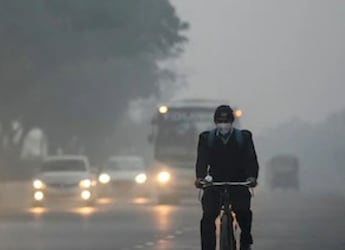
Outdoor workouts can be good for your physical and mental health, but when air pollution levels rise, where and when you exercise can affect how much polluted air you breathe. Experts explain how to stay active while reducing exposure. Going for a morning run, cycling through your neighbourhood or simply walking in a nearby park can be an easy way to stay physically active. But in cities where air pollution is a regular concern, outdoor exercise requires a little more planning. During exercise, your breathing rate increases and you tend to inhale more deeply. This can mean taking in a greater volume of air, including pollutants present in the environment. The risk can be particularly relevant on days when fine particulate matter and other pollutants are elevated. "Outdoor exercise offers several health benefits, but in cities with elevated air pollution, the timing, location and intensity of your workout can make a difference to how much polluted air you inhale," said Dr Pallav Mishra, Director, Internal Medicine, ShardaCare - Healthcity. So, should you stop exercising outdoors when pollution levels are high? Not necessarily. Instead, experts recommend making a few practical changes to reduce exposure.
Check the AQI Before You Exercise
One of the simplest ways to make an informed decision about an outdoor workout is to check the Air Quality Index (AQI) before stepping outside. AQI provides an indication of the level of air pollution and can help you decide whether outdoor exercise is appropriate on a particular day. "If the AQI is poor, consider moving your workout indoors, particularly if you have asthma, chronic respiratory disease, heart disease, are older, or are otherwise more vulnerable to air pollution," Dr Mishra said.
"People with existing heart or lung conditions may be more sensitive to the effects of air pollution. For them, choosing an indoor workout on heavily polluted days can be particularly important," Dr Mishra adds.
Avoid Exercising During High-Pollution Periods
The time you exercise can also influence your exposure. Traffic-related pollution may be higher during peak commuting hours in many urban areas, although pollution patterns differ depending on the location, weather and other factors. Rather than assuming that a particular time of day is always safer, check the current AQI and local conditions before heading out.
- If pollution levels are elevated, consider postponing your outdoor workout or switching to an indoor activity.
- Pick Your Workout Location Carefully
- Where you exercise can be just as important as when you exercise.
Running or cycling immediately alongside a busy road can expose you to traffic-related pollutants. Intersections and areas with heavy vehicle congestion may also have higher levels of traffic emissions. Instead, when air quality permits outdoor exercise, consider choosing parks, green spaces and quieter residential areas away from major roads. "Choose your location carefully. Parks, green spaces and quieter residential areas away from major roads can help reduce exposure to traffic-related pollutants," Dr Mishra said. This does not mean that a park automatically has clean air, but moving away from heavy traffic can help reduce exposure to pollutants generated by vehicles.
Consider Reducing Workout Intensity
Pollution levels are not always simply a reason to choose between exercising outdoors and staying inside. On days when pollution is moderately elevated, modifying your workout may also help. High-intensity exercise generally involves faster and deeper breathing. This means you may inhale more air during the same period compared with a low-intensity activity.
"If pollution levels are moderately elevated, reducing the duration or intensity of your workout can lower the amount of polluted air you inhale," Dr Mishra explained. For example, instead of completing a long, high-intensity run, you could opt for a shorter walk, stretching, mobility exercises or another lower-intensity workout. The aim is to remain physically active without unnecessarily increasing your exposure.
Don't Ignore Breathing Problems During Exercise
Your body can also provide warning signs that an outdoor workout is not suitable for the conditions. Pay attention to symptoms such as:
- Coughing
- Wheezing
- Throat irritation
- Chest tightness
- Unusual breathlessness
"People with respiratory symptoms should pay particular attention to how they feel. Coughing, wheezing, throat irritation, chest tightness or unusual breathlessness during or after exercise should not be ignored," said Dr Mishra. If symptoms are persistent or severe, stop exercising and seek medical advice.
Can A Mask Protect You From Air Pollution?
A common question during periods of poor air quality is whether wearing a mask makes outdoor exercise safe. The answer depends on the type of mask and the circumstances. Regular cloth or surgical masks are not designed to effectively filter fine particulate pollution. Properly fitted particulate respirators can offer better filtration, but they may also make breathing more difficult during strenuous physical activity. "Don't assume that a mask makes every outdoor workout safe," Dr Mishra said. People with underlying heart or lung conditions should speak to their doctor about appropriate exercise and protective measures rather than relying on a mask alone.
Air pollution does not necessarily mean you have to give up physical activity. The key is to adapt your workout according to the conditions. Check the AQI before exercising, avoid heavily polluted periods, choose locations away from busy roads and adjust the duration and intensity of your workout when pollution levels are elevated. On days when air quality is poor, moving your workout indoors may be the safer option, particularly for people who are more vulnerable to the effects of air pollution. "The goal is not necessarily to avoid outdoor exercise altogether, but to exercise strategically check AQI, choose cleaner locations, adjust intensity and duration, and move indoors when pollution is high," Dr Mishra said.
\r\n
\r\n
Disclaimer: This content including advice provides generic information only. It is in no way a substitute for a qualified medical opinion. Always consult a specialist or your own doctor for more information. NDTV does not claim responsibility for this information.
Published: September 22, 2026 16:59 IST
also read
Bryan Johnson's 5-Step Sleep Routine: From Bedtime To Better Recovery
Written by Sambhav KumarCan Air Pollution Trigger Depression, Suicidal Thoughts? What Links Air Quality And Mental Health
Written by Debosmita GhoshSeptember-October Period Can Cause Lung Infection, Asthma Flare-Ups: How To Care For Your Lungs
Written by Sambhav Kumar
 Tuesday September 22, 2026 , Mumbai
The court had on Monday taken suo motu (on its own) cognizance of the issue of severe noise and air pollution caused during processions.
- Written by Sambhav Kumar | Tuesday September 22, 2026
Air pollution does not necessarily mean you have to give up physical activity. The key is to adapt your workout according to the conditions.
- Written by Sambhav Kumar | Friday September 18, 2026
While Bryan Johnson's highly structured approach may attract attention, experts caution against treating any celebrity's routine as a universal prescription
- Written by Debosmita Ghosh | Thursday September 17, 2026
Researchers from Queen's University Belfast reviewed scientific evidence examining whether environmental exposures could be associated with suicide and suicidal behaviour.
- Written by Sambhav Kumar | Thursday September 17, 2026
September and October bring temperature shifts, humidity, mould, viruses, and pollution that can worsen respiratory health, especially in asthma patients.




................................ Advertisement ................................



Blog | Well Done, Delhi. You've Turned Lung Sacrifice Into A Badge Of HonourSaikat Kumar Bose
Monday November 10, 2025Till some years back, Delhiites would ask angry questions to those in power about the capitals annual tryst with toxic air. This has changed. Those in the driving seat dont see the need to answer now.
Opinion | Why Indians Have Just Given Up On Air Pollution CrisisTanushree Ganguly
Friday December 20, 2024While some may argue that people in Delhi are now more aware of air pollution than they were a decade back, my rebuttal would be that awareness does not mean that people are concerned.
Opinion | You Must Outrage Over Filthy Air More Than Once A YearJyoti Pande Lavakare
Tuesday December 10, 2024Delhi welcomed us with monsoon rains and mangos. We were home. Fast forward a couple of years, in the winter of 2012, I found myself in denial about something other parents, mostly expats, were calling toxic air.
Opinion | Delhi's Air Pollution Situation Is Like A Bad MarriageNishtha Gautam
Friday November 22, 2024On a good day, such as today, the AQI reading in Delhi is 407. We are jubilant at the sickly sunshine trickling through the slightly dissipated smog. At least its not 1600.
दिवाली... पराली... सियासी जुगाली!Ashwini kumar
Monday November 18, 2024दिल्ली-एनसीआर में प्रदूषण का समाधान तो आज तक मिला नहीं. हर साल चिंतित होकर हम-आप सांसों की तकलीफ के साथ-साथ दिल और ब्लड प्रेशर के मरीज भी क्यों बनें?


