


- Home/
- Meet 2 Delhi Teens Who Turn Classroom Fans Into Rs 140 Air Purifiers
Meet 2 Delhi Teens Who Turn Classroom Fans Into Rs 140 Air Purifiers
Reported by Ishika Verma | Updated: November 12, 2026 07:11 IST
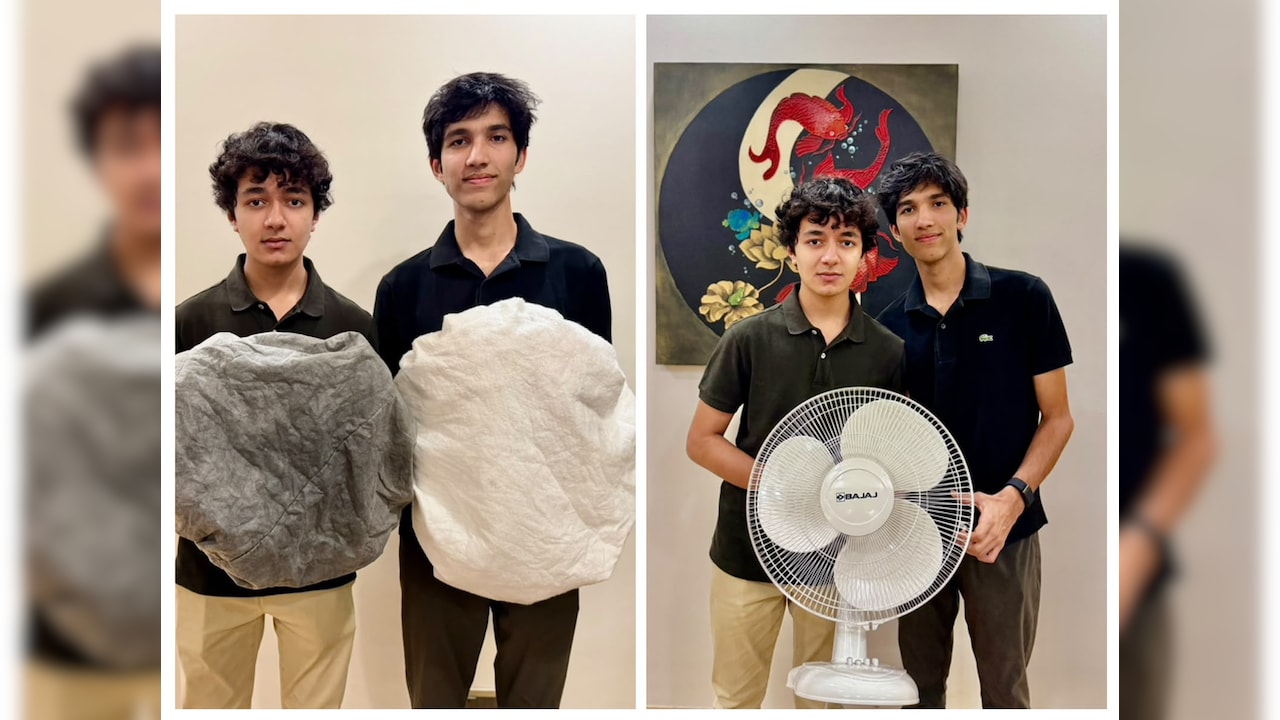
Krish Aggarwal and Samarth Meattle are the founders of Project Vayu.
Two Delhi teenagers have found a way to turn an ordinary classroom fan into an air purifier for Rs 140. Their tests suggest it can sharply cut fine-particle pollution. They say thousands of students are already using the filters. But the hardest part was still ahead: convincing schools to give them a chance.
"Schools are understandably skeptical of new technology being presented by high schoolers," Krish Aggarwal and Samarth Meattle told NDTV. "Our biggest hurdle today is getting approvals and cutting through bureaucracy."
Krish, a Class 12 student at Sanskriti School, and Samarth, a Class 11 student at Vasant Valley School, are the founders of Project Vayu. Krish has been named to the 2026 Diana Award Roll of Honour for the initiative.
The idea came from growing up in a city where toxic air has become a winter reality.
"What bothered us was that some schools can buy air purifiers and thousands of students in under-resourced schools just sit in the same air all day with nothing. We wanted to fix that," they said.
And this week is a reminder of why it matters.
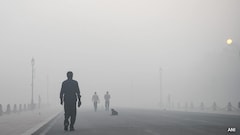
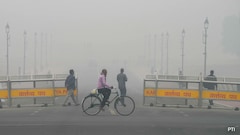
Delhi's 24-hour average Air Quality Index (AQI) stood at 313 on Wednesday, in the "very poor" category. Stage III pollution curbs remain in force, and primary schools have been directed to offer hybrid classes wherever online learning is possible. But many children still attend school in person.
A Fan, An Elastic Band And Rs 140
The teenagers decided they didn't need to build an expensive purifier from scratch.
"The technology to clean air already exists. Schools just can't afford it," they said.
Their solution uses something almost every classroom already has: a fan.
The filter fits over a table or wall fan and is secured with an elastic band. Switch on the fan and the material inflates like a balloon as air passes through it.
The filter uses electrically charged fibres that trap tiny particles, including PM2.5, which can enter deep into the lungs.
No tools, no rewiring and less than a minute to install, according to the founders.
Each filter costs Rs 140 to make but is provided free to schools. The duo credit filtration company Hollingsworth & Vose for supplying the material without charge.
The filters need replacing two or three times during the winter pollution season.
How Well Does It Work?
The teenagers say independent and external testing, along with research conducted with Hollingsworth & Vose, has shown encouraging results.
In a closed room measuring roughly 200 square feet, PM2.5 levels fell from 158 to 11 micrograms per cubic metre within an hour- a reduction of more than 90%.
But the results depend on classroom conditions.
In a larger room, one filter brought PM2.5 levels down by around 60% in an hour, they said. Keeping doors open can also reduce its effectiveness.
These are the founders' reported test results and do not guarantee identical performance in every classroom.
The change is visible on the filters themselves.
"The filters start out white and turn grey or even black after a few weeks of use," they said.
Project Vayu began with a pilot covering 295 classrooms and around 8,000 students.
The founders say they have since expanded to 10 schools and several under-resourced medical clinics, reaching approximately 20,000 students.
They now want to take the idea to Delhi's government schools and eventually other parts of India.
"At just Rs 140 per filter, it's a solution that could be scaled without major infrastructure investments," they said.
They are also inviting principals and teachers interested in the project to get in touch.
Published: November 12, 2026 07:11 IST
 Reported by Ishika Verma | Thursday November 12, 2026
Krish, a Class 12 student at Sanskriti School, and Samarth, a Class 11 student at Vasant Valley School, are the founders of Project Vayu. Krish has been named to the 2026 Diana Award Roll of Honour for the initiative.
- Reported by Pallava Bagla | Thursday November 12, 2026 , New Delhi
All are hoping for rain that may wash away the toxic cloud hanging overhead. But the weather office ended that hope today, saying rain is unlikely in the plains. There might be some over the Himalayan region, but none is expected in Delhi, where the pollution has reached severe levels.
- Reported by Ankita Tiwari | Wednesday November 11, 2026 , New Delhi
According to a Centre for Science and Environment (CSE) report, the average PM2.5 concentration during the week before Diwali stood at 236 micrograms per cubic metre, almost double the 120 ug/m3 recorded in 2025. It was also the highest pre-Diwali average in three years.
- Wednesday November 11, 2026 , New Delhi
The transport sector is expected to be the largest contributor to pollution on Wednesday, while the impact of stubble burning is anticipated to increase on Thursday, potentially worsening air quality further over the next few days, according to Indian Institute of Tropical Meteorology models.
- Reported by Himanshu Shekhar Mishra, Edited by Anindita Sanyal | Wednesday November 11, 2026 , New Delhi
Air pollution in Delhi-NCR has worsened during the onset of winter (from October to mid-November) this year. This has been revealed in a new analysis by the Centre for Science and Environment or CSE, an organisation that monitors environmental issues.

................................ Advertisement ................................
Opinion | Delhi Has Every Pollution Control Policy - Except One That Works
Monday November 09, 2026Every November, Delhi performs the same ritual. We check the AQI before stepping outdoors, children are kept indoors, masks reappear, schools consider shutting, construction is restricted, and emergency meetings are convened. Politicians blame the weather, neighbouring states, farmers, or firecrackers. And then, as the season changes, the urgency d...
दीवाली की चौखट पर दिल्ली में सांसों का संकट: 30 साल की स्टडी ने हरियाली को लेकर क्या बताया?
Thursday November 05, 2026अध्ययन में हरियाली की मात्रा के साथ उसके फैलाव और आपसी जुड़ाव को भी महत्वपूर्ण पाया गया. जिन इलाकों में हरियाली ज्यादा बिखरी हुई थी, वहां सतही तापमान अधिक रहा. इसके विपरीत, बड़े और आपस में जुड़े हरित क्षेत्रों में तापमान कम पाया गया.
Opinion: Why Delhi's Smog Can't Be Fixed From SpaceDavid Fickling, Bloomberg
Monday October 19, 2026The clearest sign that Delhi is on a path to cleaner air would be a decline in the amount of paddy grown nearby, and therefore the acreage liable to be burned each year.
Don't Normalise Air Purifiers As Delhi Chokes | The Reason Why
Thursday December 11, 2025More than 90 cities in the world's top 100 polluting list are in India. With every passing year, the AQI is rising, reaching 'hazardous' levels.
Blog | Well Done, Delhi. You've Turned Lung Sacrifice Into A Badge Of HonourSaikat Kumar Bose
Monday November 10, 2025Till some years back, Delhiites would ask angry questions to those in power about the capitals annual tryst with toxic air. This has changed. Those in the driving seat dont see the need to answer now.



